Supreme Court To Hear Plea On Protest Disruptions
Protests disrupt essential services, SC to hear plea. Concerns over access and movement raised.
'%3E%3Crect%20width%3D'96'%20height%3D'96'%20fill%3D'%231A5276'%2F%3E%3Ccircle%20cx%3D'30'%20cy%3D'24'%20r%3D'44'%20fill%3D'%23fff'%20opacity%3D'.12'%2F%3E%3Ccircle%20cx%3D'60'%20cy%3D'74'%20r%3D'40'%20fill%3D'%23000'%20opacity%3D'.10'%2F%3E%3C%2Fg%3E%3Cg%20fill%3D'%23fff'%3E%3Cpath%20d%3D'M31%2041%20L48%2031%20L65%2041%20Z'%2F%3E%3Crect%20x%3D'33'%20y%3D'43'%20width%3D'4'%20height%3D'17'%2F%3E%3Crect%20x%3D'41'%20y%3D'43'%20width%3D'4'%20height%3D'17'%2F%3E%3Crect%20x%3D'51'%20y%3D'43'%20width%3D'4'%20height%3D'17'%2F%3E%3Crect%20x%3D'59'%20y%3D'43'%20width%3D'4'%20height%3D'17'%2F%3E%3Crect%20x%3D'30'%20y%3D'62'%20width%3D'36'%20height%3D'4'%20rx%3D'1'%2F%3E%3C%2Fg%3E%3C%2Fsvg%3E)
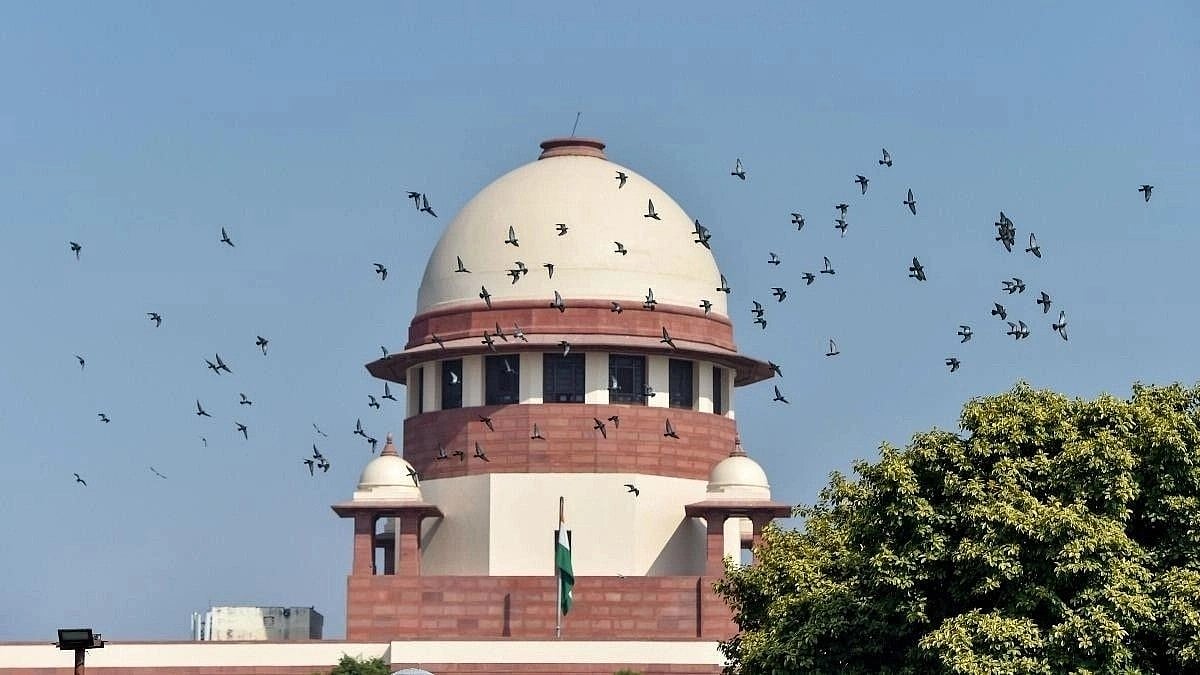
The Supreme Court has agreed to hear a plea regarding the disruption of essential services during protests across the country. On Wednesday, a bench comprising Chief Justice of India Surya Kant and Justices Joymalya Bagchi and V. Mohana was informed that protests can affect the movement of people, including those requiring access to essential services.
The petitioner's counsel highlighted the difficulties in distinguishing protesters from members of the general public during such situations. The plea also raised concerns over access and movement when demonstrations are held in areas frequented by residents and commuters.
The bench acknowledged the concerns but questioned how broad directions could be issued in matters involving protests and essential services. The court is examining the issue while balancing the constitutional right to peaceful protest with public order, access to essential services, and the rights of residents.
The plea has been tagged with a separate pending PIL concerning the suitability of Jantar Mantar in Delhi as a protest venue. The earlier petition argues that demonstrations at Jantar Mantar can inconvenience local residents and interfere with the movement of essential goods and medical services.
The Supreme Court's decision to hear the plea comes amid continuing scrutiny of protest venues and the logistical challenges posed by large demonstrations. Recent student protests and demonstrations in Delhi, including the 'Sansad Chalo' march, have also raised concerns over the issue.
The court's examination of the issue is crucial in balancing the right to protest with public interest. The petitioner's concerns over identifying protesters and ensuring access to essential services are valid and require consideration.
The Supreme Court's decision to hear the plea is a significant step in addressing the concerns raised by the petitioner. The court's ruling will have implications for the management of protests and the protection of essential services across the country.
In conclusion, the Supreme Court's agreement to hear the plea on protest disruptions is a significant development in the ongoing debate over the right to protest and public interest. The court's ruling will be closely watched as it seeks to balance the constitutional right to peaceful protest with the need to protect essential services and public order.
The issue of protest disruptions is a complex one, and the Supreme Court's decision will have far-reaching implications for the management of protests and the protection of essential services. The court's ruling will be significant in ensuring that the right to protest is balanced with the need to protect public interest and essential services.
The Supreme Court's examination of the issue is a welcome step in addressing the concerns raised by the petitioner. The court's ruling will be crucial in ensuring that the right to protest is protected while also ensuring that essential services are not disrupted.
The court's decision to tag the plea with the Jantar Mantar PIL is also significant, as it highlights the need to consider alternative protest venues that do not disrupt essential services. The Supreme Court's ruling will be closely watched as it seeks to balance the right to protest with public interest and the need to protect essential services.
In the end, the Supreme Court's agreement to hear the plea on protest disruptions is a significant step in addressing the concerns raised by the petitioner. The court's ruling will have implications for the management of protests and the protection of essential services across the country, and will be closely watched as it seeks to balance the constitutional right to peaceful protest with public interest.
Frequently asked questions
What is the Supreme Court hearing a plea about?
The Supreme Court is hearing a plea regarding the disruption of essential services during protests across the country.
What are the concerns raised by the petitioner?
The petitioner has raised concerns over access and movement when demonstrations are held in areas frequented by residents and commuters, and the difficulties in distinguishing protesters from members of the general public.