Delhi Master Plan Eases Old Building Redevelopment
Delhi's new plan incentivizes owners, promotes housing and tackles waterlogging.
'%3E%3Crect%20width%3D'96'%20height%3D'96'%20fill%3D'%23B3261E'%2F%3E%3Ccircle%20cx%3D'30'%20cy%3D'24'%20r%3D'44'%20fill%3D'%23fff'%20opacity%3D'.12'%2F%3E%3Ccircle%20cx%3D'60'%20cy%3D'74'%20r%3D'40'%20fill%3D'%23000'%20opacity%3D'.10'%2F%3E%3C%2Fg%3E%3Cg%20fill%3D'%23fff'%3E%3Crect%20x%3D'29'%20y%3D'49'%20width%3D'8'%20height%3D'19'%20rx%3D'1'%2F%3E%3Crect%20x%3D'39'%20y%3D'40'%20width%3D'9'%20height%3D'28'%20rx%3D'1'%2F%3E%3Crect%20x%3D'50'%20y%3D'45'%20width%3D'8'%20height%3D'23'%20rx%3D'1'%2F%3E%3Crect%20x%3D'60'%20y%3D'53'%20width%3D'7'%20height%3D'15'%20rx%3D'1'%2F%3E%3Crect%20x%3D'41'%20y%3D'34'%20width%3D'5'%20height%3D'6'%2F%3E%3C%2Fg%3E%3C%2Fsvg%3E)
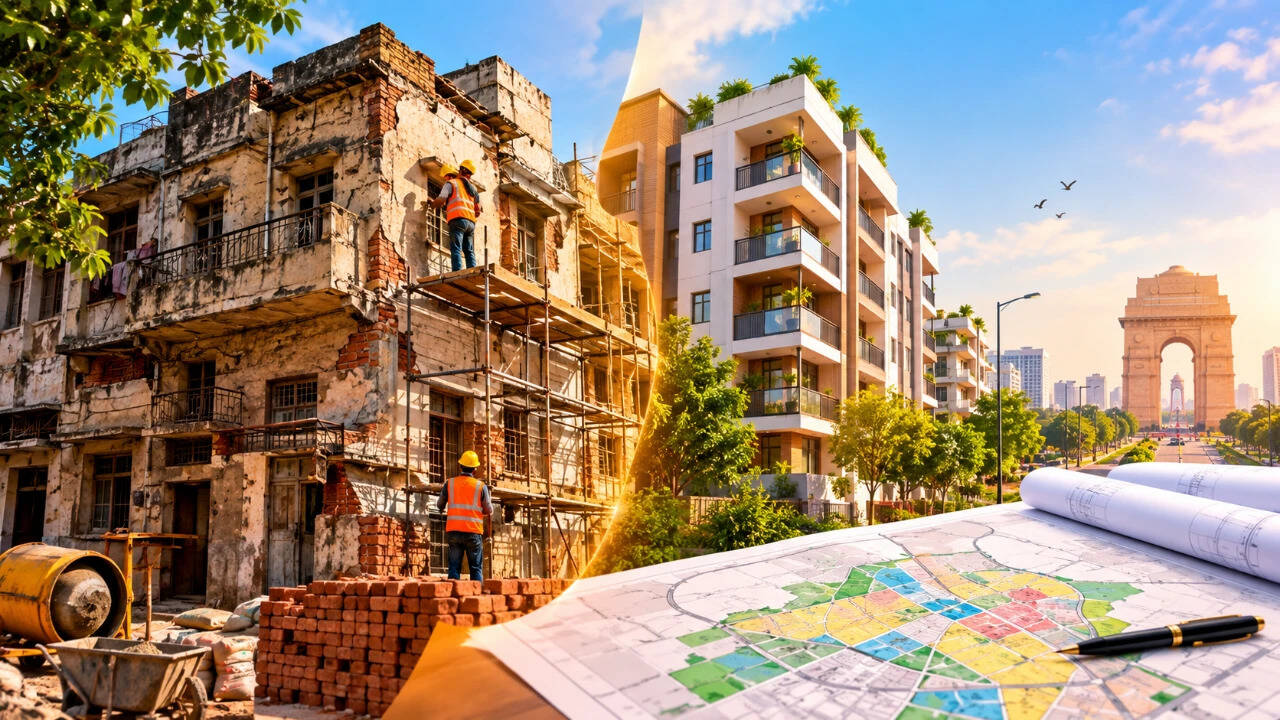
Delhi's newly introduced Master Plan aims to revitalize outdated buildings by incentivizing owners through an increased Floor Area Ratio. This move is expected to address safety issues following recent building collapses in the city.
The plan also promotes extensive housing development near metro lines, which will not only provide better connectivity but also increase the availability of housing in the city.
Furthermore, the Master Plan adopts a 'sponge cities' strategy to help manage rainwater effectively, aiming to reduce instances of waterlogging in urban areas. This approach is crucial in a city like Delhi, where waterlogging has become a major issue during the monsoon season.
The 'sponge cities' concept involves designing cities in a way that they can absorb and filter rainwater, reducing the burden on the drainage system. This can be achieved through the creation of green spaces, ponds, and other water bodies that can absorb excess rainwater.
The increased Floor Area Ratio is a major incentive for owners to redevelop their old buildings. This will not only improve the safety of the buildings but also increase the availability of housing in the city.
The Master Plan is a comprehensive document that outlines the vision for Delhi's development over the next few years. It takes into account the city's growing population, increasing demand for housing, and the need for sustainable development.
The plan's focus on promoting housing development near metro lines is also expected to reduce congestion on the city's roads. By providing housing options near public transportation hubs, the plan aims to reduce the need for personal vehicles and promote the use of public transport.
Overall, the Master Plan is a step in the right direction for Delhi's development. It addresses some of the city's major issues, such as safety, housing, and waterlogging, and provides a vision for sustainable development.
The implementation of the plan will be crucial in determining its success. The city's authorities will need to work closely with stakeholders, including owners, developers, and residents, to ensure that the plan is implemented effectively.
In the long run, the Master Plan is expected to have a significant impact on Delhi's development. It will not only improve the safety and availability of housing but also promote sustainable development and reduce the city's carbon footprint.
For Mumbai residents, this plan can serve as a model for their own city's development. Mumbai, like Delhi, faces similar issues such as outdated buildings, waterlogging, and congestion. The 'sponge cities' concept and the increased Floor Area Ratio can be explored as potential solutions for Mumbai's development.
Frequently asked questions
What is the main goal of Delhi's new Master Plan?
The main goal of Delhi's new Master Plan is to revitalize outdated buildings and promote sustainable development.
How will the 'sponge cities' strategy help Delhi?
The 'sponge cities' strategy will help Delhi manage rainwater effectively, reducing instances of waterlogging in urban areas.