3D Printing Helps Restore Ancient Pottery
New method repairs damaged pottery, monitors internal damage. Tested on maritime amphorae.
'%3E%3Crect%20width%3D'96'%20height%3D'96'%20fill%3D'%23C2185B'%2F%3E%3Ccircle%20cx%3D'30'%20cy%3D'24'%20r%3D'44'%20fill%3D'%23fff'%20opacity%3D'.12'%2F%3E%3Ccircle%20cx%3D'60'%20cy%3D'74'%20r%3D'40'%20fill%3D'%23000'%20opacity%3D'.10'%2F%3E%3C%2Fg%3E%3Cpath%20fill%3D'%23fff'%20d%3D'M48%2031%20l4.6%2010.2%2011.2%201%20-8.4%207.5%202.5%2011%20-9.9%20-5.8%20-9.9%205.8%202.5%20-11%20-8.4%20-7.5%2011.2%20-1%20z'%2F%3E%3C%2Fsvg%3E)
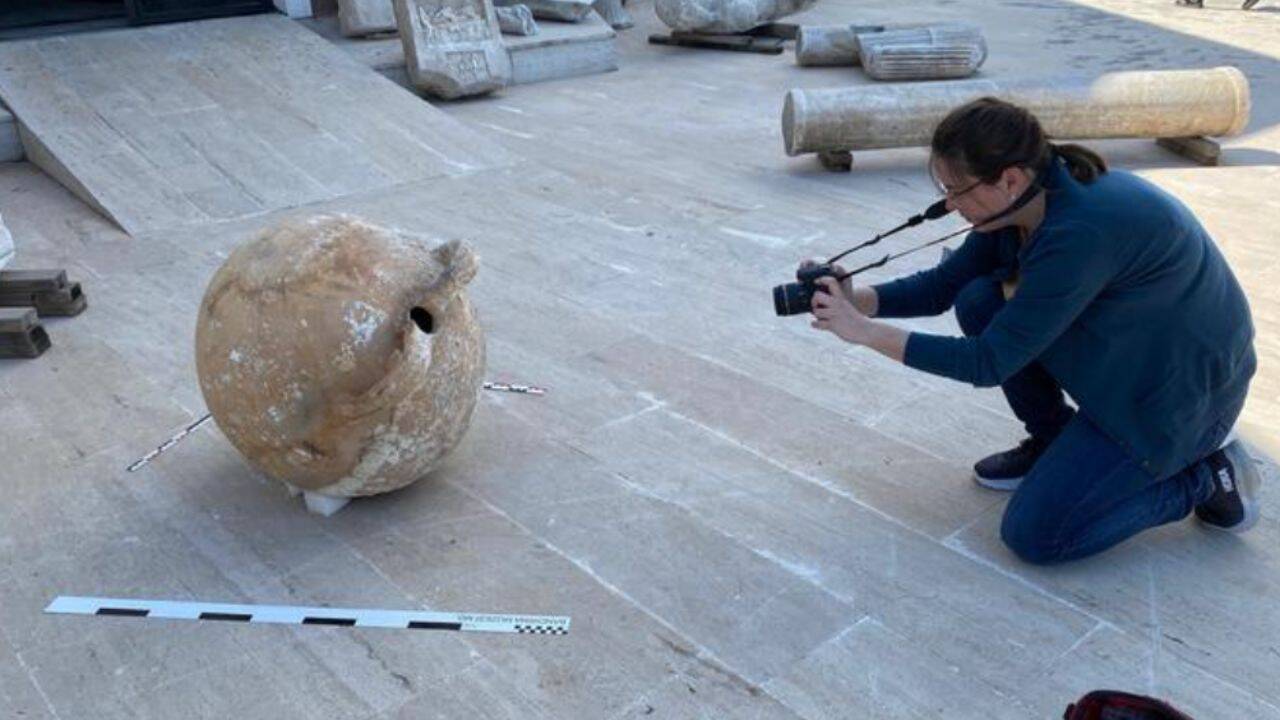
Researchers at Koc University have made a significant breakthrough in the field of conservation, developing a method that combines photogrammetry, 3D printing, and embedded sensors to repair damaged ancient pottery.
This innovative approach allows conservators to create customized 3D-printed sections that can replace missing parts of the pottery, while also monitoring various environmental factors such as temperature, humidity, pH, and physical stress.
The method was tested on maritime amphorae from Türkiye and Italy, with promising results. The use of 3D printing and embedded sensors enables conservators to track changes in the pottery's condition over time, supporting long-term preservation.
The development of this method is a significant step forward in the field of conservation, as it provides a non-invasive and reversible way to repair damaged pottery. Traditional methods of repair often involve the use of adhesives, consolidants, or other materials that can be harmful to the pottery or alter its original composition.
The use of photogrammetry, a technique that involves taking multiple photographs of an object from different angles, allows conservators to create highly accurate 3D models of the pottery. These models can then be used to design and print customized replacement parts.
The embedded sensors used in this method are designed to monitor a range of environmental factors that can affect the condition of the pottery. By tracking changes in temperature, humidity, and pH, conservators can identify potential risks to the pottery and take steps to mitigate them.
The testing of this method on maritime amphorae from Türkiye and Italy has demonstrated its potential for use in a wide range of conservation applications. The approach could be used to repair and monitor pottery from various cultures and historical periods, supporting the long-term preservation of these valuable cultural artifacts.
The development of this method is a testament to the power of interdisciplinary collaboration, bringing together experts from fields such as conservation, materials science, and engineering. As the method continues to be refined and developed, it is likely to have a significant impact on the field of conservation, enabling conservators to better preserve and protect our cultural heritage.
In conclusion, the use of 3D printing and embedded sensors to repair and monitor ancient pottery is a significant breakthrough in the field of conservation. This innovative approach has the potential to support the long-term preservation of valuable cultural artifacts, and its development is a testament to the power of interdisciplinary collaboration.
The impact of this method on the field of conservation is likely to be significant, as it provides a new and innovative way to repair and preserve ancient pottery. As the method continues to be developed and refined, it is likely to be used in a wide range of conservation applications, supporting the preservation of our cultural heritage for future generations.
Frequently asked questions
What is the new method for repairing ancient pottery?
The new method uses photogrammetry, 3D printing, and embedded sensors to repair damaged ancient pottery.
What are the benefits of using this method?
The method provides a non-invasive and reversible way to repair damaged pottery, and enables conservators to track changes in the pottery's condition over time.