TMC MP Urges PM Modi To Convene Meeting On Delimitation Bill
TMC MP Derek O'Brien writes to PM Modi, expressing concerns over Delimitation and FCRA Bills. He urges an all-party meeting to discuss the proposed legislations.
'%3E%3Crect%20width%3D'96'%20height%3D'96'%20fill%3D'%231A5276'%2F%3E%3Ccircle%20cx%3D'30'%20cy%3D'24'%20r%3D'44'%20fill%3D'%23fff'%20opacity%3D'.12'%2F%3E%3Ccircle%20cx%3D'60'%20cy%3D'74'%20r%3D'40'%20fill%3D'%23000'%20opacity%3D'.10'%2F%3E%3C%2Fg%3E%3Cg%20fill%3D'%23fff'%3E%3Cpath%20d%3D'M31%2041%20L48%2031%20L65%2041%20Z'%2F%3E%3Crect%20x%3D'33'%20y%3D'43'%20width%3D'4'%20height%3D'17'%2F%3E%3Crect%20x%3D'41'%20y%3D'43'%20width%3D'4'%20height%3D'17'%2F%3E%3Crect%20x%3D'51'%20y%3D'43'%20width%3D'4'%20height%3D'17'%2F%3E%3Crect%20x%3D'59'%20y%3D'43'%20width%3D'4'%20height%3D'17'%2F%3E%3Crect%20x%3D'30'%20y%3D'62'%20width%3D'36'%20height%3D'4'%20rx%3D'1'%2F%3E%3C%2Fg%3E%3C%2Fsvg%3E)
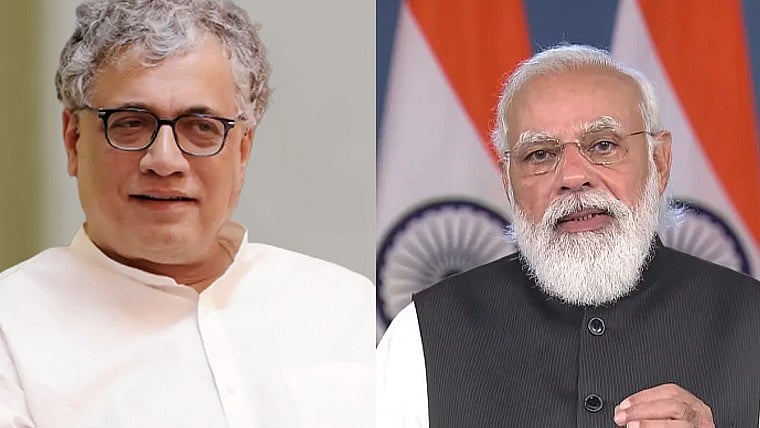
Trinamool Congress (TMC) Rajya Sabha MP Derek O'Brien has written to Prime Minister Narendra Modi, requesting him to convene an all-party meeting to discuss the proposed Delimitation Bill and the Foreign Contribution (Regulation) Amendment (FCRA) Bill.
The meeting, as proposed by O'Brien, would provide a platform for broader political consultation before the bills are taken up in Parliament's Monsoon Session. In his letter dated July 19, O'Brien described the proposed legislations as 'draconian' and emphasized the need for transparent debate.
O'Brien expressed concern over the potential impact of the Delimitation Bill on India's democratic structure. He argued that any legislation altering the country's electoral framework should be debated transparently and not introduced without adequate notice. The TMC leader drew a parallel with the Centre's handling of the Jammu and Kashmir Reorganisation Bill in 2019, which was rushed through Parliament with minimal notice.
The proposed Delimitation Bill, according to O'Brien, affects the core structure of India's democracy and cannot be handled through 'cloak-and-dagger tactics'. He cautioned against adopting a similar approach for delimitation, emphasizing the need for consensus across political parties.
O'Brien also objected to the proposed amendments to the Foreign Contribution (Regulation) Act (FCRA), saying they could adversely affect non-governmental organisations and institutions working for underprivileged communities. The proposed changes may impose greater executive control over organisations receiving foreign contributions, potentially affecting charitable activities in sectors such as education and healthcare.
The TMC leader highlighted the role of more than 54,000 educational institutions run by the Christian community, saying millions of students could be impacted if the legislation is implemented without wider consultation. He also mentioned that the Delimitation Bill would have imposed a crushing financial burden of over ₹11,000 crore annually on India's economy.
Concluding his letter, O'Brien urged Prime Minister Modi to convene an all-party meeting before proceeding with the two bills. He drew a parallel with the now-repealed farm laws, saying wider political engagement could help avoid future disputes and ensure that legislation with far-reaching implications is debated thoroughly before being enacted.
The proposed Delimitation and FCRA Bills have significant implications for India's democratic structure and the functioning of non-governmental organisations. The all-party meeting, as proposed by O'Brien, would provide a platform for constructive dialogue and debate, ensuring that the legislations are thoroughly discussed before being enacted.
In the context of India's democratic history, the Delimitation Bill and the FCRA amendments are crucial pieces of legislation that require careful consideration and debate. The bills have the potential to impact the country's electoral framework, non-governmental organisations, and charitable activities, making it essential for political parties to engage in constructive dialogue.
The Monsoon Session of Parliament is expected to commence soon, and the proposed bills are likely to be taken up for discussion. The all-party meeting, as urged by O'Brien, would provide a timely opportunity for political parties to engage in constructive dialogue and debate, ensuring that the legislations are thoroughly discussed before being enacted.
In conclusion, the proposed Delimitation and FCRA Bills have significant implications for India's democratic structure and the functioning of non-governmental organisations. The all-party meeting, as proposed by O'Brien, would provide a platform for constructive dialogue and debate, ensuring that the legislations are thoroughly discussed before being enacted. This would be a significant step towards upholding the principles of democracy and ensuring that the bills are passed with the consent of all stakeholders.
The move by O'Brien is seen as an attempt to ensure that the legislations are debated transparently and with the consent of all stakeholders. The all-party meeting would provide a platform for political parties to engage in constructive dialogue, ensuring that the bills are thoroughly discussed before being enacted. This would be a significant step towards upholding the principles of democracy and ensuring that the bills are passed with the consent of all stakeholders.
The implications of the proposed bills are far-reaching, and it is essential for political parties to engage in constructive dialogue to ensure that the legislations are thoroughly discussed before being enacted. The all-party meeting, as proposed by O'Brien, would provide a timely opportunity for political parties to engage in constructive dialogue and debate, ensuring that the bills are passed with the consent of all stakeholders.
In the larger context, the proposed Delimitation and FCRA Bills are significant pieces of legislation that require careful consideration and debate. The bills have the potential to impact the country's electoral framework, non-governmental organisations, and charitable activities, making it essential for political parties to engage in constructive dialogue. The all-party meeting, as proposed by O'Brien, would provide a platform for constructive dialogue and debate, ensuring that the legislations are thoroughly discussed before being enacted.
The significance of the proposed bills cannot be overstated, and it is essential for political parties to engage in constructive dialogue to ensure that the legislations are thoroughly discussed before being enacted. The all-party meeting, as proposed by O'Brien, would provide a timely opportunity for political parties to engage in constructive dialogue and debate, ensuring that the bills are passed with the consent of all stakeholders.
In conclusion, the proposed Delimitation and FCRA Bills have significant implications for India's democratic structure and the functioning of non-governmental organisations. The all-party meeting, as proposed by O'Brien, would provide a platform for constructive dialogue and debate, ensuring that the legislations are thoroughly discussed before being enacted. This would be a significant step towards upholding the principles of democracy and ensuring that the bills are passed with the consent of all stakeholders.
What it means for India is that the proposed bills have the potential to impact the country's democratic structure and the functioning of non-governmental organisations. The all-party meeting, as proposed by O'Brien, would provide a platform for constructive dialogue and debate, ensuring that the legislations are thoroughly discussed before being enacted. This would be a significant step towards upholding the principles of democracy and ensuring that the bills are passed with the consent of all stakeholders.
The proposed bills are a significant development in India's democratic history, and it is essential for political parties to engage in constructive dialogue to ensure that the legislations are thoroughly discussed before being enacted. The all-party meeting, as proposed by O'Brien, would provide a timely opportunity for political parties to engage in constructive dialogue and debate, ensuring that the bills are passed with the consent of all stakeholders.
The implications of the proposed bills are far-reaching, and it is essential for political parties to engage in constructive dialogue to ensure that the legislations are thoroughly discussed before being enacted. The all-party meeting, as proposed by O'Brien, would provide a platform for constructive dialogue and debate, ensuring that the bills are thoroughly discussed before being enacted.
In the final analysis, the proposed Delimitation and FCRA Bills have significant implications for India's democratic structure and the functioning of non-governmental organisations. The all-party meeting, as proposed by O'Brien, would provide a platform for constructive dialogue and debate, ensuring that the legislations are thoroughly discussed before being enacted. This would be a significant step towards upholding the principles of democracy and ensuring that the bills are passed with the consent of all stakeholders.