Palau Sees 183% Fish Biomass Jump After Rat Removal
Palau's rat removal leads to fish boom. Seabirds and coral reefs also benefit.
'%3E%3Crect%20width%3D'96'%20height%3D'96'%20fill%3D'%231B5E20'%2F%3E%3Ccircle%20cx%3D'30'%20cy%3D'24'%20r%3D'44'%20fill%3D'%23fff'%20opacity%3D'.12'%2F%3E%3Ccircle%20cx%3D'60'%20cy%3D'74'%20r%3D'40'%20fill%3D'%23000'%20opacity%3D'.10'%2F%3E%3C%2Fg%3E%3Cg%3E%3Ccircle%20cx%3D'48'%20cy%3D'48'%20r%3D'15'%20fill%3D'%23fff'%2F%3E%3Cpath%20d%3D'M43%2034%20Q50%2048%2043%2062'%20fill%3D'none'%20stroke%3D'%238a94a6'%20stroke-width%3D'2.4'%2F%3E%3Cpath%20d%3D'M47%2033%20Q54%2048%2047%2063'%20fill%3D'none'%20stroke%3D'%238a94a6'%20stroke-width%3D'1.8'%20stroke-dasharray%3D'1.5%203'%2F%3E%3C%2Fg%3E%3C%2Fsvg%3E)
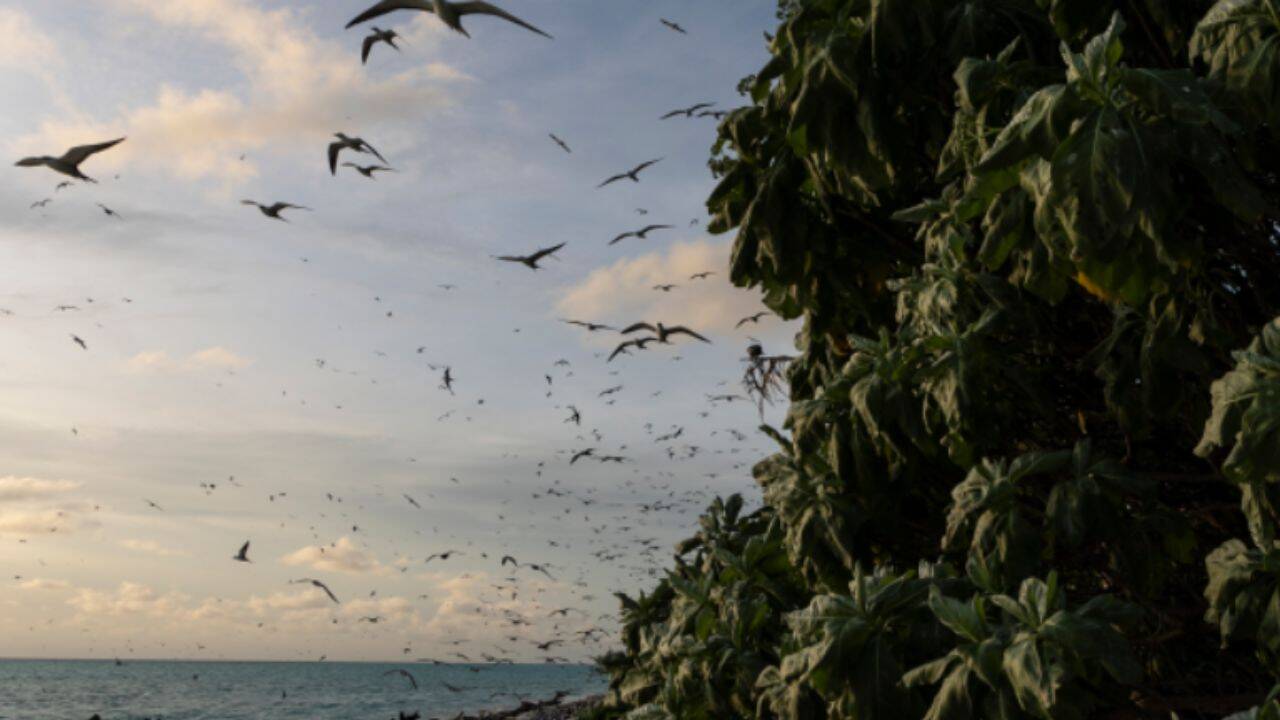
A recent study conducted on Ulong Island in Palau has revealed groundbreaking evidence of the positive impact of removing invasive rats on the local ecosystem. The research, which focused on the effects of rat removal on seabird populations and nearby coral reefs, showed a significant increase in fish biomass of 183% within just one year.
The study found that the removal of invasive rats led to a surge in seabird populations, which in turn facilitated the transfer of nutrients from land to sea. This nutrient movement had a profound effect on the marine ecosystem, resulting in increased fish biomass and improved coral reef health.
The researchers behind the study were able to record and analyze the changes in the ecosystem over the course of a year, providing valuable insights into the interconnectedness of terrestrial and marine ecosystems. The findings suggest that island restoration efforts, such as the removal of invasive species, can have far-reaching benefits for both the land and sea environments.
The removal of invasive rats has been shown to have a positive impact on seabird populations, allowing them to thrive and contribute to the health of the ecosystem. Seabirds play a crucial role in maintaining the balance of the ecosystem, and their presence is often an indicator of the overall health of the environment.
The study's findings have significant implications for conservation efforts and island restoration initiatives. By removing invasive species and allowing native populations to flourish, it is possible to create a positive feedback loop that benefits both the terrestrial and marine ecosystems.
The research conducted on Ulong Island in Palau provides a compelling example of the potential for ecosystem restoration and the importance of considering the interconnectedness of different environments. As the world continues to grapple with the challenges of conservation and environmental protection, studies like this one offer valuable insights and guidance for future restoration efforts.
The increase in fish biomass and improvement in coral reef health are a testament to the effectiveness of invasive species removal as a conservation strategy. The study's findings highlight the need for continued research and conservation efforts aimed at protecting and restoring ecosystems, and demonstrate the potential for positive change through targeted and effective conservation initiatives.
In conclusion, the study's results demonstrate the significant benefits of removing invasive rats and restoring seabird populations, and highlight the importance of considering the interconnectedness of terrestrial and marine ecosystems in conservation efforts. The findings of this research have important implications for island restoration initiatives and conservation strategies, and provide a compelling example of the potential for ecosystem restoration and the importance of protecting and preserving the natural environment.
Frequently asked questions
What happened to the fish biomass in Palau after rat removal?
The fish biomass increased by 183% within one year.
How did the removal of invasive rats affect the seabird population?
The removal of invasive rats led to a surge in seabird populations, allowing them to thrive and contribute to the health of the ecosystem.