5 Student Movements That Changed India
Student activism shaped India's politics and education. Discover 5 landmark movements.
'%3E%3Crect%20width%3D'96'%20height%3D'96'%20fill%3D'%231A5276'%2F%3E%3Ccircle%20cx%3D'30'%20cy%3D'24'%20r%3D'44'%20fill%3D'%23fff'%20opacity%3D'.12'%2F%3E%3Ccircle%20cx%3D'60'%20cy%3D'74'%20r%3D'40'%20fill%3D'%23000'%20opacity%3D'.10'%2F%3E%3C%2Fg%3E%3Cg%20fill%3D'%23fff'%3E%3Cpath%20d%3D'M31%2041%20L48%2031%20L65%2041%20Z'%2F%3E%3Crect%20x%3D'33'%20y%3D'43'%20width%3D'4'%20height%3D'17'%2F%3E%3Crect%20x%3D'41'%20y%3D'43'%20width%3D'4'%20height%3D'17'%2F%3E%3Crect%20x%3D'51'%20y%3D'43'%20width%3D'4'%20height%3D'17'%2F%3E%3Crect%20x%3D'59'%20y%3D'43'%20width%3D'4'%20height%3D'17'%2F%3E%3Crect%20x%3D'30'%20y%3D'62'%20width%3D'36'%20height%3D'4'%20rx%3D'1'%2F%3E%3C%2Fg%3E%3C%2Fsvg%3E)
Student movements have played a significant role in shaping India's political and educational landscape. These movements have often extended their influence beyond university campuses, driving debates on various issues such as language, governance, reservations, and democratic participation.
One notable example is the 1965 Anti-Hindi Agitation, which originated in Tamil Nadu. This movement was a response to the Indian government's decision to make Hindi the official language, and it sparked widespread protests across the country. The agitation ultimately led to a revision of the government's language policy.
Another significant movement was the 1974 Nav Nirman movement in Gujarat, which was followed by the Bihar movement. These movements focused on issues of governance and corruption, and they led to significant changes in the political landscape of the country.
The Assam Agitation, which took place in the 1980s, was a movement that highlighted the issues of immigration and identity in the state. The movement led to the signing of the Assam Accord, which aimed to address the concerns of the people of Assam.
The Anti-Mandal protests, which took place in the 1990s, were a response to the government's decision to implement reservations in education and employment. The protests sparked a nationwide debate on the issue of reservations and their impact on society.
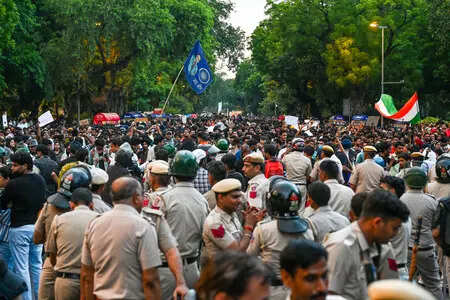
More recently, the 2026 Jantar Mantar education protests highlighted the concerns of students regarding the state of education in the country. The protests brought attention to issues such as the commercialization of education and the need for reforms in the education system.
These five movements demonstrate the power of student activism in shaping India's politics and education. They show how students have been able to drive debates and bring about changes in the country, often through peaceful and democratic means.
The impact of these movements can still be seen today, with many of the issues they raised continuing to be relevant. The movements have also inspired a new generation of students to become involved in activism and to work towards creating positive change in the country.
In conclusion, student movements have played a significant role in shaping India's politics and education. They have driven debates, brought about changes, and inspired a new generation of activists. As the country continues to evolve and face new challenges, it is likely that student movements will remain an important force for change.
The significance of these movements extends beyond the issues they raised, as they have also demonstrated the power of democratic participation and the importance of student activism in shaping the country's future.
Frequently asked questions
What was the 1965 Anti-Hindi Agitation about?
The 1965 Anti-Hindi Agitation was a response to the Indian government's decision to make Hindi the official language.
What were the Anti-Mandal protests about?
The Anti-Mandal protests were a response to the government's decision to implement reservations in education and employment.