
India Celebrates Literacy Day Amidst Educational Challenges
India marks International Literacy Day with a rising literacy rate, but education remains a concern.
'%3E%3Crect%20width%3D'96'%20height%3D'96'%20fill%3D'%23B3261E'%2F%3E%3Ccircle%20cx%3D'30'%20cy%3D'24'%20r%3D'44'%20fill%3D'%23fff'%20opacity%3D'.12'%2F%3E%3Ccircle%20cx%3D'60'%20cy%3D'74'%20r%3D'40'%20fill%3D'%23000'%20opacity%3D'.10'%2F%3E%3C%2Fg%3E%3Cg%20fill%3D'%23fff'%3E%3Crect%20x%3D'29'%20y%3D'49'%20width%3D'8'%20height%3D'19'%20rx%3D'1'%2F%3E%3Crect%20x%3D'39'%20y%3D'40'%20width%3D'9'%20height%3D'28'%20rx%3D'1'%2F%3E%3Crect%20x%3D'50'%20y%3D'45'%20width%3D'8'%20height%3D'23'%20rx%3D'1'%2F%3E%3Crect%20x%3D'60'%20y%3D'53'%20width%3D'7'%20height%3D'15'%20rx%3D'1'%2F%3E%3Crect%20x%3D'41'%20y%3D'34'%20width%3D'5'%20height%3D'6'%2F%3E%3C%2Fg%3E%3C%2Fsvg%3E)
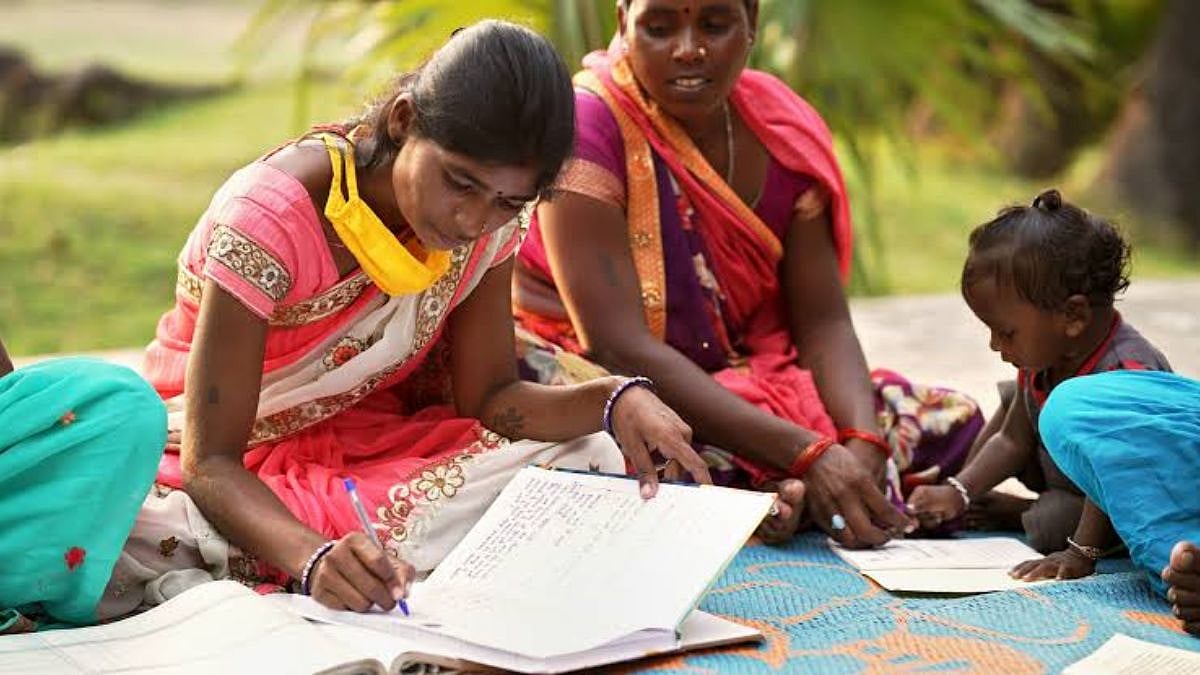
India is celebrating International Literacy Day, but the occasion also raises important questions about the country's educational progress. While a rising literacy rate is a significant social achievement, it is only the first step towards education. Literacy refers to the ability to read, write, and perform basic calculations, but education encompasses a broader range of skills, including understanding, reasoning, and informed decision-making.
The latest Periodic Labour Force Survey data reveals that India's literacy landscape remains uneven. For persons aged seven years and above, literacy rates vary significantly across states. Bihar, Rajasthan, and Telangana have literacy rates of 73.1%, 74%, and 74.6%, respectively, while Kerala and Mizoram have achieved literacy rates of 95.6% and 99.8%, respectively.
These figures highlight the danger of relying on national averages to assess India's educational progress. Educational opportunities are influenced by factors such as geography, poverty, gender, and social conditions, as well as the capacity of state governments to maintain schools and retain teachers. Bihar and Rajasthan, for example, face significant challenges in raising literacy rates among older generations and narrowing the gender gap.
In Maharashtra, the 2011 Census recorded a literacy rate of 82.9%, which is above the national average. However, the state's overall figure conceals considerable regional inequality. Urban literacy rates are significantly higher than rural literacy rates, with a gap of nearly 12 percentage points. Mumbai Suburban has a literacy rate of 90.9%, while tribal-dominated districts such as Nandurbar and Gadchiroli have literacy rates of 63.0% and 70.6%, respectively.
The southern states also exhibit significant variations in literacy rates. Kerala has the highest literacy rate at 93.9%, followed by Tamil Nadu at 80.3%, Karnataka at 75.6%, and Andhra Pradesh at 67.7%. Maharashtra's literacy rate of 82.9% places it ahead of all these states except Kerala.
Punjab and Haryana have literacy rates of 76.7% and 76.6%, respectively, according to the 2011 Census. While these states have made progress in improving literacy rates, there is still a long way to go in achieving universal education.
The celebration of International Literacy Day should serve as a reminder of the unfinished educational agenda in India. While literacy is an essential step towards education, it is only the beginning. The country needs to focus on improving educational outcomes, reducing regional and social disparities, and ensuring that all citizens have access to quality education.
In conclusion, India's celebration of International Literacy Day is a significant occasion, but it should also be a time for reflection and action. The country needs to address the challenges in its educational system and work towards achieving universal education and reducing disparities. Only then can India truly celebrate its progress towards becoming a literate and educated society.
The significance of this issue for India lies in its potential to impact the country's social and economic development. Education is a critical factor in determining a person's ability to participate in society, acquire skills, and make informed decisions. By addressing the challenges in its educational system, India can unlock the potential of its citizens and achieve greater social and economic progress.
Overall, the celebration of International Literacy Day in India is a reminder of the importance of education and the need for continued efforts to improve educational outcomes. While the country has made progress in improving literacy rates, there is still a long way to go in achieving universal education and reducing disparities.
The Indian government and state authorities must work together to address the challenges in the educational system and ensure that all citizens have access to quality education. This can be achieved by increasing investment in education, improving teacher training, and implementing policies that promote social and economic equality.
In the end, the true test of India's educational progress lies not in its literacy rates, but in its ability to provide quality education to all its citizens. By focusing on this goal, India can create a more educated, skilled, and informed society, which is essential for its social and economic development.
The country's progress towards achieving universal education will have a significant impact on its future. It is essential for India to address the challenges in its educational system and work towards creating a more educated and skilled society. Only then can India achieve its full potential and become a major player in the global economy.
The celebration of International Literacy Day is an important occasion for India, but it should also be a time for reflection and action. The country needs to address the challenges in its educational system and work towards achieving universal education and reducing disparities. By doing so, India can unlock the potential of its citizens and achieve greater social and economic progress.
In the years to come, India's educational progress will be critical in determining its social and economic development. The country needs to focus on improving educational outcomes, reducing regional and social disparities, and ensuring that all citizens have access to quality education. Only then can India truly celebrate its progress towards becoming a literate and educated society.
The significance of education in India cannot be overstated. It is essential for the country's social and economic development, and it is critical for creating a more educated, skilled, and informed society. By addressing the challenges in its educational system, India can achieve greater social and economic progress and become a major player in the global economy.
In conclusion, the celebration of International Literacy Day in India is a significant occasion, but it should also be a time for reflection and action. The country needs to address the challenges in its educational system and work towards achieving universal education and reducing disparities. By doing so, India can unlock the potential of its citizens and achieve greater social and economic progress.
What it means for Mumbai and India is that there is a need for continued efforts to improve educational outcomes and reduce disparities. The city and the country need to focus on providing quality education to all citizens, regardless of their background or location. By doing so, Mumbai and India can achieve greater social and economic progress and become more educated, skilled, and informed societies.
The final thought is that India's educational progress is critical for its social and economic development. The country needs to address the challenges in its educational system and work towards achieving universal education and reducing disparities. By doing so, India can unlock the potential of its citizens and achieve greater social and economic progress.
Frequently asked questions
What is the significance of International Literacy Day in India?
International Literacy Day is a reminder of the importance of education and the need for continued efforts to improve educational outcomes in India.
What are the challenges in India's educational system?
The challenges in India's educational system include regional and social disparities, lack of access to quality education, and inadequate teacher training.