SAD Backs Delimitation And Women's Reservation Bill
Shiromani Akali Dal supports key bills after Sukhbir Badal meets PM Modi. Party demands immediate implementation of Women's Reservation Bill.
'%3E%3Crect%20width%3D'96'%20height%3D'96'%20fill%3D'%231A5276'%2F%3E%3Ccircle%20cx%3D'30'%20cy%3D'24'%20r%3D'44'%20fill%3D'%23fff'%20opacity%3D'.12'%2F%3E%3Ccircle%20cx%3D'60'%20cy%3D'74'%20r%3D'40'%20fill%3D'%23000'%20opacity%3D'.10'%2F%3E%3C%2Fg%3E%3Cg%20fill%3D'%23fff'%3E%3Cpath%20d%3D'M31%2041%20L48%2031%20L65%2041%20Z'%2F%3E%3Crect%20x%3D'33'%20y%3D'43'%20width%3D'4'%20height%3D'17'%2F%3E%3Crect%20x%3D'41'%20y%3D'43'%20width%3D'4'%20height%3D'17'%2F%3E%3Crect%20x%3D'51'%20y%3D'43'%20width%3D'4'%20height%3D'17'%2F%3E%3Crect%20x%3D'59'%20y%3D'43'%20width%3D'4'%20height%3D'17'%2F%3E%3Crect%20x%3D'30'%20y%3D'62'%20width%3D'36'%20height%3D'4'%20rx%3D'1'%2F%3E%3C%2Fg%3E%3C%2Fsvg%3E)
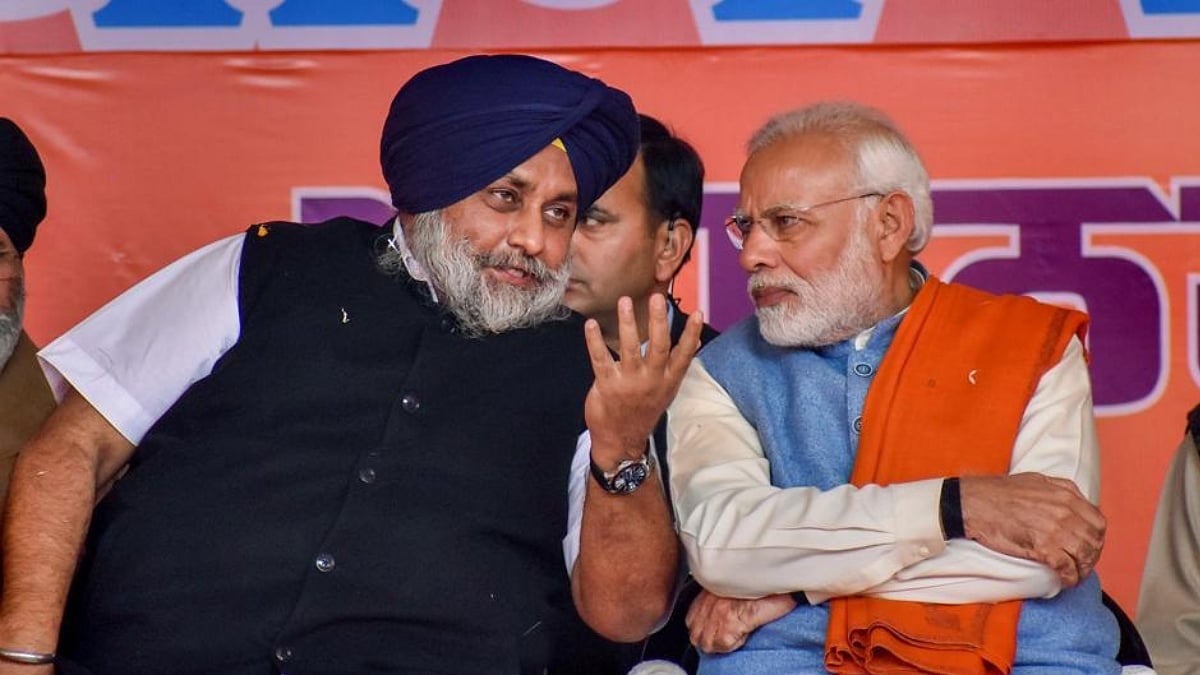
The Shiromani Akali Dal (SAD) has announced its support for the Delimitation Bill and the Women's Reservation Bill. This development comes after party chief Sukhbir Badal met with Prime Minister Narendra Modi on Friday.
The SAD's decision to back these bills marks a significant shift in the party's stance, as it had previously opposed the Delimitation Bill when it was first introduced in Parliament in April. At the time, the party had described the bill as discriminatory towards Punjab, citing that the state would only see a marginal increase in seats while neighboring states would gain more.
However, after meeting with PM Modi, the SAD has now expressed its support for the bill, with Badal stating that the party demands a fair and equitable delimitation that ensures equal representation to all states. The party has also emphasized the need for a uniform increase of 50% of seats for all states.
In addition to its support for the Delimitation Bill, the SAD has also demanded the immediate implementation of the Women's Reservation Bill. Badal stated that the party draws inspiration from the teachings of the Sikh Gurus, who championed the dignity, equality, and equal rights of women. The Shiromani Gurdwara Parbandhak Committee has already set an example by providing for women's reservation in its House.
The SAD's support for these bills has intensified speculation about the party's potential return to the National Democratic Alliance (NDA) ahead of the Punjab Assembly elections in 2027. Badal's meeting with PM Modi and Haryana Chief Minister Nayab Singh Saini has triggered buzz about a possible alliance between the two parties.
The Punjab Assembly elections are scheduled to take place in less than a year, and the SAD's decision to support the Delimitation and Women's Reservation Bills may have significant implications for the party's electoral prospects. As the party navigates its relationships with other political parties, its support for these key bills is likely to be closely watched by voters and political analysts alike.
The SAD's shift in stance on the Delimitation Bill may also have implications for the party's relationships with other opposition parties. The party's decision to back the bill may be seen as a betrayal by some of its former allies, who had opposed the bill alongside the SAD.
In the coming months, the SAD will likely face scrutiny over its decision to support the Delimitation and Women's Reservation Bills. As the party prepares for the Punjab Assembly elections, its ability to navigate the complexities of coalition politics and build alliances with other parties will be crucial to its success.
The SAD's support for the Delimitation and Women's Reservation Bills marks a significant development in Indian politics, with potential implications for the party's electoral prospects and its relationships with other political parties. As the party moves forward, its decisions will be closely watched by voters and political analysts alike.
In conclusion, the SAD's decision to support the Delimitation and Women's Reservation Bills is a significant shift in the party's stance, with potential implications for the party's electoral prospects and its relationships with other political parties. The party's ability to navigate the complexities of coalition politics and build alliances with other parties will be crucial to its success in the coming months.
Frequently asked questions
Why did the SAD change its stance on the Delimitation Bill?
The SAD changed its stance on the Delimitation Bill after party chief Sukhbir Badal met with PM Modi, and the party now demands a fair and equitable delimitation that ensures equal representation to all states.
What is the significance of the SAD's support for the Women's Reservation Bill?
The SAD's support for the Women's Reservation Bill is significant because it marks a shift in the party's stance and demonstrates its commitment to the principles of equality and equal rights for women.