Manjara Reservoir Water Levels Drop to 16%
Water crisis looms for Latur, Ambajogai and 28 villages
'%3E%3Crect%20width%3D'96'%20height%3D'96'%20fill%3D'%23B3261E'%2F%3E%3Ccircle%20cx%3D'30'%20cy%3D'24'%20r%3D'44'%20fill%3D'%23fff'%20opacity%3D'.12'%2F%3E%3Ccircle%20cx%3D'60'%20cy%3D'74'%20r%3D'40'%20fill%3D'%23000'%20opacity%3D'.10'%2F%3E%3C%2Fg%3E%3Cg%20fill%3D'%23fff'%3E%3Crect%20x%3D'29'%20y%3D'49'%20width%3D'8'%20height%3D'19'%20rx%3D'1'%2F%3E%3Crect%20x%3D'39'%20y%3D'40'%20width%3D'9'%20height%3D'28'%20rx%3D'1'%2F%3E%3Crect%20x%3D'50'%20y%3D'45'%20width%3D'8'%20height%3D'23'%20rx%3D'1'%2F%3E%3Crect%20x%3D'60'%20y%3D'53'%20width%3D'7'%20height%3D'15'%20rx%3D'1'%2F%3E%3Crect%20x%3D'41'%20y%3D'34'%20width%3D'5'%20height%3D'6'%2F%3E%3C%2Fg%3E%3C%2Fsvg%3E)
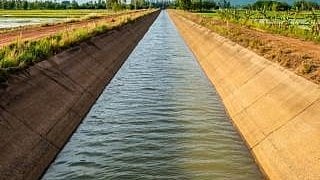
The Manjara reservoir, which supplies drinking water to Ambajogai, Latur, and 28 surrounding villages, has only 16% of its live storage capacity left. This is due to poor rainfall in the reservoir's catchment area during the core monsoon months.
The reservoir requires 224.093 million cubic metres of water to reach full capacity, but it currently holds only 75.905 million cubic metres, leaving nearly 84% of its storage capacity unfilled.
Residents across Beed, Latur, and Dharashiv districts are anxiously watching the weather, hoping for improved inflows. The Manjara Dam was constructed in 1980 primarily to provide irrigation for farmers, but it has become the principal source of drinking water for the region.
As a result, irrigation releases have taken a back seat, leaving local farmers struggling with inadequate water for agriculture. With the major monsoon spell virtually over, hopes now rest on the retreating monsoon to revive the reservoir.
Farmers from nearly 70 villages have invested heavily in laying pipelines from the dam for irrigation and now fear their investments may prove futile if water levels do not improve. The fate of both agriculture and drinking water supply in the region depends largely on the rainfall expected during the retreating monsoon.
The region's water crisis is likely to worsen if the current situation continues, with drinking water supply schemes dependent on the reservoir facing severe stress in the coming months.
In the past 47 years, the reservoir has reached full capacity only 17 times, due to the nature of its catchment area. The reservoir's water levels have remained alarmingly low despite June and July being the peak months of the southwest monsoon.
The water crisis in the region is a major concern, with residents and farmers waiting anxiously for the rains to come. The situation is being closely monitored by the authorities, who are hoping for a miracle to ease the water shortage.
The Manjara reservoir's water levels are a major indicator of the region's water security, and the current situation is a cause for concern. The region's economy, which is heavily dependent on agriculture, is likely to be affected if the water crisis worsens.
In conclusion, the water crisis in the region is a major issue that needs to be addressed urgently. The authorities must take immediate action to mitigate the effects of the water shortage and ensure that the region's water security is maintained.
Frequently asked questions
What is the current water level in the Manjara reservoir?
The Manjara reservoir has only 16% of its live storage capacity left.
How many villages are affected by the water crisis?
28 villages are affected by the water crisis, including Ambajogai and Latur.