Youth Embrace Digital Detox for Better Mental Health
Young adults reduce screen time, improve well-being. Experts stress mindful tech use.
'%3E%3Crect%20width%3D'96'%20height%3D'96'%20fill%3D'%23B3261E'%2F%3E%3Ccircle%20cx%3D'30'%20cy%3D'24'%20r%3D'44'%20fill%3D'%23fff'%20opacity%3D'.12'%2F%3E%3Ccircle%20cx%3D'60'%20cy%3D'74'%20r%3D'40'%20fill%3D'%23000'%20opacity%3D'.10'%2F%3E%3C%2Fg%3E%3Cg%20fill%3D'%23fff'%3E%3Crect%20x%3D'29'%20y%3D'49'%20width%3D'8'%20height%3D'19'%20rx%3D'1'%2F%3E%3Crect%20x%3D'39'%20y%3D'40'%20width%3D'9'%20height%3D'28'%20rx%3D'1'%2F%3E%3Crect%20x%3D'50'%20y%3D'45'%20width%3D'8'%20height%3D'23'%20rx%3D'1'%2F%3E%3Crect%20x%3D'60'%20y%3D'53'%20width%3D'7'%20height%3D'15'%20rx%3D'1'%2F%3E%3Crect%20x%3D'41'%20y%3D'34'%20width%3D'5'%20height%3D'6'%2F%3E%3C%2Fg%3E%3C%2Fsvg%3E)
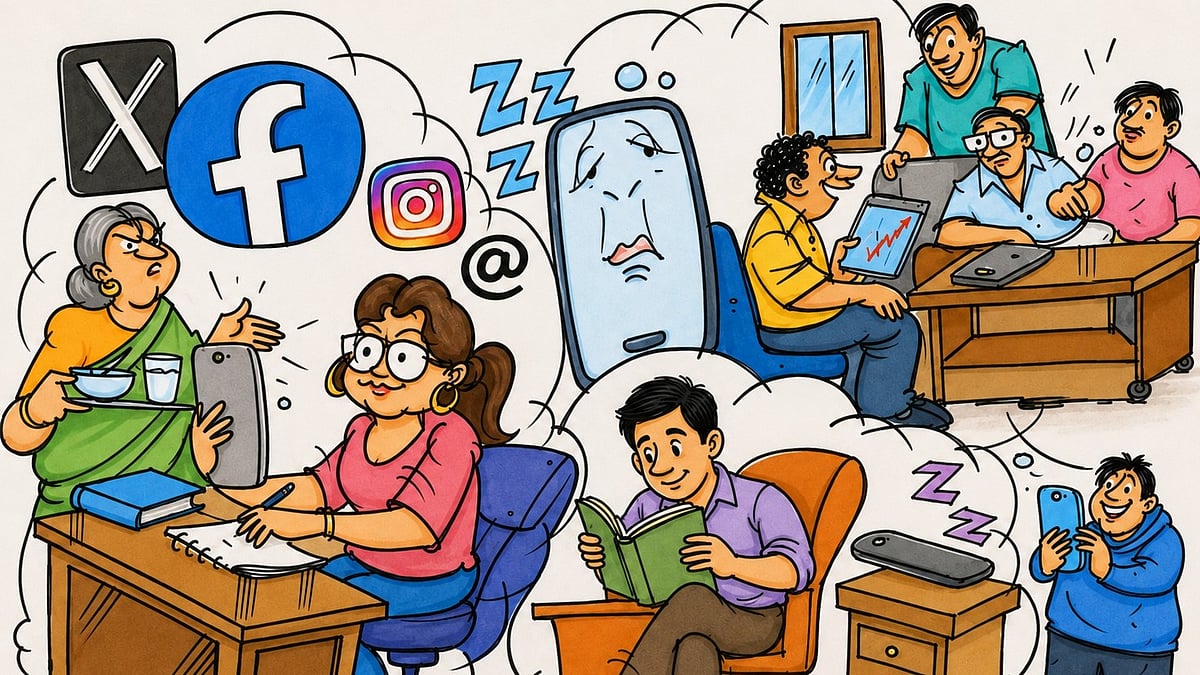
Young adults in Indore, Madhya Pradesh, are increasingly adopting digital detox practices to reduce their screen dependency and improve their mental well-being.
This trend is driven by the desire to restore a healthy work-life balance and minimize the negative effects of excessive screen time. A digital detox involves taking a break from electronic devices such as smartphones, computers, and social media to reduce stress and curb compulsive screen use.
According to psychologist and entrepreneur Tanuj Suthar, digital detox should not be seen as a complete escape from technology, but rather as a way to reduce intentional screen use. He emphasizes that excessive screen time can affect sleep, relationships, and socio-occupational functioning.
Suthar suggests building physical boundaries and replacing screen time with healthier alternatives as the primary goal. This approach is supported by several young adults who have experienced positive outcomes from limiting their screen time.
Shreshth Rajpurohit, a psychology student, reported improved concentration and stronger real-life relationships after limiting his screen time for a month. Similarly, data analyst Tarun Eppa found that uninstalling Instagram helped him sleep better, stay focused, and achieve a healthier work-life balance.
Vatsal Pandya, founder of ForeignForYou, switched from a smartphone to a keypad phone and noticed improved focus and mental clarity. Equity analyst Kartik Kothari replaced screen time with reading, exercise, and hobbies, resulting in feeling calmer and more productive.
Experts and participants agree that digital detox is not about abandoning technology, but about developing healthier and more intentional screen habits. By being mindful of their technology use, young adults can reduce their screen dependency and improve their overall well-being.
The benefits of digital detox are numerous, and it is essential for young adults to be aware of the potential risks associated with excessive screen time. By adopting healthier screen habits, they can improve their mental health, relationships, and productivity.
In conclusion, the trend of digital detox among young adults is a positive step towards promoting healthier technology use and improving mental well-being. As experts continue to stress the importance of mindful screen habits, it is likely that more young adults will adopt digital detox practices to achieve a better balance in their lives.
The awareness of digital detox and its benefits is crucial in today's digital age, where technology is an integral part of daily life. By promoting healthier screen habits, we can work towards creating a healthier and more balanced society.
Overall, the adoption of digital detox practices among young adults is a significant step towards improving mental health and well-being. It is essential to continue promoting awareness and education about the importance of mindful technology use to ensure a healthier and more balanced future for all.
Frequently asked questions
What is digital detox?
Digital detox is the practice of taking an intentional break from electronic devices to reduce stress and improve mental well-being.
How can digital detox improve mental health?
Digital detox can improve mental health by reducing screen dependency, improving sleep, and strengthening real-life relationships.