AI Pioneer Agrees with Elon Musk on Mass Unemployment
Geoffrey Hinton warns of job losses, Senator Bernie Sanders estimates 100 million US jobs at risk
'%3E%3Crect%20width%3D'96'%20height%3D'96'%20fill%3D'%234A235A'%2F%3E%3Ccircle%20cx%3D'30'%20cy%3D'24'%20r%3D'44'%20fill%3D'%23fff'%20opacity%3D'.12'%2F%3E%3Ccircle%20cx%3D'60'%20cy%3D'74'%20r%3D'40'%20fill%3D'%23000'%20opacity%3D'.10'%2F%3E%3C%2Fg%3E%3Cg%20fill%3D'none'%20stroke%3D'%23fff'%20stroke-width%3D'3'%3E%3Ccircle%20cx%3D'48'%20cy%3D'48'%20r%3D'16'%2F%3E%3Cellipse%20cx%3D'48'%20cy%3D'48'%20rx%3D'6.5'%20ry%3D'16'%2F%3E%3Cline%20x1%3D'32'%20y1%3D'42'%20x2%3D'64'%20y2%3D'42'%2F%3E%3Cline%20x1%3D'32'%20y1%3D'54'%20x2%3D'64'%20y2%3D'54'%2F%3E%3C%2Fg%3E%3C%2Fsvg%3E)
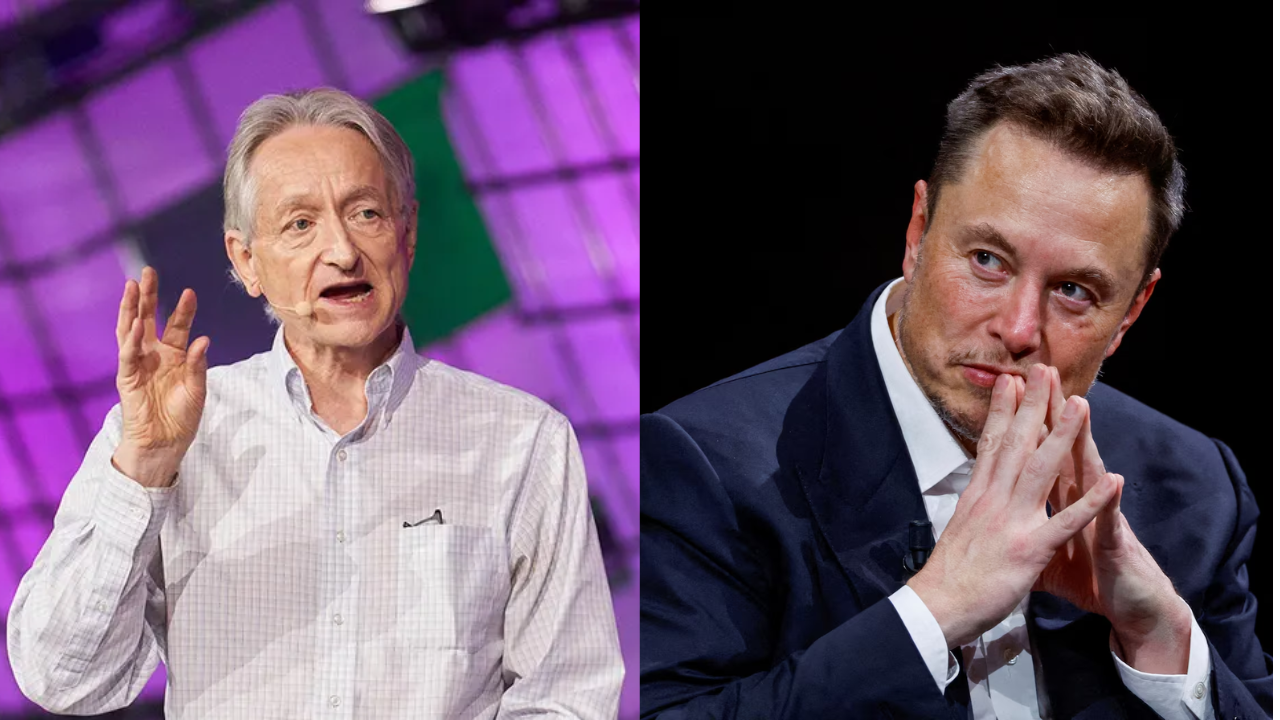
Geoffrey Hinton, a Nobel laureate and pioneer in the field of artificial intelligence, has expressed his agreement with Elon Musk's prediction that AI will lead to widespread job losses. Speaking at Georgetown University, Hinton stated that the significant investments being made by Big Tech companies in data centres will ultimately result in the replacement of human workers with cheaper automated alternatives.
Hinton's comments were made during a conversation with Senator Bernie Sanders, who has also been vocal about the potential risks associated with automation. According to Sanders, nearly 100 million jobs in the US are at risk of being automated, which could have severe consequences for the economy and society as a whole.
The warnings from Hinton and Sanders are based on the rapid advancements being made in AI technology, which is increasingly capable of performing tasks that were previously the exclusive domain of human workers. As AI systems become more sophisticated, they are likely to displace workers in a wide range of industries, from manufacturing and transportation to customer service and healthcare.
The potential consequences of widespread automation are far-reaching and could have a significant impact on the global economy. With millions of workers potentially facing unemployment, there are concerns about the social and economic implications of such a scenario. Governments and businesses may need to consider implementing policies and programs to mitigate the effects of automation and ensure that workers who lose their jobs are able to access training and education to acquire new skills.
Hinton's comments are particularly significant given his status as a leading expert in the field of AI. His warnings about the potential risks associated with automation serve as a reminder that the development of AI is a complex issue that requires careful consideration and planning.
In recent years, there has been a growing debate about the potential impact of automation on the workforce. While some argue that automation will lead to increased productivity and efficiency, others warn that it could result in significant job losses and social unrest. The comments from Hinton and Sanders add to this debate and highlight the need for a nuanced and informed discussion about the potential consequences of automation.
As the use of AI continues to grow and expand into new areas, it is likely that the debate about its potential impact on the workforce will continue to evolve. With experts like Hinton and Sanders sounding the alarm about the potential risks associated with automation, it is essential that governments, businesses, and individuals begin to think critically about the potential consequences of AI and take steps to mitigate its negative effects.
The agreement between Hinton and Musk on the potential risks associated with automation serves as a reminder that this is an issue that transcends partisan politics and requires a collective response. As the world continues to grapple with the implications of AI, it is essential that we prioritize a nuanced and informed discussion about its potential consequences and work towards finding solutions that benefit everyone.
In conclusion, the warnings from Hinton and Sanders about the potential risks associated with automation are a timely reminder of the need for careful consideration and planning as we continue to develop and deploy AI systems. With the potential for widespread job losses and social unrest, it is essential that we prioritize a nuanced and informed discussion about the potential consequences of AI and work towards finding solutions that benefit everyone.
Frequently asked questions
How many US jobs are at risk of automation?
According to Senator Bernie Sanders, nearly 100 million US jobs face automation risk.
What is the main reason for Big Tech's data centre spending?
The main reason is to replace workers with cheaper automated alternatives, according to Geoffrey Hinton.