Rising CO₂ Threatens World's Largest Bees
Larger bee species decline, smaller bees thrive, pollination at risk
'%3E%3Crect%20width%3D'96'%20height%3D'96'%20fill%3D'%23B3261E'%2F%3E%3Ccircle%20cx%3D'30'%20cy%3D'24'%20r%3D'44'%20fill%3D'%23fff'%20opacity%3D'.12'%2F%3E%3Ccircle%20cx%3D'60'%20cy%3D'74'%20r%3D'40'%20fill%3D'%23000'%20opacity%3D'.10'%2F%3E%3C%2Fg%3E%3Cg%20fill%3D'%23fff'%3E%3Crect%20x%3D'29'%20y%3D'49'%20width%3D'8'%20height%3D'19'%20rx%3D'1'%2F%3E%3Crect%20x%3D'39'%20y%3D'40'%20width%3D'9'%20height%3D'28'%20rx%3D'1'%2F%3E%3Crect%20x%3D'50'%20y%3D'45'%20width%3D'8'%20height%3D'23'%20rx%3D'1'%2F%3E%3Crect%20x%3D'60'%20y%3D'53'%20width%3D'7'%20height%3D'15'%20rx%3D'1'%2F%3E%3Crect%20x%3D'41'%20y%3D'34'%20width%3D'5'%20height%3D'6'%2F%3E%3C%2Fg%3E%3C%2Fsvg%3E)
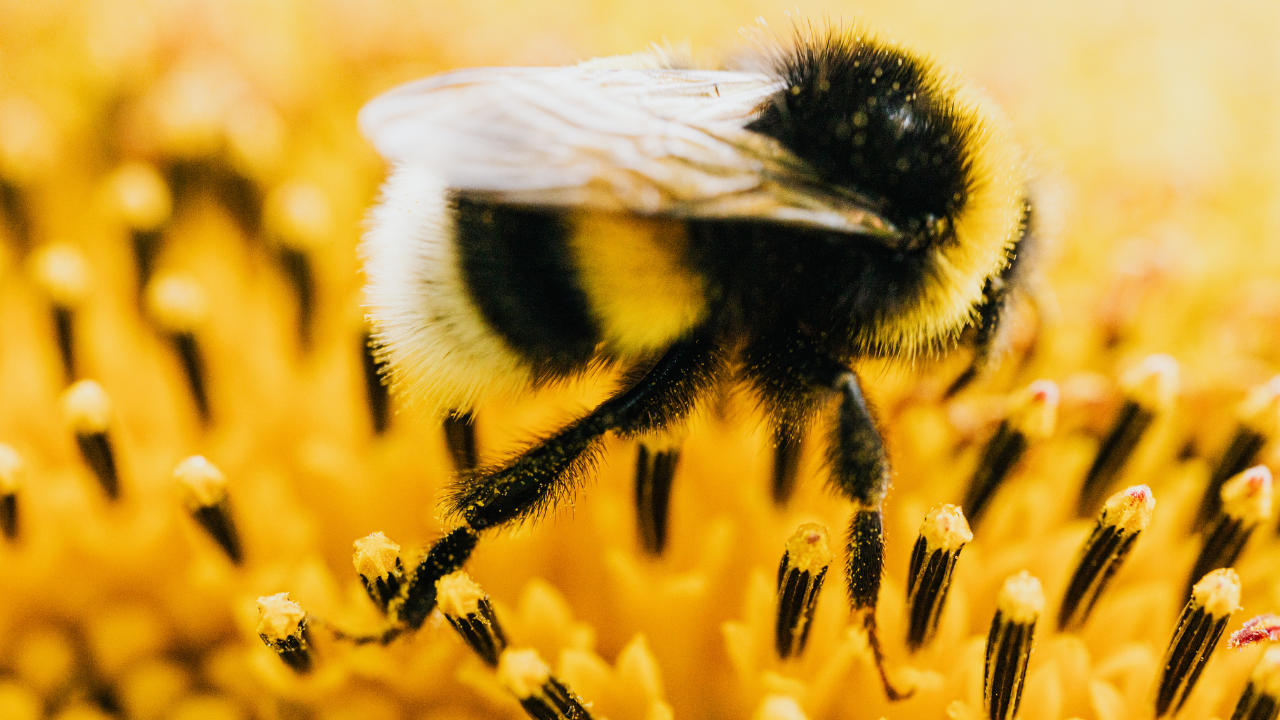
Scientists have discovered a new threat to global pollinators: increasing atmospheric carbon dioxide levels. The world's largest bees are becoming less abundant and genetically diverse due to rising CO₂ emissions. This shift favors smaller-bodied pollinators, which could impact crucial pollination services.
The main reason for this decline is the nutritional changes in plants caused by rising CO₂ levels. As CO₂ increases, plants produce more carbohydrates but less protein, making it harder for large bees to meet their energy demands. Large bees require more energy to fly and survive, and the lack of protein in plants hinders their ability to thrive.
The decline of large bee species is a concern for pollination services, as these bees play a crucial role in pollinating many plant species. Smaller bees, on the other hand, are better adapted to the changing plant nutrition and are thriving in this new environment. However, smaller bees may not be able to provide the same level of pollination services as larger bees, which could have significant impacts on ecosystems and food production.
The study highlights the importance of addressing rising carbon dioxide emissions to protect these vital pollinators. Reducing CO₂ emissions could help to mitigate the decline of large bee species and preserve the genetic diversity of these important pollinators.
Pollinators, including bees, are essential for the reproduction of many plant species and are a crucial part of ecosystems. Without pollinators, many plants would be unable to reproduce, and food production would be severely impacted. The decline of pollinators is a global concern, and addressing the causes of this decline is essential for preserving ecosystems and food security.
In recent years, there has been a growing concern about the decline of pollinators, and the impact of rising CO₂ emissions is a new and significant threat. The study provides important insights into the impacts of climate change on pollinators and highlights the need for urgent action to address this issue.
The protection of pollinators requires a multi-faceted approach, including reducing CO₂ emissions, preserving natural habitats, and promoting sustainable agriculture practices. By addressing the causes of pollinator decline, we can help to preserve these vital species and ensure the long-term health of ecosystems and food production.
In conclusion, the decline of the world's largest bees due to rising CO₂ emissions is a significant concern, and addressing this issue is essential for preserving pollination services and ecosystems. By reducing CO₂ emissions and promoting sustainable practices, we can help to protect these vital pollinators and ensure the long-term health of our planet.
Frequently asked questions
How do rising CO₂ levels affect large bees?
Rising CO₂ levels make it harder for large bees to meet their energy demands due to nutritional changes in plants.
Why are large bees important for pollination?
Large bees play a crucial role in pollinating many plant species and are essential for ecosystems and food production.