Mumbai Police Denies Hunger Strike Permission
Maratha quota activist's hunger strike denied, security concerns cited
'%3E%3Crect%20width%3D'96'%20height%3D'96'%20fill%3D'%23B3261E'%2F%3E%3Ccircle%20cx%3D'30'%20cy%3D'24'%20r%3D'44'%20fill%3D'%23fff'%20opacity%3D'.12'%2F%3E%3Ccircle%20cx%3D'60'%20cy%3D'74'%20r%3D'40'%20fill%3D'%23000'%20opacity%3D'.10'%2F%3E%3C%2Fg%3E%3Cg%20fill%3D'%23fff'%3E%3Crect%20x%3D'29'%20y%3D'49'%20width%3D'8'%20height%3D'19'%20rx%3D'1'%2F%3E%3Crect%20x%3D'39'%20y%3D'40'%20width%3D'9'%20height%3D'28'%20rx%3D'1'%2F%3E%3Crect%20x%3D'50'%20y%3D'45'%20width%3D'8'%20height%3D'23'%20rx%3D'1'%2F%3E%3Crect%20x%3D'60'%20y%3D'53'%20width%3D'7'%20height%3D'15'%20rx%3D'1'%2F%3E%3Crect%20x%3D'41'%20y%3D'34'%20width%3D'5'%20height%3D'6'%2F%3E%3C%2Fg%3E%3C%2Fsvg%3E)

Mumbai police have denied permission to Maratha quota activist Manoj Jarange-Patil to hold an indefinite hunger strike at Azad Maidan. The decision was made on Sunday, citing potential security concerns during the ongoing Ganeshotsav celebrations.
The hunger strike was scheduled to start on September 19, following a march into the city. However, the police have rejected the request, citing the need to maintain law and order during the festivities.
Manoj Jarange-Patil has been a prominent figure in the Maratha quota movement, which has been demanding reservations for the Maratha community in education and employment. The movement has seen several protests and demonstrations in the past, with activists often clashing with the police.
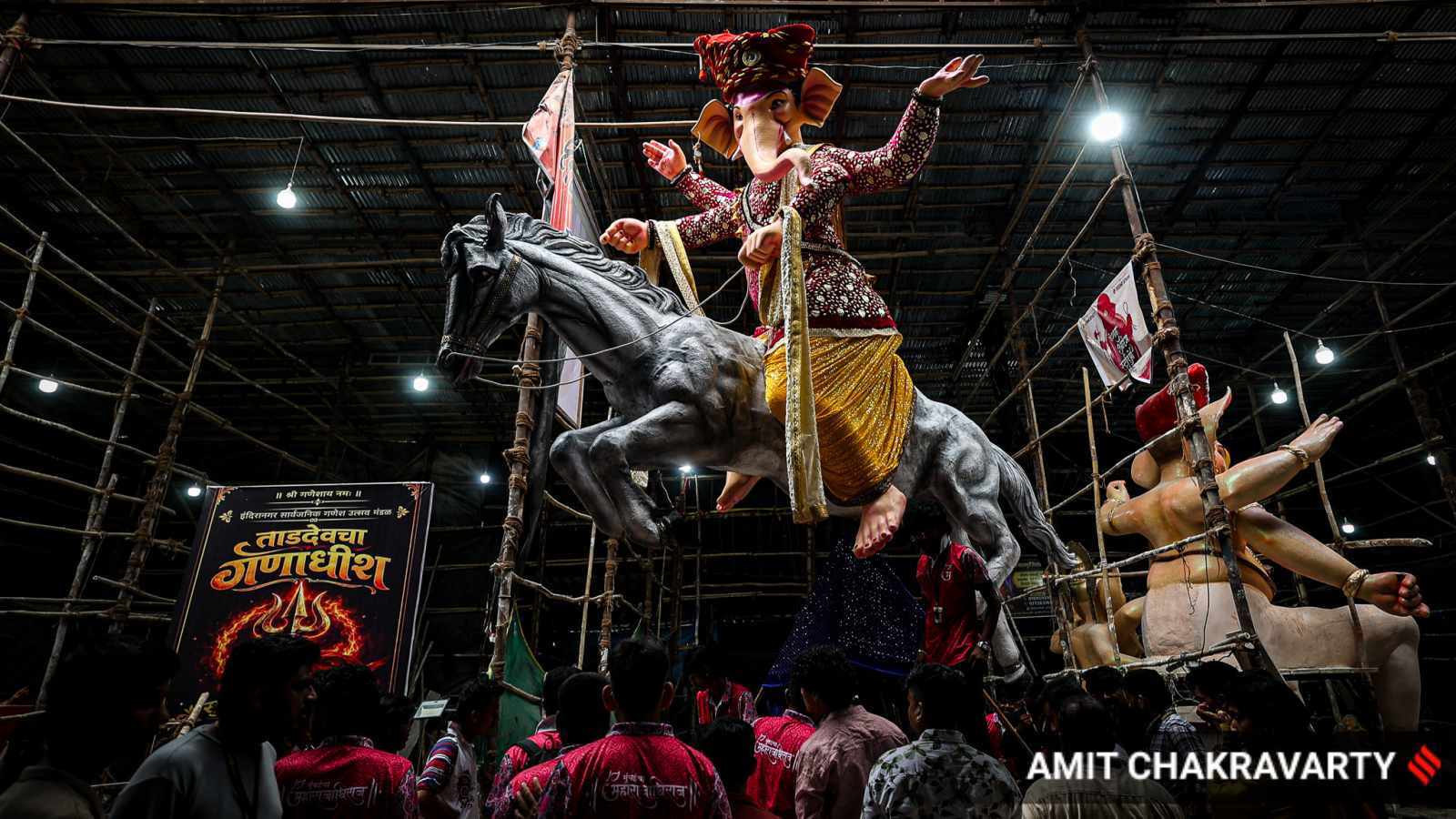
The Ganeshotsav celebrations, which are currently underway in Mumbai, are a significant event in the city's cultural calendar. The police are on high alert during this period, with thousands of devotees gathering to celebrate the festival.
The denial of permission for the hunger strike is likely to be seen as a precautionary measure by the police to avoid any potential disruptions to the celebrations. The police have a responsibility to maintain law and order, and any large gathering can pose a security risk.
The Maratha quota movement has been a contentious issue in Maharashtra, with the state government facing pressure to provide reservations to the community. The movement has seen several protests and demonstrations, with activists often using hunger strikes and other forms of agitation to draw attention to their demands.
In the past, the police have often been criticized for their handling of protests and demonstrations in Mumbai. The city has a long history of protests and demonstrations, and the police have a delicate balance to strike between allowing citizens to exercise their right to free speech and maintaining law and order.
The decision to deny permission for the hunger strike is likely to be seen as a pragmatic move by the police, given the potential security risks associated with large gatherings during the Ganeshotsav celebrations. However, it may also be seen as a restriction on the right to free speech and assembly, which is a fundamental right in a democratic society.
The Maratha quota movement is likely to continue to be a significant issue in Maharashtra, with activists pushing for reservations and the state government facing pressure to respond to their demands. The denial of permission for the hunger strike is just one episode in a long-running saga, and it remains to be seen how the movement will unfold in the coming days and weeks.
In conclusion, the denial of permission for the hunger strike is a significant development in the Maratha quota movement, and it highlights the challenges faced by the police in maintaining law and order during large gatherings. The movement is likely to continue to be a major issue in Maharashtra, and it will be interesting to see how it unfolds in the coming days and weeks.
Frequently asked questions
Why was the hunger strike permission denied?
The police denied permission due to potential security concerns during the ongoing Ganeshotsav celebrations.
Who is Manoj Jarange-Patil?
Manoj Jarange-Patil is a Maratha quota activist who has been demanding reservations for the Maratha community in education and employment.