Saudi-Pak-Turkey Sign Mecca Defence Deal
Saudi Arabia, Pakistan, and Turkey form alliance. What does it mean for India?
'%3E%3Crect%20width%3D'96'%20height%3D'96'%20fill%3D'%234A235A'%2F%3E%3Ccircle%20cx%3D'30'%20cy%3D'24'%20r%3D'44'%20fill%3D'%23fff'%20opacity%3D'.12'%2F%3E%3Ccircle%20cx%3D'60'%20cy%3D'74'%20r%3D'40'%20fill%3D'%23000'%20opacity%3D'.10'%2F%3E%3C%2Fg%3E%3Cg%20fill%3D'none'%20stroke%3D'%23fff'%20stroke-width%3D'3'%3E%3Ccircle%20cx%3D'48'%20cy%3D'48'%20r%3D'16'%2F%3E%3Cellipse%20cx%3D'48'%20cy%3D'48'%20rx%3D'6.5'%20ry%3D'16'%2F%3E%3Cline%20x1%3D'32'%20y1%3D'42'%20x2%3D'64'%20y2%3D'42'%2F%3E%3Cline%20x1%3D'32'%20y1%3D'54'%20x2%3D'64'%20y2%3D'54'%2F%3E%3C%2Fg%3E%3C%2Fsvg%3E)
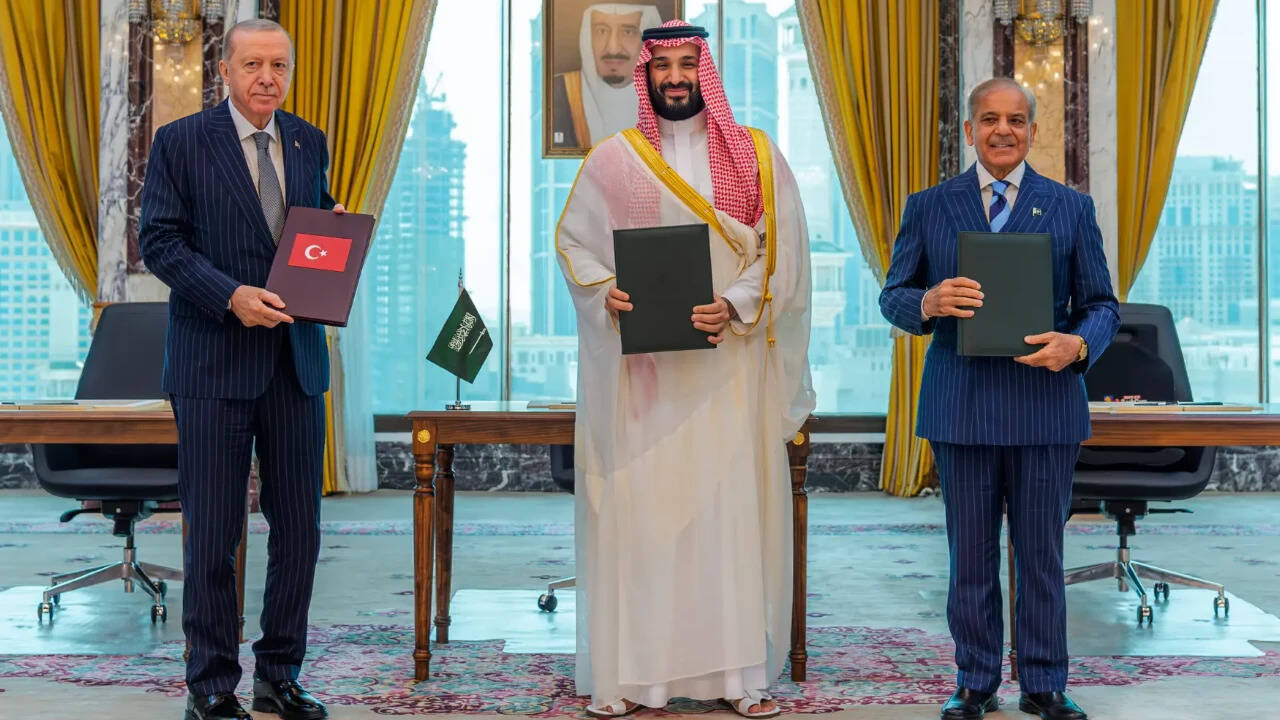
Saudi Arabia, Pakistan, and Turkey have signed a defence deal to protect the holy city of Mecca. This agreement comes at a time when Saudi Arabia is facing a challenging regional security environment, with ongoing conflicts involving Iran, Israel, and the United States. The country has traditionally relied on the United States for security, but recent regional crises have led to a shift in focus towards developing additional security partnerships and greater regional burden-sharing.
The deal is seen as a significant development in the region, with potential implications for India's future military operations. The partnership between Saudi Arabia, Pakistan, and Turkey is likely to have a bearing on the regional balance of power, and India will need to carefully consider its own security interests in the face of this new alliance.
Saudi Arabia has been facing threats from Iran-aligned groups, and there are continuing concerns over the safety of energy infrastructure and maritime routes. The country has been seeking to diversify its security partnerships, and the deal with Pakistan and Turkey is a significant step in this direction.
The agreement is also seen as a reflection of the growing importance of regional security partnerships in the Gulf. The United States has traditionally been the dominant security player in the region, but recent events have led to a re-evaluation of this role. The deal between Saudi Arabia, Pakistan, and Turkey is likely to be seen as a challenge to US influence in the region.
For India, the implications of this deal are significant. The country has traditionally enjoyed good relations with Saudi Arabia, but the new alliance may complicate these ties. India will need to carefully consider its own security interests in the region, and how it can navigate the changing regional dynamics.
The deal is also likely to have implications for India's relations with Pakistan. The two countries have a long-standing rivalry, and the new alliance may exacerbate tensions between them. India will need to be cautious in its dealings with Pakistan, and ensure that its own security interests are protected.
In conclusion, the Saudi-Pak-Turkey defence deal is a significant development in the region, with potential implications for India's future military operations. India will need to carefully consider its own security interests, and navigate the changing regional dynamics with caution.
The regional security environment is complex and challenging, with multiple players and interests at stake. India will need to be aware of these dynamics, and ensure that its own security interests are protected. The deal between Saudi Arabia, Pakistan, and Turkey is a significant step in the evolving regional security landscape, and India will need to be prepared to respond to these changes.
As the regional security environment continues to evolve, India will need to be vigilant and proactive in protecting its own interests. The Saudi-Pak-Turkey defence deal is a significant development, and India will need to carefully consider its implications for the region and for its own security interests.
In the coming months and years, the regional security landscape is likely to continue to evolve and change. India will need to be prepared to respond to these changes, and to protect its own security interests in the face of shifting regional dynamics. The Saudi-Pak-Turkey defence deal is a significant step in this direction, and India will need to be aware of its implications and to navigate the changing regional landscape with caution.
Frequently asked questions
What is the significance of the Saudi-Pak-Turkey defence deal?
The deal is a significant development in the region, with potential implications for India's future military operations and the regional balance of power.
How will the deal affect India's relations with Saudi Arabia and Pakistan?
The deal may complicate India's ties with Saudi Arabia and exacerbate tensions with Pakistan, requiring India to carefully consider its own security interests and navigate the changing regional dynamics with caution.