Centre Works On CBSE Three-Language Policy Implementation
Centre informs Supreme Court of implementation plan, court seeks details.
'%3E%3Crect%20width%3D'96'%20height%3D'96'%20fill%3D'%23B3261E'%2F%3E%3Ccircle%20cx%3D'30'%20cy%3D'24'%20r%3D'44'%20fill%3D'%23fff'%20opacity%3D'.12'%2F%3E%3Ccircle%20cx%3D'60'%20cy%3D'74'%20r%3D'40'%20fill%3D'%23000'%20opacity%3D'.10'%2F%3E%3C%2Fg%3E%3Cg%20fill%3D'%23fff'%3E%3Crect%20x%3D'29'%20y%3D'49'%20width%3D'8'%20height%3D'19'%20rx%3D'1'%2F%3E%3Crect%20x%3D'39'%20y%3D'40'%20width%3D'9'%20height%3D'28'%20rx%3D'1'%2F%3E%3Crect%20x%3D'50'%20y%3D'45'%20width%3D'8'%20height%3D'23'%20rx%3D'1'%2F%3E%3Crect%20x%3D'60'%20y%3D'53'%20width%3D'7'%20height%3D'15'%20rx%3D'1'%2F%3E%3Crect%20x%3D'41'%20y%3D'34'%20width%3D'5'%20height%3D'6'%2F%3E%3C%2Fg%3E%3C%2Fsvg%3E)
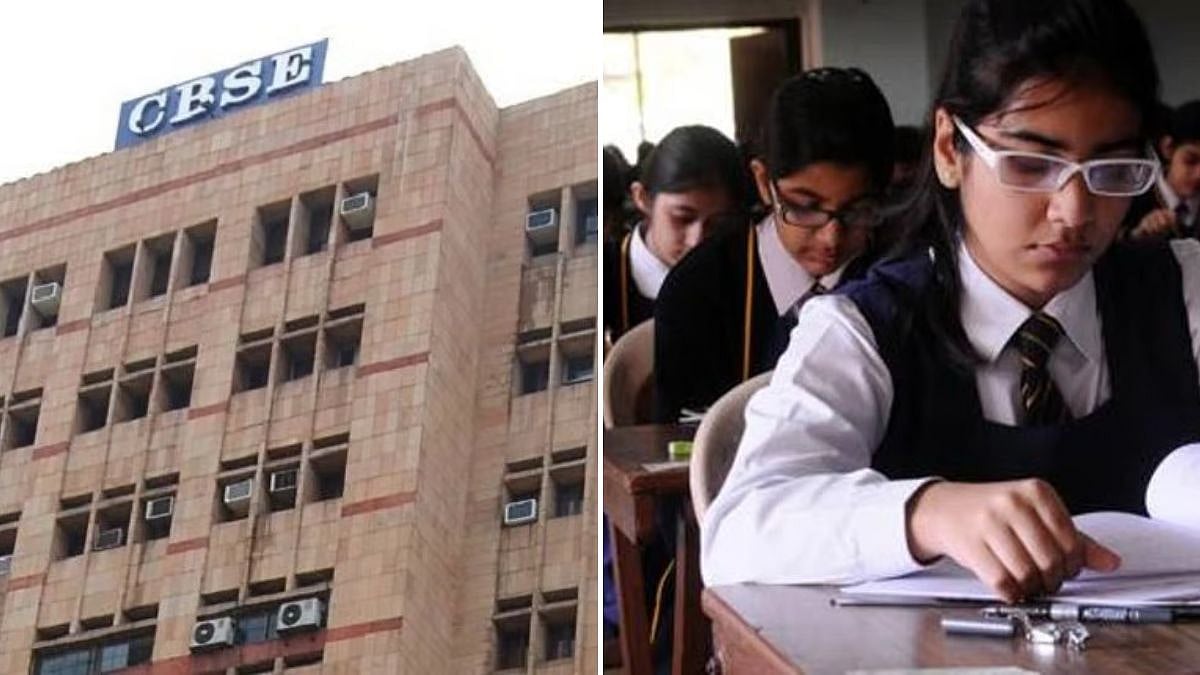
The Central government has informed the Supreme Court that it is working on implementing the CBSE's three-language policy for Class 9 students. The policy, which mandates the study of three languages including two native Indian languages, has been a subject of controversy.
The Additional Solicitor General, Aishwarya Bhati, told the court that the CBSE is in the process of working out various modalities for the implementation of the policy and sought time to do so. The Supreme Court, comprising Chief Justice Surya Kant and Justices Joymalya Bagchi and V Mohana, took note of the submission and deferred the matter by a week.
The court had earlier observed that while introducing the three-language policy was not wrong, the manner in which it was being introduced was a concern. The court stressed the need to find a solution to issues arising out of the policy, including the need to build adequate human resource infrastructure for the language options available.
The CBSE's three-language policy was challenged in the Supreme Court on May 27, with the petitioners arguing that the policy was being introduced without proper planning. The court issued notices to the Centre, the CBSE, and the NCERT, seeking their responses.
According to the CBSE's circular, students opting for a foreign language may do so only as the third language after studying two native Indian languages, or as an additional fourth language. The board has also said that no board examination shall be conducted for the third language at the Class 10 level, to reduce undue pressure on students.
The CBSE's three-language policy is part of its alignment with the National Education Policy 2020 and the National Curriculum Framework for School Education 2023. The policy aims to promote the study of native Indian languages and reduce the emphasis on foreign languages.
The implementation of the policy has been a subject of controversy, with some arguing that it will put undue pressure on students. The Supreme Court's intervention has been seen as a positive step towards finding a solution to the issues arising out of the policy.
The Centre's decision to work on implementing the policy is a significant development, and the Supreme Court's monitoring of the situation will ensure that the policy is implemented in a fair and transparent manner. The outcome of the case will have significant implications for the education sector in India.
In conclusion, the Centre's efforts to implement the CBSE's three-language policy are underway, and the Supreme Court's intervention will ensure that the policy is implemented in a manner that promotes the study of native Indian languages without putting undue pressure on students. The policy's implementation will be closely watched, and its outcome will have significant implications for the education sector in India.
The policy's alignment with the National Education Policy 2020 and the National Curriculum Framework for School Education 2023 is a significant step towards promoting the study of native Indian languages. The CBSE's decision to not conduct board examinations for the third language at the Class 10 level is also a positive step towards reducing undue pressure on students.
Overall, the implementation of the CBSE's three-language policy is a complex issue that requires careful planning and consideration. The Supreme Court's intervention and the Centre's efforts to implement the policy will ensure that the policy is implemented in a fair and transparent manner, and that the interests of students are protected.
Frequently asked questions
What is the CBSE's three-language policy?
The policy mandates the study of three languages, including two native Indian languages, for Class 9 students.
Why is the policy being challenged in court?
The petitioners argue that the policy is being introduced without proper planning and will put undue pressure on students.