Monsoon Deficit Persists Despite Recent Rains
Recent rains bring relief to some states, but deficit remains. Bihar and Punjab struggle.
'%3E%3Crect%20width%3D'96'%20height%3D'96'%20fill%3D'%23B3261E'%2F%3E%3Ccircle%20cx%3D'30'%20cy%3D'24'%20r%3D'44'%20fill%3D'%23fff'%20opacity%3D'.12'%2F%3E%3Ccircle%20cx%3D'60'%20cy%3D'74'%20r%3D'40'%20fill%3D'%23000'%20opacity%3D'.10'%2F%3E%3C%2Fg%3E%3Cg%20fill%3D'%23fff'%3E%3Crect%20x%3D'29'%20y%3D'49'%20width%3D'8'%20height%3D'19'%20rx%3D'1'%2F%3E%3Crect%20x%3D'39'%20y%3D'40'%20width%3D'9'%20height%3D'28'%20rx%3D'1'%2F%3E%3Crect%20x%3D'50'%20y%3D'45'%20width%3D'8'%20height%3D'23'%20rx%3D'1'%2F%3E%3Crect%20x%3D'60'%20y%3D'53'%20width%3D'7'%20height%3D'15'%20rx%3D'1'%2F%3E%3Crect%20x%3D'41'%20y%3D'34'%20width%3D'5'%20height%3D'6'%2F%3E%3C%2Fg%3E%3C%2Fsvg%3E)
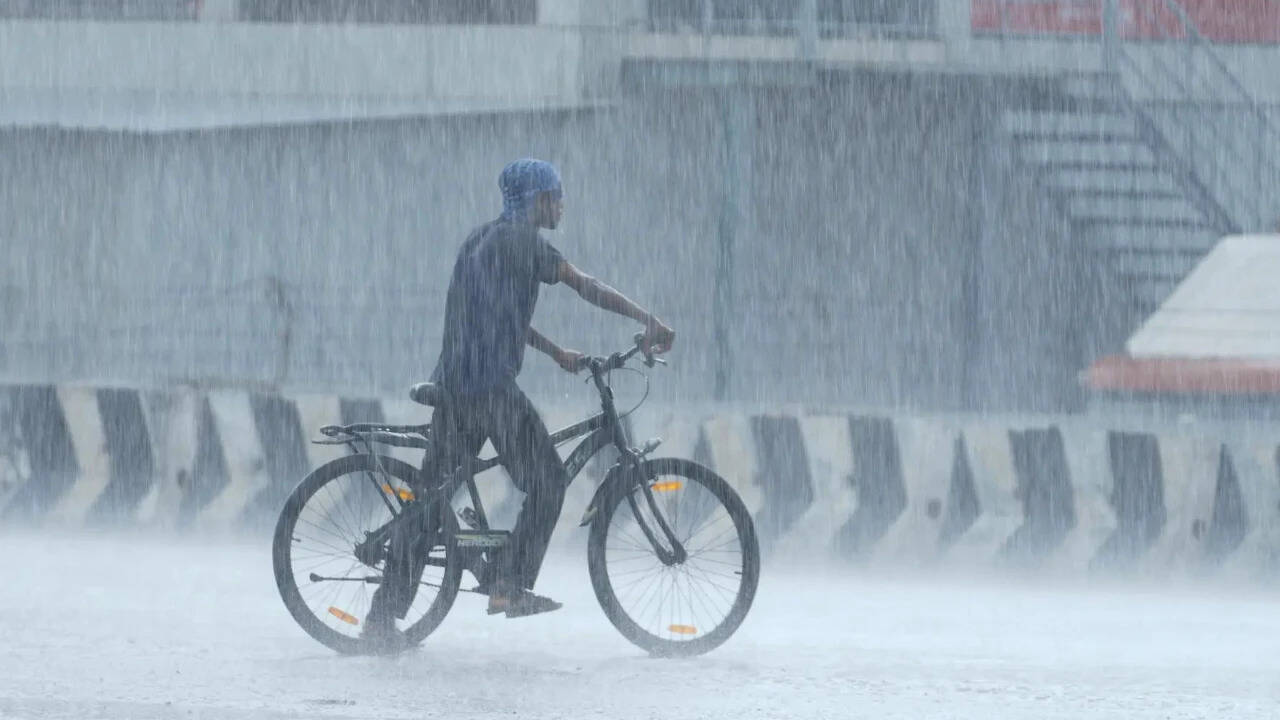
Recent rains have brought relief to several states in India, including Delhi, Haryana, and eastern Rajasthan. However, the national monsoon deficit persists, with some states continuing to struggle with below-average rainfall.
States like Bihar and Punjab are among the worst affected, with rainfall levels still below the average. The sowing of Kharif crops is nearly finalized across the nation, but the deficit in rainfall may still have an impact on the overall crop yield.
The recent rains have, however, raised hopes that the water reservoirs for hydropower and upcoming planting seasons may be enhanced. August's rainfall is expected to play a crucial role in determining the overall monsoon performance.
A low-pressure area is expected to form in eastern India shortly, which may raise precipitation levels in the region. This could bring some relief to the states that are still struggling with below-average rainfall.
The monsoon deficit has been a concern for the country, with the overall rainfall levels being below the average. The India Meteorological Department (IMD) has been closely monitoring the situation and has predicted that the monsoon is expected to be normal in the coming weeks.
The impact of the monsoon deficit on the agricultural sector is still being assessed. While the sowing of Kharif crops is nearly finalized, the deficit in rainfall may still affect the overall crop yield. The government has been taking steps to mitigate the impact of the deficit, including providing support to farmers.
In conclusion, while the recent rains have brought some relief to certain states, the national monsoon deficit persists. The coming weeks will be crucial in determining the overall monsoon performance, and the country will be closely watching the rainfall levels in the days to come.
The situation highlights the importance of efficient water management and the need for the country to be prepared for any eventuality. The monsoon season is critical for the country's agricultural sector, and any deficit in rainfall can have a significant impact on the economy.
As the monsoon season progresses, it is essential for the country to be vigilant and take necessary steps to mitigate the impact of any deficit in rainfall. The government, farmers, and other stakeholders must work together to ensure that the agricultural sector is protected and the country's food security is maintained.
The monsoon deficit is a reminder of the importance of sustainable agriculture practices and the need for the country to adopt climate-resilient agriculture practices. The country must be prepared to face the challenges posed by climate change and take necessary steps to mitigate its impact on the agricultural sector.
In the coming weeks, the country will be closely watching the rainfall levels and the overall monsoon performance. The situation will be monitored closely, and necessary steps will be taken to mitigate the impact of any deficit in rainfall.
What it means for India is that the country needs to be prepared for any eventuality and take necessary steps to mitigate the impact of the monsoon deficit. The government, farmers, and other stakeholders must work together to ensure that the agricultural sector is protected and the country's food security is maintained.
Frequently asked questions
What is the current status of the monsoon deficit in India?
The national monsoon deficit persists, with some states continuing to struggle with below-average rainfall.
Which states are worst affected by the monsoon deficit?
States like Bihar and Punjab are among the worst affected, with rainfall levels still below the average.