Hiroshima Oyster Farms Hit by 90% Death Rate
Hiroshima's oyster farms face catastrophic losses, with up to 90% of oysters dying.
'%3E%3Crect%20width%3D'96'%20height%3D'96'%20fill%3D'%23B3261E'%2F%3E%3Ccircle%20cx%3D'30'%20cy%3D'24'%20r%3D'44'%20fill%3D'%23fff'%20opacity%3D'.12'%2F%3E%3Ccircle%20cx%3D'60'%20cy%3D'74'%20r%3D'40'%20fill%3D'%23000'%20opacity%3D'.10'%2F%3E%3C%2Fg%3E%3Cg%20fill%3D'%23fff'%3E%3Crect%20x%3D'29'%20y%3D'49'%20width%3D'8'%20height%3D'19'%20rx%3D'1'%2F%3E%3Crect%20x%3D'39'%20y%3D'40'%20width%3D'9'%20height%3D'28'%20rx%3D'1'%2F%3E%3Crect%20x%3D'50'%20y%3D'45'%20width%3D'8'%20height%3D'23'%20rx%3D'1'%2F%3E%3Crect%20x%3D'60'%20y%3D'53'%20width%3D'7'%20height%3D'15'%20rx%3D'1'%2F%3E%3Crect%20x%3D'41'%20y%3D'34'%20width%3D'5'%20height%3D'6'%2F%3E%3C%2Fg%3E%3C%2Fsvg%3E)
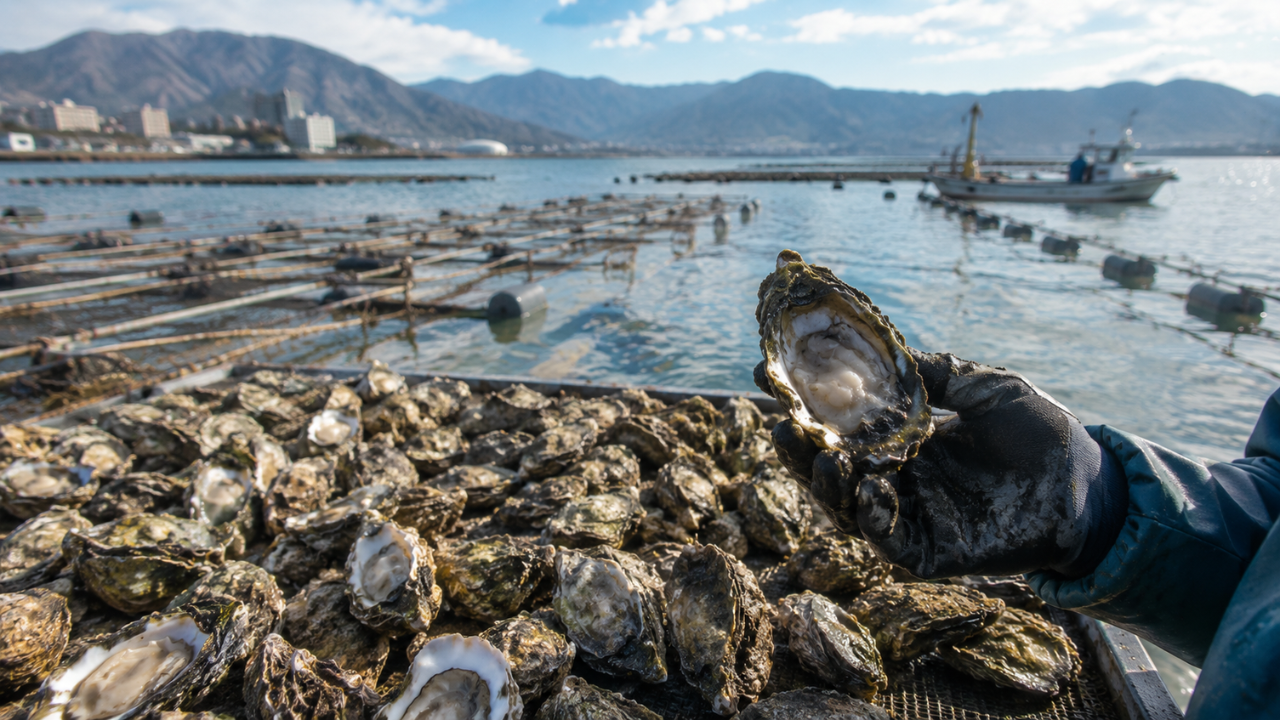
Hiroshima, Japan's leading oyster-producing region, is experiencing a devastating oyster farm crisis, with mortality rates reaching as high as 90%. This significant increase in oyster deaths is well above the normal threshold, prompting investigations into the possible causes.
The main suspects behind this alarming situation are rising sea temperatures and environmental shifts, which are being thoroughly examined. The consequences of this crisis are far-reaching, affecting not only the local oyster farmers but also the dining establishments and tourism activities that rely on the oyster industry.
Hiroshima produces approximately 60% of Japan's farmed oysters, making it a crucial region for the country's oyster supply. The current crisis jeopardizes the livelihoods of those involved in the industry, from farmers to restaurant owners. While the government is providing temporary assistance to alleviate the immediate effects of the crisis, the search for sustainable solutions continues.
The oyster farming industry is a significant contributor to Hiroshima's economy, and the current situation poses a substantial threat to the region's economic stability. The local government and industry stakeholders are working together to find ways to mitigate the effects of the crisis and prevent similar disasters in the future.
The investigation into the causes of the oyster deaths is ongoing, with experts examining various factors, including changes in sea temperature, water quality, and other environmental factors. The findings of this investigation will be crucial in determining the best course of action to address the crisis and ensure the long-term sustainability of Hiroshima's oyster farming industry.
In the meantime, the local community is coming together to support the affected farmers and businesses. The government's temporary assistance is providing some relief, but it is clear that more needs to be done to address the root causes of the crisis and prevent similar disasters in the future.
The situation in Hiroshima serves as a reminder of the importance of environmental sustainability and the need for industries to adapt to changing environmental conditions. As the search for sustainable solutions continues, it is essential for all stakeholders to work together to find ways to mitigate the effects of the crisis and ensure the long-term viability of the oyster farming industry.
In conclusion, the oyster farm crisis in Hiroshima is a significant issue that requires immediate attention and action. The consequences of inaction could be severe, not only for the local economy but also for the environment and the people who rely on the oyster industry for their livelihoods.
Frequently asked questions
What is causing the oyster deaths in Hiroshima?
Investigations are underway, but rising sea temperatures and environmental shifts are suspected.
How much of Japan's oysters come from Hiroshima?
Hiroshima produces approximately 60% of Japan's farmed oysters.