SC: Caste Abuse in Closed Room Not 'Public View'
Caste-based insult in private space not a public view offence, rules SC. Proceedings against school manager quashed.
'%3E%3Crect%20width%3D'96'%20height%3D'96'%20fill%3D'%231A5276'%2F%3E%3Ccircle%20cx%3D'30'%20cy%3D'24'%20r%3D'44'%20fill%3D'%23fff'%20opacity%3D'.12'%2F%3E%3Ccircle%20cx%3D'60'%20cy%3D'74'%20r%3D'40'%20fill%3D'%23000'%20opacity%3D'.10'%2F%3E%3C%2Fg%3E%3Cg%20fill%3D'%23fff'%3E%3Cpath%20d%3D'M31%2041%20L48%2031%20L65%2041%20Z'%2F%3E%3Crect%20x%3D'33'%20y%3D'43'%20width%3D'4'%20height%3D'17'%2F%3E%3Crect%20x%3D'41'%20y%3D'43'%20width%3D'4'%20height%3D'17'%2F%3E%3Crect%20x%3D'51'%20y%3D'43'%20width%3D'4'%20height%3D'17'%2F%3E%3Crect%20x%3D'59'%20y%3D'43'%20width%3D'4'%20height%3D'17'%2F%3E%3Crect%20x%3D'30'%20y%3D'62'%20width%3D'36'%20height%3D'4'%20rx%3D'1'%2F%3E%3C%2Fg%3E%3C%2Fsvg%3E)
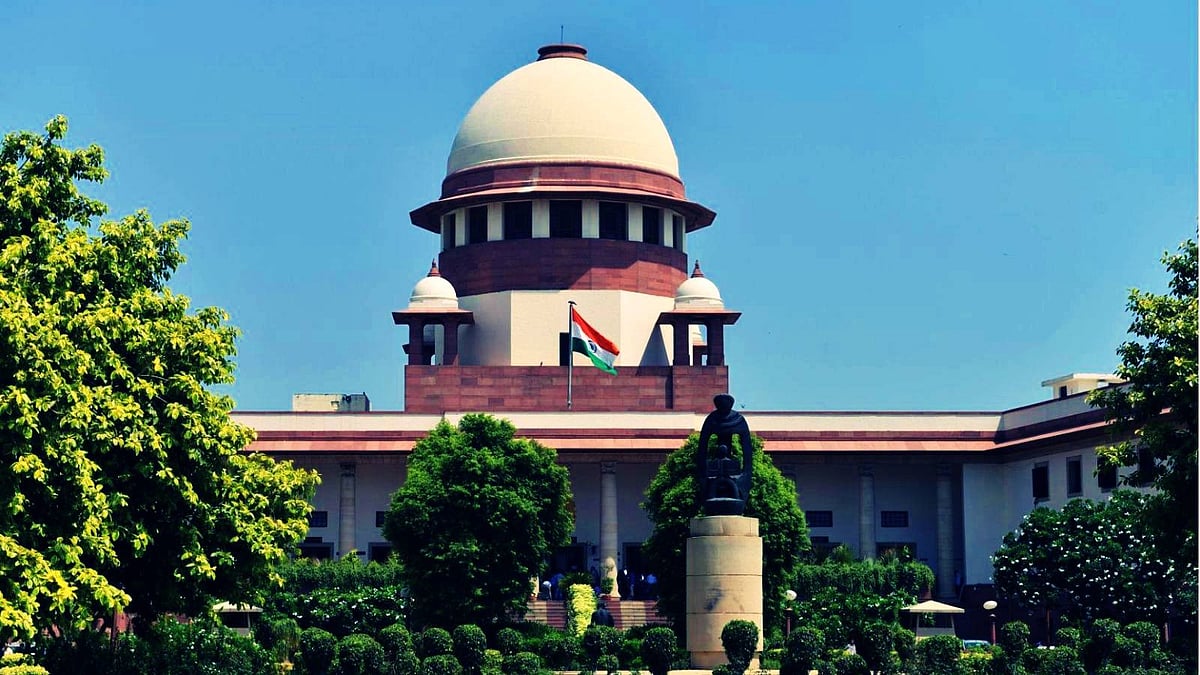
The Supreme Court has ruled that a caste-based insult made inside a closed room, without the presence of members of the public, does not meet the 'public view' requirement under the SC/ST (Prevention of Atrocities) Act.
This ruling came while quashing proceedings against a school manager accused of abusing a complainant with casteist remarks. The dispute arose after the complainant, whose two sons were students at the school, went to meet the school manager following a quarrel between students.
The complainant alleged that the manager and school employees assaulted him and subjected him to caste-based abuse. A police case was subsequently registered under the SC/ST Act and a chargesheet was filed.
The school manager challenged the summons issued by the special court before the Allahabad High Court, but the high court declined to quash the proceedings. The manager's counsel argued before the Supreme Court that the alleged casteist remarks were made inside a closed room, and witness statements did not indicate that members of the public were present or had heard the alleged remarks.
The Supreme Court examined the requirements under Sections 3(1)(r) and 3(1)(s) of the SC/ST Act, which cover intentional insult or intimidation and caste-based abuse when committed in a place within public view.
The bench reiterated that an incident can fall within 'public view' when members of the public are present at the location and are able to see or hear the alleged conduct. However, an incident taking place inside a confined space, with no members of the public present, cannot automatically be treated as occurring in public view.
The court also noted that the witness statements did not substantiate the allegation of casteist abuse. While teachers confirmed that a dispute and physical altercation had taken place, none of them stated that they had witnessed or heard the alleged caste-based remarks.
On these grounds, the Supreme Court set aside the proceedings against the school manager under the relevant provisions of the SC/ST Act. However, it clarified that proceedings related to other charges, such as assault, could continue.
The ruling provides clarity on the interpretation of 'public view' under the SC/ST Act and highlights the importance of considering the context and circumstances of each case.
The SC/ST Act is a crucial piece of legislation aimed at preventing atrocities against Scheduled Castes and Scheduled Tribes. The Act provides for stringent penalties for offences such as intentional insult, intimidation, and abuse.
The Supreme Court's decision is significant, as it sets a precedent for similar cases in the future. It emphasizes the need for a nuanced understanding of the 'public view' requirement and the importance of considering the specific facts and circumstances of each case.
In conclusion, the Supreme Court's ruling provides important guidance on the interpretation of the SC/ST Act and highlights the need for careful consideration of the context and circumstances of each case.
The decision is likely to have implications for the enforcement of the SC/ST Act and the protection of the rights of Scheduled Castes and Scheduled Tribes.
It is essential to ensure that the Act is implemented effectively and that those responsible for atrocities are held accountable.
The Supreme Court's ruling is a step towards achieving this goal, and it is crucial that the decision is taken into consideration in similar cases in the future.
Frequently asked questions
What is the SC/ST Act?
The SC/ST Act is a legislation aimed at preventing atrocities against Scheduled Castes and Scheduled Tribes.
What is the 'public view' requirement under the SC/ST Act?
The 'public view' requirement refers to the presence of members of the public at the location of the alleged offence, who are able to see or hear the conduct.