Lok Sabha Passes Bill To Combat Exam Paper Leaks
New law aims to boost transparency, stricter penalties for offenders
'%3E%3Crect%20width%3D'96'%20height%3D'96'%20fill%3D'%231A5276'%2F%3E%3Ccircle%20cx%3D'30'%20cy%3D'24'%20r%3D'44'%20fill%3D'%23fff'%20opacity%3D'.12'%2F%3E%3Ccircle%20cx%3D'60'%20cy%3D'74'%20r%3D'40'%20fill%3D'%23000'%20opacity%3D'.10'%2F%3E%3C%2Fg%3E%3Cg%20fill%3D'%23fff'%3E%3Cpath%20d%3D'M31%2041%20L48%2031%20L65%2041%20Z'%2F%3E%3Crect%20x%3D'33'%20y%3D'43'%20width%3D'4'%20height%3D'17'%2F%3E%3Crect%20x%3D'41'%20y%3D'43'%20width%3D'4'%20height%3D'17'%2F%3E%3Crect%20x%3D'51'%20y%3D'43'%20width%3D'4'%20height%3D'17'%2F%3E%3Crect%20x%3D'59'%20y%3D'43'%20width%3D'4'%20height%3D'17'%2F%3E%3Crect%20x%3D'30'%20y%3D'62'%20width%3D'36'%20height%3D'4'%20rx%3D'1'%2F%3E%3C%2Fg%3E%3C%2Fsvg%3E)
The Lok Sabha has passed the Public Examinations (Prevention of Unfair Means) Amendment Bill, 2026, which introduces a stronger legal framework to curb paper leaks and examination fraud. The legislation was approved by a voice vote on Wednesday, despite disruptions in the House and an Opposition walkout.
The amendment strengthens the Public Examinations (Prevention of Unfair Means) Act, 2024, which was enacted to ensure greater transparency, fairness, and integrity in recruitment and entrance examinations conducted by public authorities.
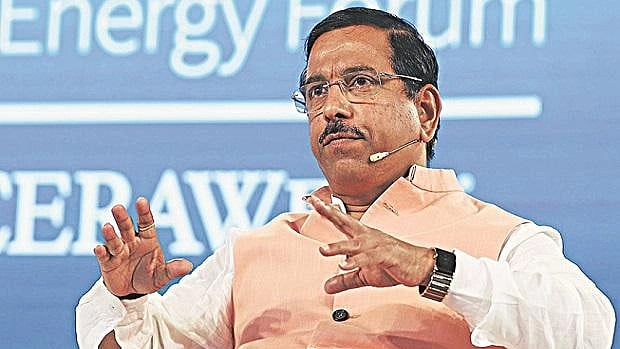
Union Education Minister Pralhad Joshi announced the passage of the Bill, stating that it ushers in a tougher legal framework to combat examination malpractices. The amendments introduce stricter penalties, fast-track courts, stronger investigation mechanisms, and stringent action against exam fraud.
The move comes in the aftermath of the NEET-UG paper leak controversy, which triggered nationwide protests and intensified calls for stricter measures to protect the credibility of competitive examinations.
Under the amended law, investigations into paper leak cases must be completed within two months to ensure timely action against offenders. The legislation also doubles the maximum punishment for individuals found guilty of using unfair means, increasing the prison term from five years to 10 years, along with a fine of up to ₹50 lakh.
To crack down on organised cheating syndicates, the Bill proposes a maximum penalty of ₹10 crore for networks involved in large-scale examination fraud, significantly raising the financial deterrent against such offences.
The legislation also provides for the establishment of fast-track courts to ensure cases related to examination fraud are disposed of within three months, enabling quicker justice and reducing delays in prosecution.
The government has maintained that the amendments are aimed at reinforcing the Public Examinations (Prevention of Unfair Means) Act, 2024, safeguarding the interests of candidates, and restoring public confidence in recruitment and entrance examinations by taking tougher action against paper leak rackets and organised cheating networks.
The passage of the Bill is a significant step towards enhancing transparency, credibility, and fairness in the examination process. It is expected to have a positive impact on the education system, ensuring that candidates are selected based on their merit and abilities, rather than through unfair means.
In conclusion, the Public Examinations (Prevention of Unfair Means) Amendment Bill, 2026, is a crucial legislation that aims to dismantle the paper leak ecosystem and boost exam transparency. Its passage is a significant milestone in the government's efforts to ensure fairness and integrity in public examinations.
Frequently asked questions
What is the maximum punishment for individuals found guilty of using unfair means?
The maximum punishment is 10 years imprisonment and a fine of up to ₹50 lakh.
What is the proposed penalty for networks involved in large-scale examination fraud?
The proposed penalty is ₹10 crore.