Iran Names Ex-IRGC Chief Mohsen Rezaei Top Security Official
Iran appoints new security head, former IRGC chief Mohsen Rezaei, amid Hormuz talks.
'%3E%3Crect%20width%3D'96'%20height%3D'96'%20fill%3D'%234A235A'%2F%3E%3Ccircle%20cx%3D'30'%20cy%3D'24'%20r%3D'44'%20fill%3D'%23fff'%20opacity%3D'.12'%2F%3E%3Ccircle%20cx%3D'60'%20cy%3D'74'%20r%3D'40'%20fill%3D'%23000'%20opacity%3D'.10'%2F%3E%3C%2Fg%3E%3Cg%20fill%3D'none'%20stroke%3D'%23fff'%20stroke-width%3D'3'%3E%3Ccircle%20cx%3D'48'%20cy%3D'48'%20r%3D'16'%2F%3E%3Cellipse%20cx%3D'48'%20cy%3D'48'%20rx%3D'6.5'%20ry%3D'16'%2F%3E%3Cline%20x1%3D'32'%20y1%3D'42'%20x2%3D'64'%20y2%3D'42'%2F%3E%3Cline%20x1%3D'32'%20y1%3D'54'%20x2%3D'64'%20y2%3D'54'%2F%3E%3C%2Fg%3E%3C%2Fsvg%3E)
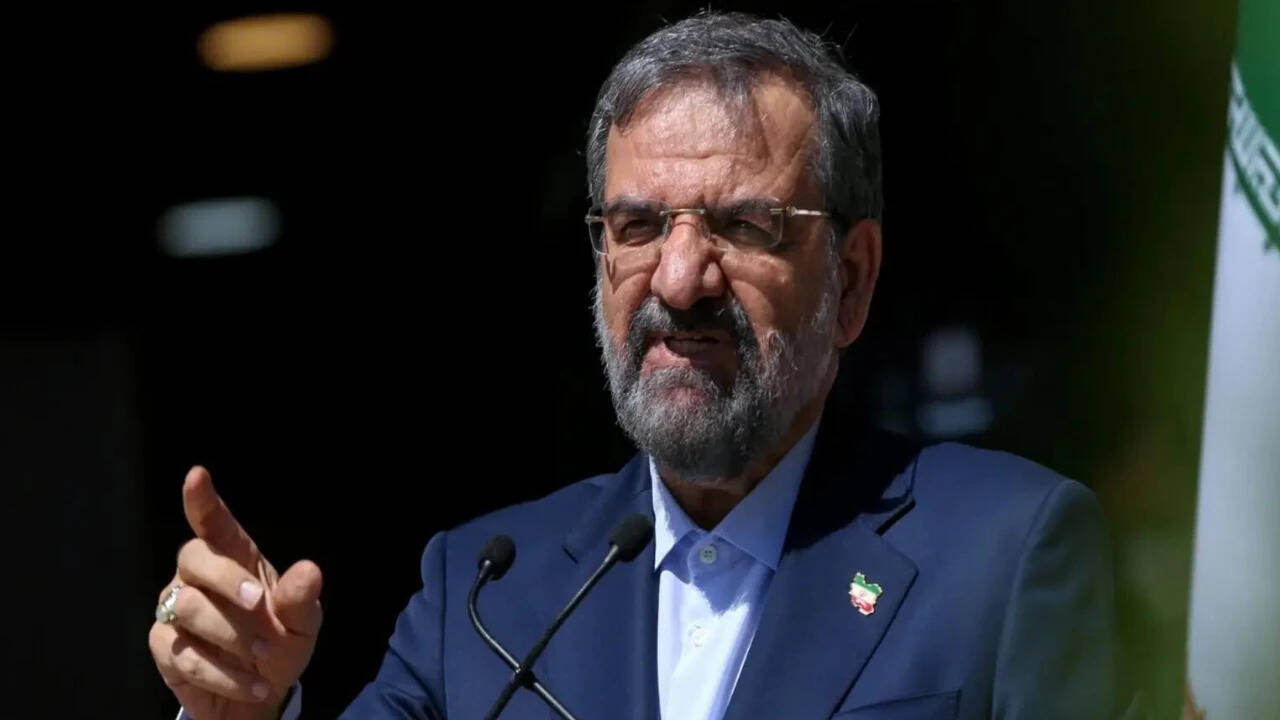
Iran has appointed Mohsen Rezaei, a former commander of the Islamic Revolutionary Guard Corps (IRGC), as the head of its Supreme National Security Council. This development comes after the resignation of Mohammad Bagher Zolghadr, the previous head of the council.
The appointment of Rezaei, who has extensive experience in Iran's military and security establishment, is significant as it marks a change in the country's national security leadership. Rezaei's background as a former IRGC chief is likely to influence Iran's approach to national security and foreign policy.
The leadership transformation at the Supreme National Security Council is taking place at a time when Iran is engaged in discussions surrounding the reopening of the Strait of Hormuz. The Strait of Hormuz is a critical waterway that connects the Persian Gulf to the Arabian Sea and is a major shipping route for oil exports.
Rezaei's appointment has been seen as a noteworthy adjustment in Iran's national security landscape. His experience as a former IRGC commander is expected to shape Iran's national security policies and decisions. The IRGC is a powerful military organization in Iran that plays a significant role in the country's security and defense establishment.
The reopening of the Strait of Hormuz is a critical issue for Iran and other countries in the region. The strait has been a source of tension in recent years, with Iran and other countries having different views on the management and security of the waterway. The discussions surrounding the reopening of the strait are aimed at finding a solution that addresses the concerns of all parties involved.
The appointment of Rezaei as the head of the Supreme National Security Council is likely to have implications for Iran's national security and foreign policy. His experience and background are expected to influence Iran's approach to regional and international issues, including the reopening of the Strait of Hormuz.
In the context of Iran's national security and foreign policy, the appointment of Rezaei is a significant development. It reflects the country's efforts to adjust its national security landscape and respond to changing regional and international circumstances. The leadership transformation at the Supreme National Security Council is expected to have a lasting impact on Iran's national security and foreign policy decisions.
The significance of Rezaei's appointment lies in its potential to shape Iran's national security policies and decisions. His experience and background are expected to influence Iran's approach to regional and international issues, including the reopening of the Strait of Hormuz. As Iran continues to engage in discussions surrounding the reopening of the strait, Rezaei's leadership is likely to play a critical role in shaping the country's national security and foreign policy decisions.
In conclusion, the appointment of Mohsen Rezaei as the head of Iran's Supreme National Security Council marks a significant development in the country's national security landscape. His experience and background are expected to influence Iran's approach to national security and foreign policy, including the reopening of the Strait of Hormuz. The leadership transformation at the Supreme National Security Council is likely to have a lasting impact on Iran's national security and foreign policy decisions.
Frequently asked questions
Who is the new head of Iran's Supreme National Security Council?
Mohsen Rezaei, a former commander of the Islamic Revolutionary Guard Corps (IRGC).
What is the significance of the Strait of Hormuz?
The Strait of Hormuz is a critical waterway that connects the Persian Gulf to the Arabian Sea and is a major shipping route for oil exports.