Scientists Uncover Secret Behind Earth's Worst Mass Extinction
New study reveals metabolism's role in 252mn-year-old marine extinction. Mobile animals survived, less active ones perished.
'%3E%3Crect%20width%3D'96'%20height%3D'96'%20fill%3D'%23B3261E'%2F%3E%3Ccircle%20cx%3D'30'%20cy%3D'24'%20r%3D'44'%20fill%3D'%23fff'%20opacity%3D'.12'%2F%3E%3Ccircle%20cx%3D'60'%20cy%3D'74'%20r%3D'40'%20fill%3D'%23000'%20opacity%3D'.10'%2F%3E%3C%2Fg%3E%3Cg%20fill%3D'%23fff'%3E%3Crect%20x%3D'29'%20y%3D'49'%20width%3D'8'%20height%3D'19'%20rx%3D'1'%2F%3E%3Crect%20x%3D'39'%20y%3D'40'%20width%3D'9'%20height%3D'28'%20rx%3D'1'%2F%3E%3Crect%20x%3D'50'%20y%3D'45'%20width%3D'8'%20height%3D'23'%20rx%3D'1'%2F%3E%3Crect%20x%3D'60'%20y%3D'53'%20width%3D'7'%20height%3D'15'%20rx%3D'1'%2F%3E%3Crect%20x%3D'41'%20y%3D'34'%20width%3D'5'%20height%3D'6'%2F%3E%3C%2Fg%3E%3C%2Fsvg%3E)
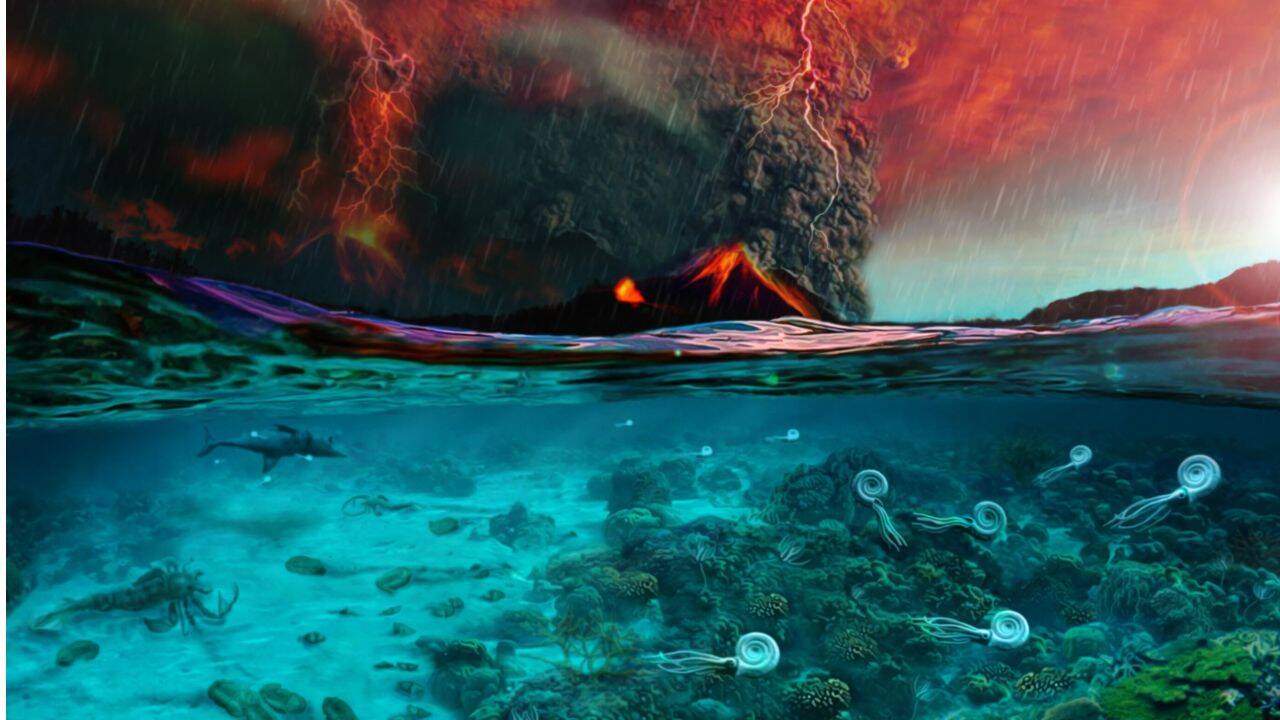
A groundbreaking study has shed light on the 252 million-year-old mystery behind Earth's greatest mass extinction event, which wiped out nearly 96% of marine species. The research suggests that the key to survival during this ancient crisis lay in the organisms' metabolism, specifically their oxygen use and energy generation.
According to the study, the warming oceans and declining oxygen levels during that period stressed the less active ancient marine life, making it difficult for them to survive. On the other hand, more mobile animals with higher energy demands were better equipped to withstand the deteriorating conditions.
The mass extinction event, which occurred at the end of the Permian period, is believed to have been triggered by massive volcanic eruptions that released large amounts of greenhouse gases into the atmosphere, causing the Earth's temperature to rise. This, in turn, led to the warming of the oceans and the depletion of oxygen levels, making it difficult for many marine species to survive.
The study's findings have significant implications for our understanding of the Earth's ecosystems and how they respond to environmental stressors. The ancient shift in the ocean's ecosystem continues to shape the diverse marine life we see today.
The research also highlights the importance of metabolism in determining the survival of species in the face of environmental challenges. By studying the metabolic rates of ancient organisms, scientists can gain a better understanding of how they responded to the changing conditions and how this, in turn, affected their ability to survive.
The discovery of the role of metabolism in the Earth's greatest mass extinction event is a significant breakthrough in the field of paleontology and will likely have a major impact on our understanding of the Earth's history. It also serves as a reminder of the importance of preserving the health of our oceans and the diverse ecosystems they support.
In conclusion, the study's findings provide a fascinating glimpse into the Earth's past and the factors that shaped the evolution of life on our planet. The research has far-reaching implications for our understanding of the Earth's ecosystems and the importance of preserving the health of our oceans for future generations.
The mass extinction event that occurred 252 million years ago was a pivotal moment in the Earth's history, and the study's findings will likely be the subject of much debate and discussion in the scientific community. As scientists continue to study the Earth's ecosystems and the factors that shape them, we can gain a deeper understanding of the complex relationships between the Earth's systems and the life that inhabits our planet.