Delhi Police Used Plastic Pellets On DCP's Orders During NEET Protest
Delhi Police fired plastic pellets during NEET protest. Records show DCP ordered use of force.
'%3E%3Crect%20width%3D'96'%20height%3D'96'%20fill%3D'%231A5276'%2F%3E%3Ccircle%20cx%3D'30'%20cy%3D'24'%20r%3D'44'%20fill%3D'%23fff'%20opacity%3D'.12'%2F%3E%3Ccircle%20cx%3D'60'%20cy%3D'74'%20r%3D'40'%20fill%3D'%23000'%20opacity%3D'.10'%2F%3E%3C%2Fg%3E%3Cg%20fill%3D'%23fff'%3E%3Cpath%20d%3D'M31%2041%20L48%2031%20L65%2041%20Z'%2F%3E%3Crect%20x%3D'33'%20y%3D'43'%20width%3D'4'%20height%3D'17'%2F%3E%3Crect%20x%3D'41'%20y%3D'43'%20width%3D'4'%20height%3D'17'%2F%3E%3Crect%20x%3D'51'%20y%3D'43'%20width%3D'4'%20height%3D'17'%2F%3E%3Crect%20x%3D'59'%20y%3D'43'%20width%3D'4'%20height%3D'17'%2F%3E%3Crect%20x%3D'30'%20y%3D'62'%20width%3D'36'%20height%3D'4'%20rx%3D'1'%2F%3E%3C%2Fg%3E%3C%2Fsvg%3E)
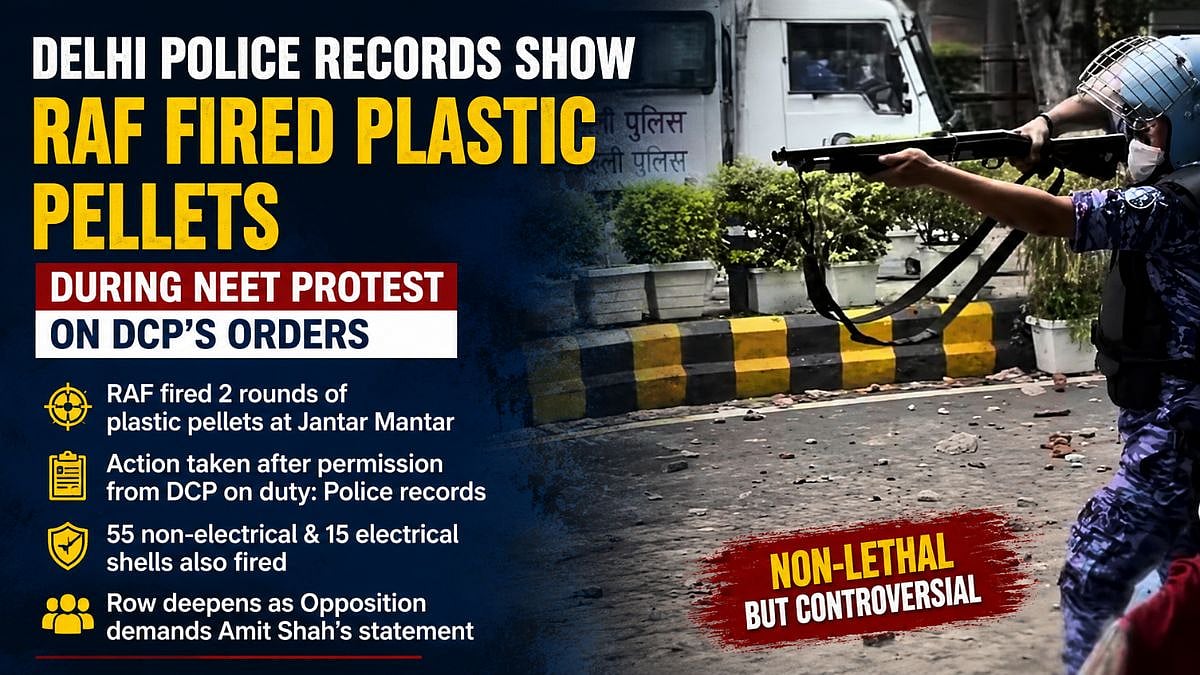
On July 20, 2026, the Rapid Action Force (RAF) fired non-lethal munitions, including plastic pellets, during the 'Sansad Chalo' protest over the alleged NEET-UG paper leak in New Delhi. The force acted on the directions of a Delhi Police Deputy Commissioner of Police (DCP) while attempting to control protesters near Jantar Mantar.
According to official Delhi Police records, the RAF personnel were deployed in Zone 1 of the Jantar Mantar area alongside a DCP-rank officer of the Delhi Police during the protest. The records show that the RAF fired 55 non-electrical shells, 15 electrical shells, five tear smoke grenades, two rounds from anti-riot guns, and two rounds of plastic pellets after receiving permission from the DCP on duty.
The Delhi Police has denied allegations that pellet guns were used against peaceful protesters, describing such claims as false and misleading. However, the police records indicate that two rounds of plastic pellets were fired during the operation. Officials explained that one round of plastic pellets contains four plastic pieces, unlike metal pellets that can pierce the body.
The reported use of plastic pellets has added to the political controversy surrounding the protests. The Opposition has criticised the government over the use of force against demonstrators and demanded that Union Home Minister Amit Shah make a statement in Parliament. There have been reports of two to three protesters suffering grievous pellet injuries during the violence that broke out at the march organised by the Cockroach Janta Party (CJP).
The protest was demanding the resignation of Dharmendra Pradhan as Union Education Minister over the alleged NEET-UG paper leak. Pradhan resigned on Saturday, following which the month-long CJP protest was called off. Several Delhi Police, RAF, and Central Reserve Police Force (CRPF) personnel were also injured during the clashes.
The CRPF Director General G P Singh said the force will conduct a professional post-event assessment after the agitation was called off and protesters dispersed. He said the findings would be shared after the review by the force headquarters.
The use of plastic pellets by the Delhi Police during the NEET protest has raised questions about the use of force against protesters. The incident has sparked a political row, with the Opposition demanding answers from the government. The CRPF's decision to review its response to the protest is a step towards understanding what happened and how to improve crowd control measures in the future.
The resignation of Dharmendra Pradhan as Union Education Minister has brought an end to the month-long protest, but the controversy surrounding the use of force against protesters is likely to continue. The government will need to address the concerns of the Opposition and the public about the use of force against peaceful protesters.
In conclusion, the use of plastic pellets by the Delhi Police during the NEET protest has added to the political controversy surrounding the protests. The incident has raised questions about the use of force against protesters and has sparked a political row. The CRPF's decision to review its response to the protest is a step towards understanding what happened and how to improve crowd control measures in the future.
Frequently asked questions
What was the reason for the NEET protest in Delhi?
The protest was demanding the resignation of Dharmendra Pradhan as Union Education Minister over the alleged NEET-UG paper leak.
Did the Delhi Police use pellet guns against protesters?
The Delhi Police has denied allegations that pellet guns were used against peaceful protesters, but records show that two rounds of plastic pellets were fired during the operation.