Rupee Plunges 34 Paise to 95.08 Against Dollar
Rupee falls sharply, crude oil crosses $100, US-Iran tensions rise
'%3E%3Crect%20width%3D'96'%20height%3D'96'%20fill%3D'%230B6E4F'%2F%3E%3Ccircle%20cx%3D'30'%20cy%3D'24'%20r%3D'44'%20fill%3D'%23fff'%20opacity%3D'.12'%2F%3E%3Ccircle%20cx%3D'60'%20cy%3D'74'%20r%3D'40'%20fill%3D'%23000'%20opacity%3D'.10'%2F%3E%3C%2Fg%3E%3Cg%20fill%3D'none'%20stroke%3D'%23fff'%20stroke-width%3D'3.2'%20stroke-linecap%3D'round'%20stroke-linejoin%3D'round'%3E%3Cpolyline%20points%3D'31%2C59%2041%2C49%2049%2C54%2063%2C37'%2F%3E%3Cpolyline%20points%3D'55%2C37%2063%2C37%2063%2C45'%2F%3E%3C%2Fg%3E%3C%2Fsvg%3E)
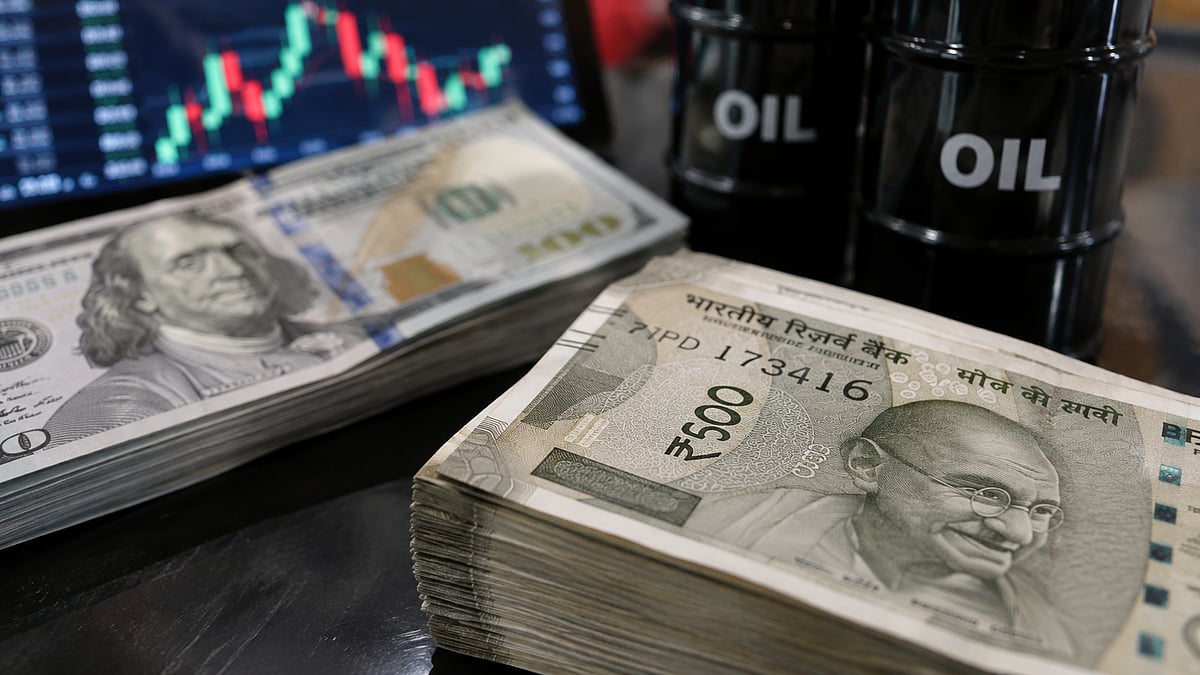
The Indian rupee suffered a significant decline on Wednesday, falling 34 paise to close provisionally at 95.08 against the US dollar. This downturn was largely attributed to the escalating US-Iran tensions, which led to a surge in Brent crude prices, crossing the $100-per-barrel mark.
At the interbank foreign exchange market, the rupee opened at 94.80 against the US dollar, marking its intraday high. However, as crude oil prices continued to climb, the currency weakened to an intraday low of 95.22 before recovering some losses and settling at 95.08. This marked a notable decline from its previous session close of 94.74.
The dollar index, which tracks the greenback against six major currencies, edged 0.05% higher to 98.84. Meanwhile, Brent crude futures climbed 2.94% to $100.73 per barrel, crossing $100 for the first time in almost six weeks. The rise in oil prices was largely driven by attacks on energy infrastructure and ships in West Asia, which intensified concerns over already strained global supplies amid the US-Iran conflict.
For India, higher crude prices are particularly significant, as the country depends heavily on imported oil. A prolonged increase in crude prices can raise the import bill and add pressure on inflation and the rupee. Furthermore, foreign institutional investor outflows also weighed on the USD-INR exchange rate, with FIIs selling Indian equities worth a net ₹123.19 crore on Tuesday.
The domestic markets witnessed another sharp sell-off, with the Sensex plunging 813.35 points to 74,764.23, while the Nifty dropped 203.60 points to 23,431.50. The decline in the rupee's value can be attributed to a combination of factors, including concerns over higher inflation, foreign fund outflows, and weakness in domestic equity markets.
The rupee's performance is closely tied to the movement of crude oil prices, and any further escalation in US-Iran tensions could lead to increased pressure on the Indian currency. Additionally, the rupee's near-term direction may be influenced by movements in the US dollar.
In the context of India's economy, the decline in the rupee's value can have significant implications. A weaker rupee can make imports more expensive, leading to higher inflation and potentially impacting the country's trade deficit. Moreover, the rise in crude oil prices can also have a ripple effect on various industries, including transportation and manufacturing.
As the global economic landscape continues to evolve, the Indian rupee's performance will be closely watched by investors and policymakers alike. The interplay between crude oil prices, US-Iran tensions, and the US dollar's movement will be crucial in determining the rupee's near-term direction.
In conclusion, the Indian rupee's sharp decline on Wednesday was largely driven by the surge in crude oil prices and escalating US-Iran tensions. As the country navigates these challenging global economic conditions, the rupee's performance will be critical in determining the overall health of India's economy.
Frequently asked questions
Why did the rupee decline on Wednesday?
The rupee declined due to the surge in crude oil prices and escalating US-Iran tensions.
What is the impact of higher crude prices on India's economy?
Higher crude prices can raise the import bill and add pressure on inflation and the rupee.