Delhi HC Urges Centre to Monitor Wangchuk's Health
Delhi HC intervenes in activist's health, warns of organ damage.
'%3E%3Crect%20width%3D'96'%20height%3D'96'%20fill%3D'%231A5276'%2F%3E%3Ccircle%20cx%3D'30'%20cy%3D'24'%20r%3D'44'%20fill%3D'%23fff'%20opacity%3D'.12'%2F%3E%3Ccircle%20cx%3D'60'%20cy%3D'74'%20r%3D'40'%20fill%3D'%23000'%20opacity%3D'.10'%2F%3E%3C%2Fg%3E%3Cg%20fill%3D'%23fff'%3E%3Cpath%20d%3D'M31%2041%20L48%2031%20L65%2041%20Z'%2F%3E%3Crect%20x%3D'33'%20y%3D'43'%20width%3D'4'%20height%3D'17'%2F%3E%3Crect%20x%3D'41'%20y%3D'43'%20width%3D'4'%20height%3D'17'%2F%3E%3Crect%20x%3D'51'%20y%3D'43'%20width%3D'4'%20height%3D'17'%2F%3E%3Crect%20x%3D'59'%20y%3D'43'%20width%3D'4'%20height%3D'17'%2F%3E%3Crect%20x%3D'30'%20y%3D'62'%20width%3D'36'%20height%3D'4'%20rx%3D'1'%2F%3E%3C%2Fg%3E%3C%2Fsvg%3E)
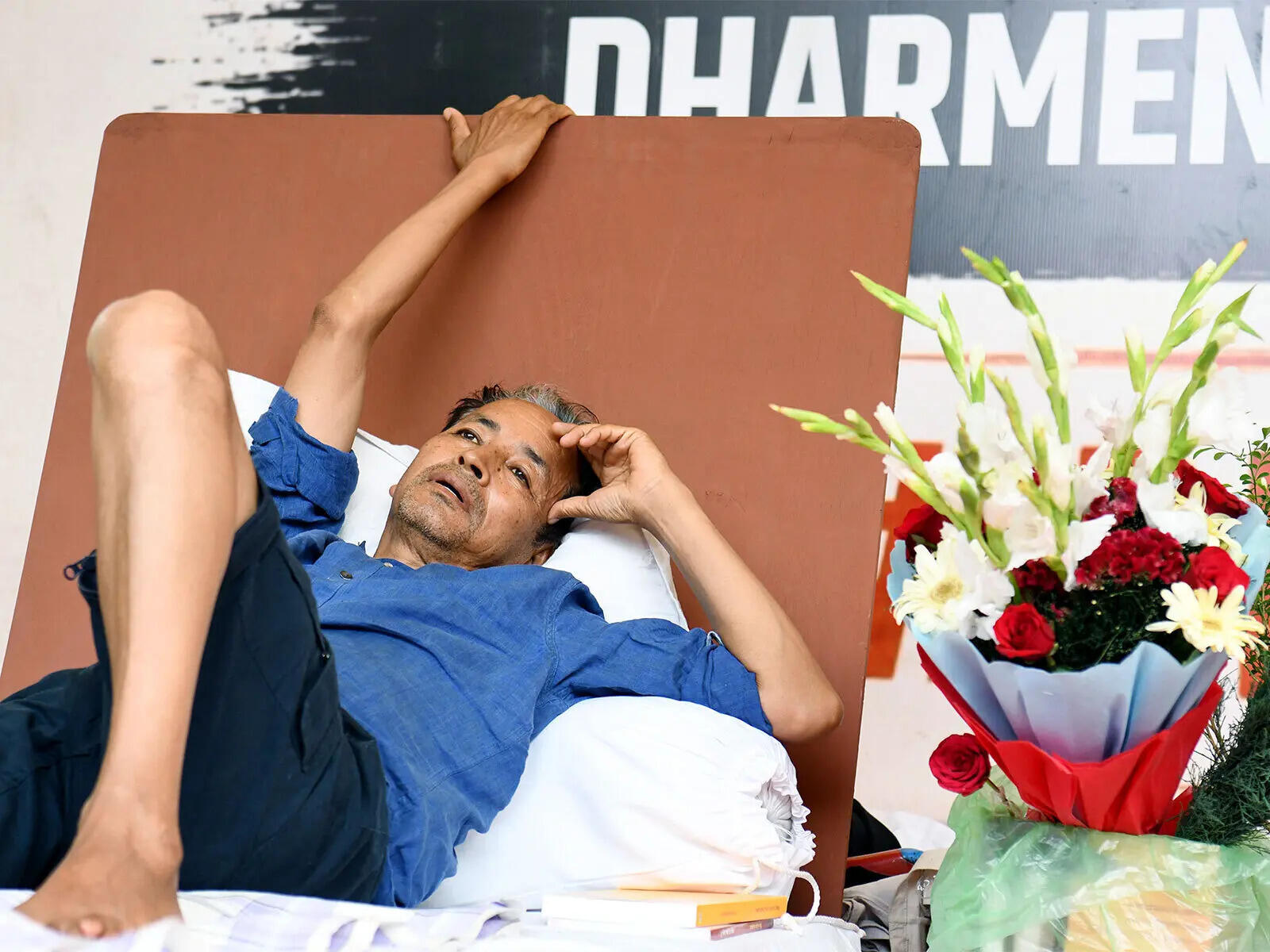
The Delhi High Court has stepped in to ensure the well-being of Ladakh activist Wangchuk, who has been on an indefinite hunger strike. On a recent hearing of a Public Interest Litigation (PIL) concerning Wangchuk's deteriorating health, the court emphasized that life is precious and urged the Centre to regularly examine his health.
The court's directive comes after doctors warned that Wangchuk's condition may soon take a turn for the worse, potentially leading to organ damage. Since the start of his hunger strike, Wangchuk has lost over 9 kilograms, prompting concerns about his health.
The Delhi High Court has asked both the central and state governments to provide medical aid to Wangchuk if needed. This move aims to prevent any further deterioration of his health and ensure he receives the necessary care.
Wangchuk, a native of Ladakh, began his indefinite hunger strike to bring attention to his demands. However, his worsening health has sparked concerns among his supporters and the medical community.
The court's intervention highlights the importance of preserving human life, even in the face of protests or demonstrations. By urging the Centre to monitor Wangchuk's health, the Delhi High Court has underscored the need for a balance between the right to protest and the protection of human life.
The Indian government has a responsibility to ensure the well-being of its citizens, particularly those who are vulnerable or in distress. In this case, the court's directive serves as a reminder of this responsibility and the need for prompt action to prevent any harm to Wangchuk.
The situation surrounding Wangchuk's hunger strike and his deteriorating health has sparked a wider debate about the limits of protest and the importance of protecting human life. As the Centre and state governments respond to the court's directive, it remains to be seen how they will balance their responsibilities with the rights of protesters like Wangchuk.
In the broader context, the Delhi High Court's intervention in Wangchuk's case serves as a reminder of the importance of upholding human rights and protecting the well-being of citizens. This principle is fundamental to any democratic society, and its application in this case underscores the need for a compassionate and responsive approach to governance.
Ultimately, the significance of the Delhi High Court's directive lies in its emphasis on the value of human life. By urging the Centre to monitor Wangchuk's health and provide medical aid if needed, the court has reaffirmed the importance of prioritizing human well-being, even in the face of challenging circumstances.