Japanese Yen Hits 40-Year Low
Yen falls to 163.24 per dollar, strongest since 1986. Oil prices surge.
'%3E%3Crect%20width%3D'96'%20height%3D'96'%20fill%3D'%234A235A'%2F%3E%3Ccircle%20cx%3D'30'%20cy%3D'24'%20r%3D'44'%20fill%3D'%23fff'%20opacity%3D'.12'%2F%3E%3Ccircle%20cx%3D'60'%20cy%3D'74'%20r%3D'40'%20fill%3D'%23000'%20opacity%3D'.10'%2F%3E%3C%2Fg%3E%3Cg%20fill%3D'none'%20stroke%3D'%23fff'%20stroke-width%3D'3'%3E%3Ccircle%20cx%3D'48'%20cy%3D'48'%20r%3D'16'%2F%3E%3Cellipse%20cx%3D'48'%20cy%3D'48'%20rx%3D'6.5'%20ry%3D'16'%2F%3E%3Cline%20x1%3D'32'%20y1%3D'42'%20x2%3D'64'%20y2%3D'42'%2F%3E%3Cline%20x1%3D'32'%20y1%3D'54'%20x2%3D'64'%20y2%3D'54'%2F%3E%3C%2Fg%3E%3C%2Fsvg%3E)
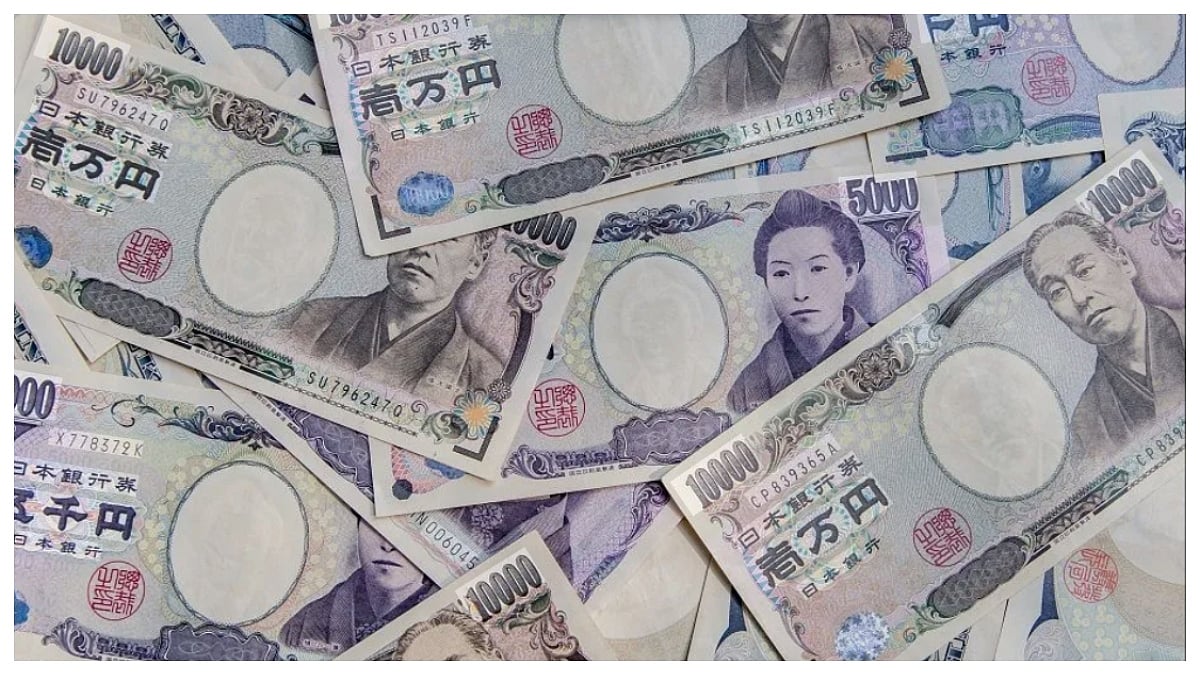
The Japanese yen has fallen to its weakest level in nearly four decades, trading at 163.24 per dollar on Tuesday. This decline is attributed to the strengthening of the US dollar, driven by rising crude oil prices and higher US Treasury yields. The yen's weakness has been exacerbated by Japan's prolonged low interest rates and concerns over the country's fiscal position.
The dollar has gained against major currencies as investors seek safety amid escalating tensions in the Middle East. The US military operations against Iran have entered another phase, boosting demand for the dollar as a safe-haven asset. Brent crude futures have climbed to a six-week high of $91.99 per barrel, while US Treasury yields have also moved higher.
The 30-year Treasury yield has risen to a two-month peak of 5.15%, while the benchmark 10-year yield has touched 4.64%, increasing pressure on the yen. Higher US yields typically strengthen the dollar by attracting investors towards American assets. A rise in long-term yields above key levels also tends to affect global markets by increasing borrowing costs and reducing demand for riskier assets.
Japan previously carried out record currency intervention in April and May after the dollar-yen exchange rate crossed the 160 mark. However, the impact of those measures has faded, with Japanese officials now relying more on the threat of intervention to discourage excessive currency moves.
Analysts expect the dollar-yen pair to remain within a higher trading range of 160-165, with periodic intervention limiting further gains while Japan's low real interest rates continue to weigh on the currency. HSBC analysts have warned that intervention alone may not create a lasting reversal unless supported by stronger Bank of Japan rate hikes, a shift towards US rate cuts, or improved confidence in Japan's fiscal outlook.
The yen's decline has significant implications for the global economy, particularly for countries with strong trade ties with Japan. The weakness of the yen could lead to increased exports from Japan, but it also poses risks for the country's economy, including higher import costs and potential inflationary pressures.
In related news, the Indian rupee has also fallen, losing 48 paise to close at 96.16 against the US dollar. The Sensex and Nifty have also declined, falling over 0.7% due to the surge in crude oil prices and global tensions.
The Japanese government is likely to closely monitor the yen's movement and consider further intervention to support the currency. However, the effectiveness of such measures remains uncertain, and the yen's weakness is likely to continue unless there are significant changes in Japan's monetary policy or fiscal position.
In conclusion, the Japanese yen's decline to a nearly 40-year low is a significant development with far-reaching implications for the global economy. The yen's weakness is driven by a combination of factors, including the strengthening of the US dollar, rising crude oil prices, and concerns over Japan's fiscal position. As the situation continues to evolve, it is likely to have a significant impact on trade and investment flows between Japan and other countries, including India.
The decline of the yen also has implications for the Indian economy, particularly for companies that have trade ties with Japan. The weakness of the yen could lead to increased competition from Japanese exports, but it also poses opportunities for Indian companies to increase their exports to Japan.
Overall, the Japanese yen's decline to a nearly 40-year low is a significant development that warrants close attention from policymakers, investors, and businesses around the world.
Frequently asked questions
What is the current exchange rate of the Japanese yen against the US dollar?
The Japanese yen has fallen to 163.24 per dollar, its weakest level in nearly four decades.
What are the factors driving the yen's weakness?
The yen's weakness is driven by the strengthening of the US dollar, rising crude oil prices, and concerns over Japan's fiscal position.