Maharashtra Introduces New Health Training Policy
Maharashtra launches new policy to strengthen public healthcare workforce. Training to be mandatory for all employees.
'%3E%3Crect%20width%3D'96'%20height%3D'96'%20fill%3D'%23B3261E'%2F%3E%3Ccircle%20cx%3D'30'%20cy%3D'24'%20r%3D'44'%20fill%3D'%23fff'%20opacity%3D'.12'%2F%3E%3Ccircle%20cx%3D'60'%20cy%3D'74'%20r%3D'40'%20fill%3D'%23000'%20opacity%3D'.10'%2F%3E%3C%2Fg%3E%3Cg%20fill%3D'%23fff'%3E%3Crect%20x%3D'29'%20y%3D'49'%20width%3D'8'%20height%3D'19'%20rx%3D'1'%2F%3E%3Crect%20x%3D'39'%20y%3D'40'%20width%3D'9'%20height%3D'28'%20rx%3D'1'%2F%3E%3Crect%20x%3D'50'%20y%3D'45'%20width%3D'8'%20height%3D'23'%20rx%3D'1'%2F%3E%3Crect%20x%3D'60'%20y%3D'53'%20width%3D'7'%20height%3D'15'%20rx%3D'1'%2F%3E%3Crect%20x%3D'41'%20y%3D'34'%20width%3D'5'%20height%3D'6'%2F%3E%3C%2Fg%3E%3C%2Fsvg%3E)
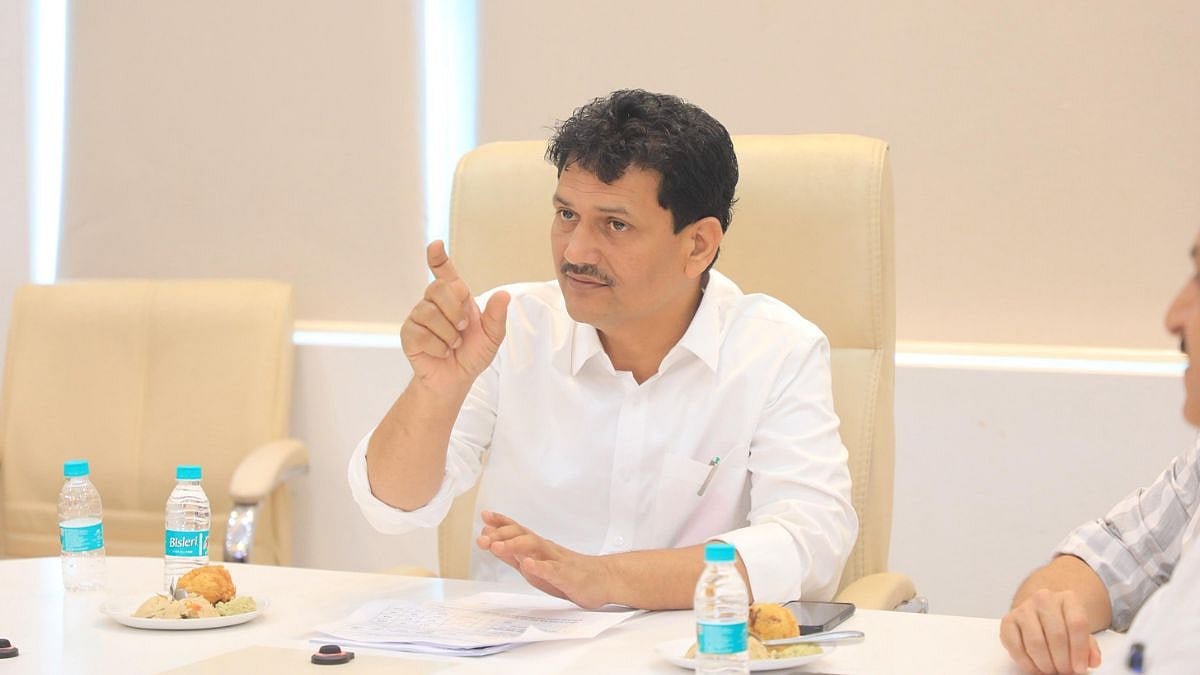
The Maharashtra Public Health Department has introduced a new training policy aimed at strengthening the skills and knowledge of its officers and employees. This policy seeks to improve the quality of public healthcare services across the state.
According to Health Minister Prakash Abitkar, the policy will bring about a major transformation in the existing training system. Training will no longer be seen as merely an administrative requirement, but as a key investment in human resource development.
The State Institute of Health and Family Welfare (SIHFW) in Nagpur will function as the nodal training institution. Training institutions across Maharashtra will be brought under the technical and administrative supervision of the Directorate of Public Health Services Training, Nagpur. This will ensure uniformity and effectiveness in the training provided.
Under the new policy, training will be mandatory for all regular and contractual employees. Newly recruited staff will have to complete initial training within one year of joining service. Employees promoted to higher positions will also be required to undergo relevant training. Refresher courses will be provided after four to six years of service, followed by advanced or senior-level training after 10 years.
A 28-day residential ‘Skill Lab’ programme has also been proposed to provide hands-on training. This programme will include 20 days of practical training in skill laboratories and eight days of field training at district hospitals.
The department will prepare five-year training frameworks and annual training plans based on the requirements of different positions. Training programmes will also be aligned with employees’ actual responsibilities.
The introduction of this new policy is expected to have a significant impact on the public healthcare system in Maharashtra. It will help build a skilled and capable healthcare workforce, enabling the state to provide better-quality services to citizens. Principal Secretary Nipun Vinayak said the initiative would strengthen the public health system, improve training uniformity, and enhance citizens’ confidence in government healthcare services.
The new policy is a step in the right direction, as it recognizes the importance of investing in human resource development. By providing mandatory training to all employees, the state can ensure that its healthcare workforce is equipped to provide high-quality services to citizens.
In recent years, Maharashtra has taken several steps to improve its public healthcare system. The introduction of this new policy is a testament to the state's commitment to providing better healthcare services to its citizens. With the implementation of this policy, Maharashtra is expected to see significant improvements in the quality of its public healthcare services.
The policy is also expected to have a positive impact on the state's healthcare workforce. By providing opportunities for training and development, the state can attract and retain talented healthcare professionals. This, in turn, will help to improve the overall quality of healthcare services in Maharashtra.
In conclusion, the introduction of the new health training policy in Maharashtra is a significant development. It has the potential to bring about major improvements in the state's public healthcare system, and it is a step in the right direction. With the implementation of this policy, Maharashtra can expect to see significant improvements in the quality of its public healthcare services, and its healthcare workforce can expect to benefit from increased opportunities for training and development.
The policy's impact will be felt across the state, as it will help to build a skilled and capable healthcare workforce. This, in turn, will enable the state to provide better-quality services to citizens, and it will help to strengthen the public health system. Overall, the introduction of the new health training policy is a positive development, and it is expected to have a significant impact on the public healthcare system in Maharashtra.
The state's healthcare system has been facing several challenges in recent years, including a shortage of skilled healthcare professionals. The introduction of this new policy is expected to help address this issue, as it will provide opportunities for training and development. By investing in human resource development, the state can ensure that its healthcare workforce is equipped to provide high-quality services to citizens.
In the coming years, the state is expected to see significant improvements in the quality of its public healthcare services. The introduction of the new policy is a major step in the right direction, and it is expected to have a positive impact on the state's healthcare workforce. With the implementation of this policy, Maharashtra can expect to see significant improvements in the quality of its public healthcare services, and its healthcare workforce can expect to benefit from increased opportunities for training and development.
The policy's introduction is a testament to the state's commitment to providing better healthcare services to its citizens. By recognizing the importance of investing in human resource development, the state can ensure that its healthcare workforce is equipped to provide high-quality services to citizens. The policy is expected to have a significant impact on the public healthcare system in Maharashtra, and it is a step in the right direction.
The state's public healthcare system has been facing several challenges in recent years, including a shortage of skilled healthcare professionals. The introduction of this new policy is expected to help address this issue, as it will provide opportunities for training and development. By investing in human resource development, the state can ensure that its healthcare workforce is equipped to provide high-quality services to citizens.
The policy is expected to have a positive impact on the state's healthcare workforce, as it will provide opportunities for training and development. The state can expect to see significant improvements in the quality of its public healthcare services, and its healthcare workforce can expect to benefit from increased opportunities for training and development.
In conclusion, the introduction of the new health training policy in Maharashtra is a significant development. It has the potential to bring about major improvements in the state's public healthcare system, and it is a step in the right direction. With the implementation of this policy, Maharashtra can expect to see significant improvements in the quality of its public healthcare services, and its healthcare workforce can expect to benefit from increased opportunities for training and development.
What it means for Mumbai and Maharashtra is that the state will have a more skilled and capable healthcare workforce, which will enable it to provide better-quality services to citizens. The policy is expected to have a positive impact on the state's healthcare workforce, and it will help to strengthen the public health system. Overall, the introduction of the new health training policy is a positive development, and it is expected to have a significant impact on the public healthcare system in Maharashtra.
Frequently asked questions
What is the main objective of the new health training policy in Maharashtra?
The main objective of the policy is to strengthen the skills, knowledge and professional approach of public health officers and employees, and to improve the quality of public healthcare services across the state.
Who will be responsible for implementing the new policy?
The State Institute of Health and Family Welfare (SIHFW) in Nagpur will function as the nodal training institution, and training institutions across Maharashtra will be brought under the technical and administrative supervision of the Directorate of Public Health Services Training, Nagpur.