Mumbai Drivers Protest RTO Marathi Tests
Mumbai auto and taxi drivers strike over Marathi questions in RTO tests. Drivers claim questions are not part of their training syllabus.
'%3E%3Crect%20width%3D'96'%20height%3D'96'%20fill%3D'%23B3261E'%2F%3E%3Ccircle%20cx%3D'30'%20cy%3D'24'%20r%3D'44'%20fill%3D'%23fff'%20opacity%3D'.12'%2F%3E%3Ccircle%20cx%3D'60'%20cy%3D'74'%20r%3D'40'%20fill%3D'%23000'%20opacity%3D'.10'%2F%3E%3C%2Fg%3E%3Cg%20fill%3D'%23fff'%3E%3Crect%20x%3D'29'%20y%3D'49'%20width%3D'8'%20height%3D'19'%20rx%3D'1'%2F%3E%3Crect%20x%3D'39'%20y%3D'40'%20width%3D'9'%20height%3D'28'%20rx%3D'1'%2F%3E%3Crect%20x%3D'50'%20y%3D'45'%20width%3D'8'%20height%3D'23'%20rx%3D'1'%2F%3E%3Crect%20x%3D'60'%20y%3D'53'%20width%3D'7'%20height%3D'15'%20rx%3D'1'%2F%3E%3Crect%20x%3D'41'%20y%3D'34'%20width%3D'5'%20height%3D'6'%2F%3E%3C%2Fg%3E%3C%2Fsvg%3E)
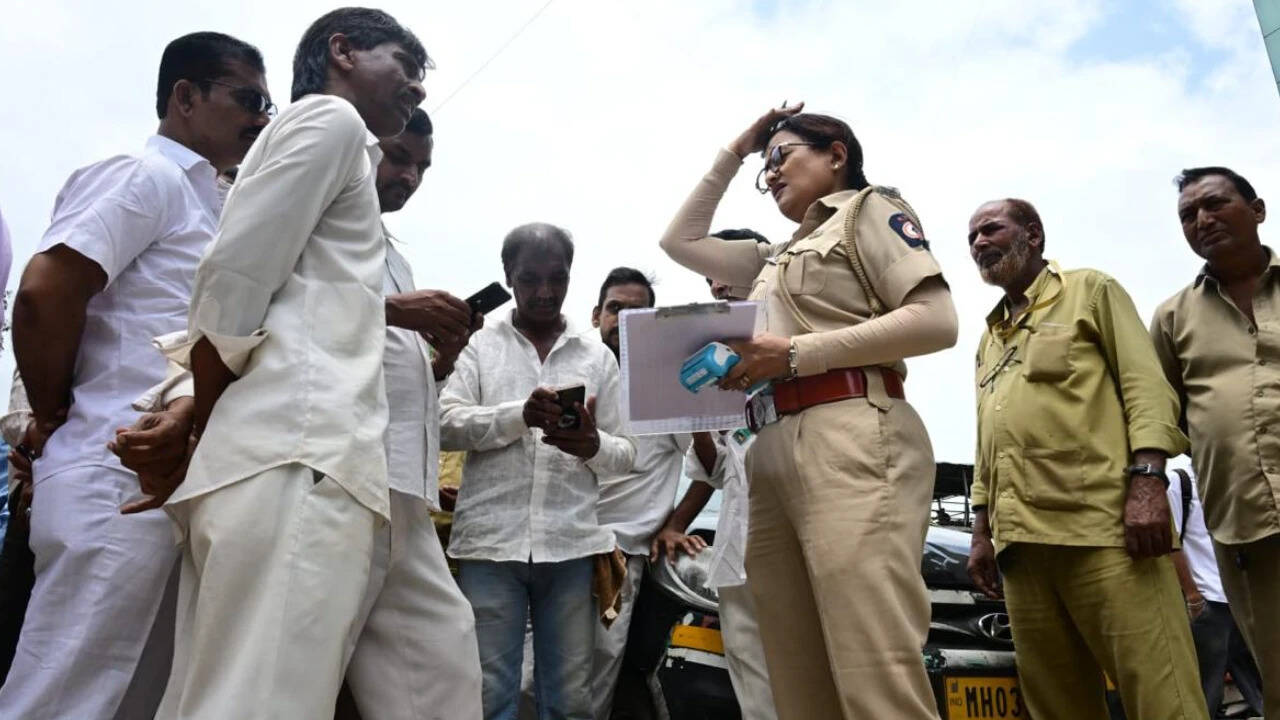
Mumbai auto and taxi drivers have gone on strike to protest the Regional Transport Office's (RTO) roadside tests, which they claim include Marathi questions that are not part of their training syllabus. The strike, called by unions representing around 400,000 drivers, has caused significant transportation disruptions across various city suburbs.
The drivers argue that despite completing language courses, they are being asked questions that are not relevant to their training. Many drivers have received notices from the RTO, which has added to their frustration. The unions are demanding that the RTO extend the testing period and make the evaluations fairer.
The RTO's roadside tests are meant to ensure that drivers have a basic understanding of Marathi, as well as traffic rules and regulations. However, the drivers claim that the tests are unfair and do not take into account their language skills. The strike has left commuters stranded, with many struggling to find alternative modes of transport.
The unions have stated that they are willing to work with the RTO to find a solution, but they want the testing process to be fair and transparent. They have also demanded that the RTO provide more time for drivers to prepare for the tests. The strike has highlighted the long-standing issue of language barriers in Mumbai, where many drivers struggle to communicate in Marathi.
The Mumbai transportation system is heavily reliant on auto and taxi drivers, and the strike has caused chaos across the city. Commuters are facing long delays and are being forced to find alternative modes of transport. The strike has also affected businesses, with many owners reporting a decline in sales due to the lack of transportation.
The RTO has not commented on the strike, but it is likely that they will be forced to review their testing process. The unions have threatened to continue the strike until their demands are met, which could lead to further disruptions in the city's transportation system.
In the meantime, commuters are advised to plan their journeys in advance and to use alternative modes of transport. The strike has highlighted the need for a fair and transparent testing process, and it is likely that the RTO will be forced to make changes to their system.
The strike is a significant issue for Mumbai, as it has affected not only commuters but also businesses and the economy as a whole. The city's transportation system is a vital part of its infrastructure, and any disruptions can have far-reaching consequences. It is hoped that a solution can be found soon, and that the city's transportation system can return to normal.
In conclusion, the strike by Mumbai auto and taxi drivers has highlighted the need for a fair and transparent testing process. The RTO must review their system and make changes to ensure that drivers are not unfairly penalized. The strike has caused significant disruptions, but it is hoped that a solution can be found soon, and that the city's transportation system can return to normal.
Frequently asked questions
Why are Mumbai auto and taxi drivers on strike?
The drivers are on strike because they claim that the Marathi questions in the RTO's roadside tests are not part of their training syllabus.
How many drivers are affected by the strike?
Around 400,000 drivers are represented by the unions that have called the strike.