SC Quashes Rahul Summon in Savarkar Case
Rahul Gandhi gets relief, SC overturns court order. Defamation case dismissed.
'%3E%3Crect%20width%3D'96'%20height%3D'96'%20fill%3D'%231A5276'%2F%3E%3Ccircle%20cx%3D'30'%20cy%3D'24'%20r%3D'44'%20fill%3D'%23fff'%20opacity%3D'.12'%2F%3E%3Ccircle%20cx%3D'60'%20cy%3D'74'%20r%3D'40'%20fill%3D'%23000'%20opacity%3D'.10'%2F%3E%3C%2Fg%3E%3Cg%20fill%3D'%23fff'%3E%3Cpath%20d%3D'M31%2041%20L48%2031%20L65%2041%20Z'%2F%3E%3Crect%20x%3D'33'%20y%3D'43'%20width%3D'4'%20height%3D'17'%2F%3E%3Crect%20x%3D'41'%20y%3D'43'%20width%3D'4'%20height%3D'17'%2F%3E%3Crect%20x%3D'51'%20y%3D'43'%20width%3D'4'%20height%3D'17'%2F%3E%3Crect%20x%3D'59'%20y%3D'43'%20width%3D'4'%20height%3D'17'%2F%3E%3Crect%20x%3D'30'%20y%3D'62'%20width%3D'36'%20height%3D'4'%20rx%3D'1'%2F%3E%3C%2Fg%3E%3C%2Fsvg%3E)
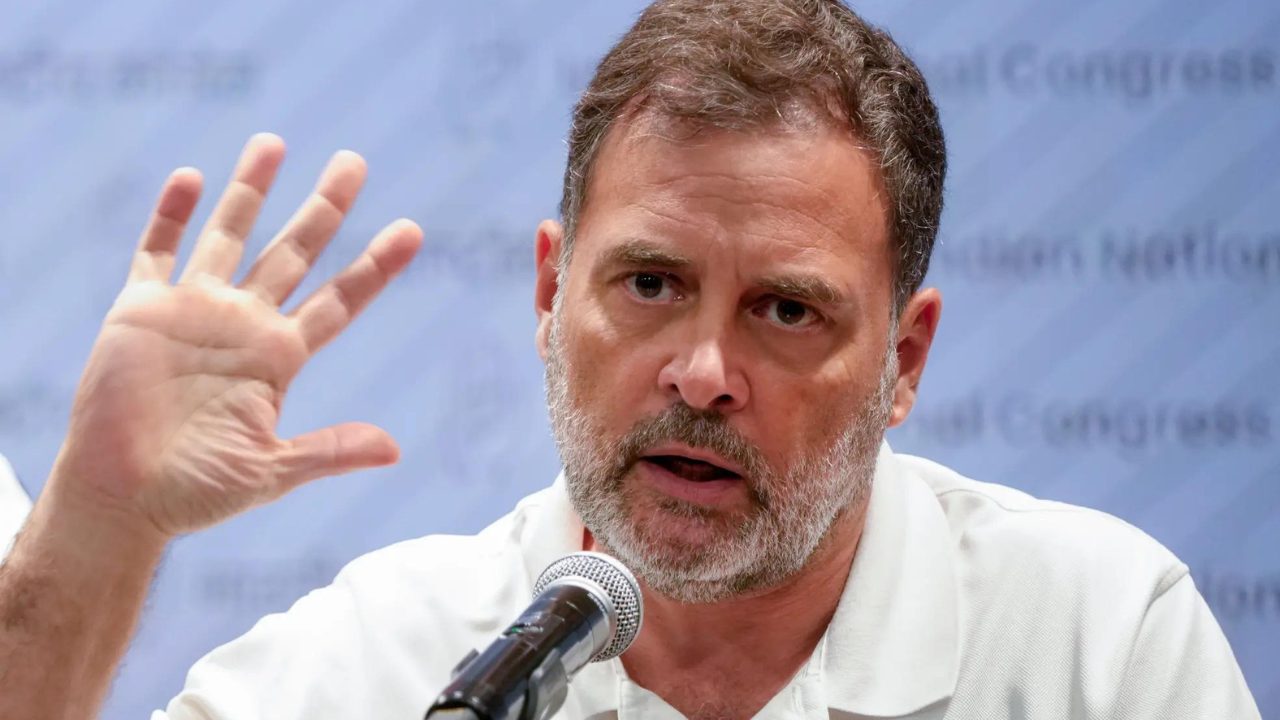
The Supreme Court has quashed a Lucknow Court order summoning Rahul Gandhi in a defamation case related to his remarks on Vinayak Damodar Savarkar.
The case was filed by a local lawyer in Lucknow, alleging that Rahul Gandhi's comments on Savarkar were defamatory. The lower court had issued a summons to Rahul Gandhi, asking him to appear before it.
However, the Supreme Court has now set aside the order, providing relief to the Congress leader. The apex court's decision is a significant development in the case, which had sparked a political controversy.
Rahul Gandhi had made the comments in question during a public rally, where he criticized Savarkar's ideology. The remarks were seen as controversial by some, who felt that they were an attack on Savarkar's legacy.
The case had been pending before the Lucknow Court for some time, with the court issuing a summons to Rahul Gandhi in response to the defamation complaint. However, the Congress leader had approached the Supreme Court, challenging the order and arguing that the comments were made in the course of a public speech and were protected by freedom of speech.
The Supreme Court's decision to quash the summons is likely to be seen as a victory for Rahul Gandhi and the Congress party. The case had been widely reported in the media, and the Supreme Court's ruling is expected to have significant implications for the ongoing debate over freedom of speech and defamation laws in India.
The defamation case had also sparked a debate over the role of the judiciary in regulating public discourse. Some had argued that the case was an example of the judiciary overstepping its bounds, while others saw it as a necessary step to protect individuals from defamatory remarks.
The Supreme Court's decision is likely to be welcomed by those who argue that freedom of speech is essential in a democratic society. However, it may also be seen as a setback for those who believe that defamation laws are necessary to protect individuals from harmful and false statements.
In any case, the Supreme Court's ruling is a significant development in the ongoing debate over freedom of speech and defamation laws in India. It is likely to have far-reaching implications for the way in which public discourse is regulated in the country.
The case had also highlighted the ongoing tensions between the Congress party and the BJP, with the two parties having differing views on the issue of freedom of speech and defamation laws. The Supreme Court's decision is likely to be seen as a victory for the Congress party, which had argued that the comments were protected by freedom of speech.
In conclusion, the Supreme Court's decision to quash the summons in the Savarkar defamation case is a significant development in the ongoing debate over freedom of speech and defamation laws in India. The ruling is likely to have far-reaching implications for the way in which public discourse is regulated in the country, and is a welcome relief for Rahul Gandhi and the Congress party.
The decision also underscores the importance of the judiciary in protecting freedom of speech and ensuring that individuals are not unfairly targeted by defamation laws. It is a significant victory for those who believe in the importance of freedom of speech in a democratic society.
The Supreme Court's ruling is also likely to have implications for the way in which politicians and public figures express themselves in public. It is a reminder that freedom of speech is an essential part of a democratic society, and that individuals should be free to express their opinions without fear of reprisal.
Overall, the Supreme Court's decision to quash the summons in the Savarkar defamation case is a significant development in the ongoing debate over freedom of speech and defamation laws in India. It is a welcome relief for Rahul Gandhi and the Congress party, and is likely to have far-reaching implications for the way in which public discourse is regulated in the country.
The case has now been dismissed, and Rahul Gandhi will not have to appear before the Lucknow Court. The Supreme Court's decision is a significant victory for the Congress leader, and is likely to be seen as a major setback for those who had filed the defamation complaint.
In the end, the Supreme Court's ruling is a reminder that freedom of speech is an essential part of a democratic society, and that individuals should be free to express their opinions without fear of reprisal. The decision is a significant development in the ongoing debate over freedom of speech and defamation laws in India, and is likely to have far-reaching implications for the way in which public discourse is regulated in the country.
The Supreme Court's decision to quash the summons in the Savarkar defamation case is a significant victory for Rahul Gandhi and the Congress party. The ruling is likely to be seen as a major setback for those who had filed the defamation complaint, and is a reminder that freedom of speech is an essential part of a democratic society.
The case has highlighted the ongoing tensions between the Congress party and the BJP, with the two parties having differing views on the issue of freedom of speech and defamation laws. The Supreme Court's decision is likely to be seen as a victory for the Congress party, which had argued that the comments were protected by freedom of speech.
In conclusion, the Supreme Court's decision to quash the summons in the Savarkar defamation case is a significant development in the ongoing debate over freedom of speech and defamation laws in India. The ruling is likely to have far-reaching implications for the way in which public discourse is regulated in the country, and is a welcome relief for Rahul Gandhi and the Congress party.
The decision also underscores the importance of the judiciary in protecting freedom of speech and ensuring that individuals are not unfairly targeted by defamation laws. It is a significant victory for those who believe in the importance of freedom of speech in a democratic society.
The Supreme Court's ruling is also likely to have implications for the way in which politicians and public figures express themselves in public. It is a reminder that freedom of speech is an essential part of a democratic society, and that individuals should be free to express their opinions without fear of reprisal.
Overall, the Supreme Court's decision to quash the summons in the Savarkar defamation case is a significant development in the ongoing debate over freedom of speech and defamation laws in India. It is a welcome relief for Rahul Gandhi and the Congress party, and is likely to have far-reaching implications for the way in which public discourse is regulated in the country.
What it means for Mumbai or India is that the Supreme Court's decision is a significant victory for freedom of speech and is likely to have far-reaching implications for the way in which public discourse is regulated in the country. The ruling is a reminder that individuals should be free to express their opinions without fear of reprisal, and that the judiciary plays a crucial role in protecting this fundamental right.
The decision is also likely to have implications for the way in which politicians and public figures express themselves in public. It is a reminder that freedom of speech is an essential part of a democratic society, and that individuals should be free to express their opinions without fear of reprisal.
In the end, the Supreme Court's ruling is a significant development in the ongoing debate over freedom of speech and defamation laws in India. It is a welcome relief for Rahul Gandhi and the Congress party, and is likely to have far-reaching implications for the way in which public discourse is regulated in the country.
Frequently asked questions
What was the case about?
The case was about a defamation complaint filed against Rahul Gandhi for his remarks on Vinayak Damodar Savarkar.
What was the Supreme Court's decision?
The Supreme Court quashed the Lucknow Court order summoning Rahul Gandhi and dismissed the defamation case.