Oil Prices Surge Amid US-Iran Tensions
Oil prices rise due to US-Iran tensions, Brent crude at $85.34, WTI at $80.08
'%3E%3Crect%20width%3D'96'%20height%3D'96'%20fill%3D'%234A235A'%2F%3E%3Ccircle%20cx%3D'30'%20cy%3D'24'%20r%3D'44'%20fill%3D'%23fff'%20opacity%3D'.12'%2F%3E%3Ccircle%20cx%3D'60'%20cy%3D'74'%20r%3D'40'%20fill%3D'%23000'%20opacity%3D'.10'%2F%3E%3C%2Fg%3E%3Cg%20fill%3D'none'%20stroke%3D'%23fff'%20stroke-width%3D'3'%3E%3Ccircle%20cx%3D'48'%20cy%3D'48'%20r%3D'16'%2F%3E%3Cellipse%20cx%3D'48'%20cy%3D'48'%20rx%3D'6.5'%20ry%3D'16'%2F%3E%3Cline%20x1%3D'32'%20y1%3D'42'%20x2%3D'64'%20y2%3D'42'%2F%3E%3Cline%20x1%3D'32'%20y1%3D'54'%20x2%3D'64'%20y2%3D'54'%2F%3E%3C%2Fg%3E%3C%2Fsvg%3E)
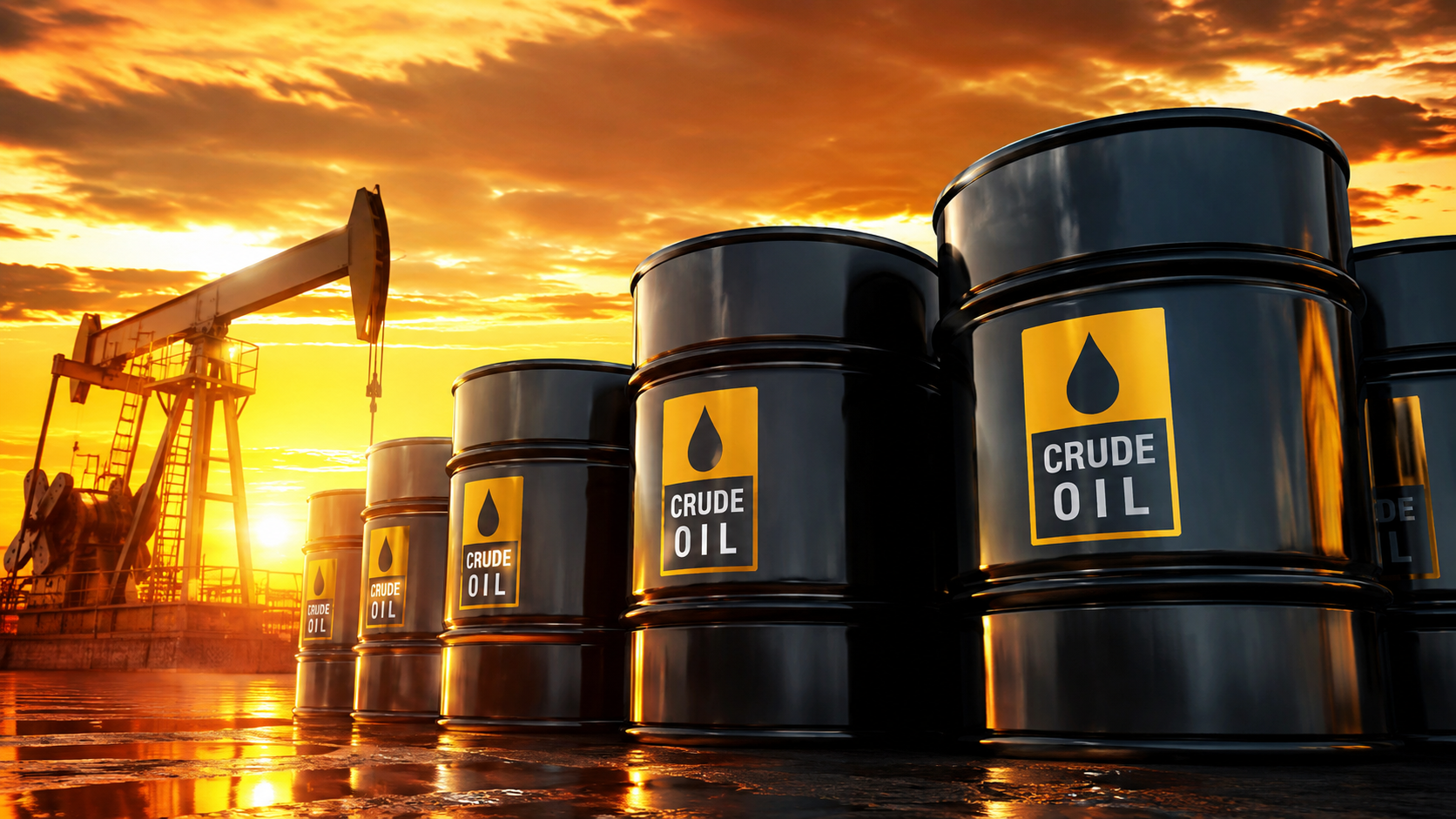
Oil prices are experiencing their biggest weekly gain in months as the crisis in the Middle East intensifies. The price of Brent crude has risen to $85.34 per barrel, while WTI crude is trading at $80.08 per barrel.
The surge in oil prices is attributed to the escalating military tensions between the US and Iran. Recent US strikes aimed to degrade Iranian military capabilities, prompting Iran to retaliate against regional allies. This has raised concerns about potential supply disruptions, particularly in the Strait of Hormuz, a critical oil shipping route.
The renewed hostilities have revived fears of a broader conflict in the region, which could have significant implications for global oil supplies. Iran has warned that it will inflict widespread damage on regional infrastructure if the US carries out its threats to strike Iranian facilities.
The US-Iran tensions have been escalating for some time, with both countries engaging in a war of words and retaliatory actions. The situation has been further complicated by the involvement of other regional players, making it difficult to predict how the situation will unfold.
The Middle East is a critical region for global oil supplies, with many of the world's largest oil producers located there. Any disruption to oil supplies from the region could have significant implications for the global economy, particularly for countries that rely heavily on imported oil.
The situation in the Middle East is being closely watched by oil market analysts, who are warning of potential further price increases if the tensions escalate. The price of oil has a significant impact on the global economy, and any major disruption to supplies could have far-reaching consequences.
In recent years, the Middle East has experienced a number of conflicts and crises, including the war in Yemen and the Syrian civil war. These conflicts have had significant implications for regional stability and global oil supplies.
The current crisis in the Middle East is a reminder of the ongoing risks and uncertainties in the region, and the potential for further conflicts and disruptions to oil supplies. As the situation continues to unfold, it is likely that oil prices will remain volatile, with potential further increases if the tensions escalate.
The impact of the US-Iran tensions on the global economy will depend on a number of factors, including the severity of any supply disruptions and the response of other oil-producing countries. However, it is clear that the situation has the potential to have significant implications for the global economy, and will be closely watched by analysts and policymakers in the coming days and weeks.
In conclusion, the surge in oil prices due to the US-Iran tensions is a significant development that has the potential to have far-reaching implications for the global economy. As the situation continues to unfold, it is likely that oil prices will remain volatile, and the potential for further conflicts and disruptions to oil supplies will continue to be a major concern for policymakers and analysts alike.