CBSE Defends Language Policy in SC
CBSE defends policy, cites school compliance. Nearly half of schools meet norms.
'%3E%3Crect%20width%3D'96'%20height%3D'96'%20fill%3D'%23B3261E'%2F%3E%3Ccircle%20cx%3D'30'%20cy%3D'24'%20r%3D'44'%20fill%3D'%23fff'%20opacity%3D'.12'%2F%3E%3Ccircle%20cx%3D'60'%20cy%3D'74'%20r%3D'40'%20fill%3D'%23000'%20opacity%3D'.10'%2F%3E%3C%2Fg%3E%3Cg%20fill%3D'%23fff'%3E%3Crect%20x%3D'29'%20y%3D'49'%20width%3D'8'%20height%3D'19'%20rx%3D'1'%2F%3E%3Crect%20x%3D'39'%20y%3D'40'%20width%3D'9'%20height%3D'28'%20rx%3D'1'%2F%3E%3Crect%20x%3D'50'%20y%3D'45'%20width%3D'8'%20height%3D'23'%20rx%3D'1'%2F%3E%3Crect%20x%3D'60'%20y%3D'53'%20width%3D'7'%20height%3D'15'%20rx%3D'1'%2F%3E%3Crect%20x%3D'41'%20y%3D'34'%20width%3D'5'%20height%3D'6'%2F%3E%3C%2Fg%3E%3C%2Fsvg%3E)
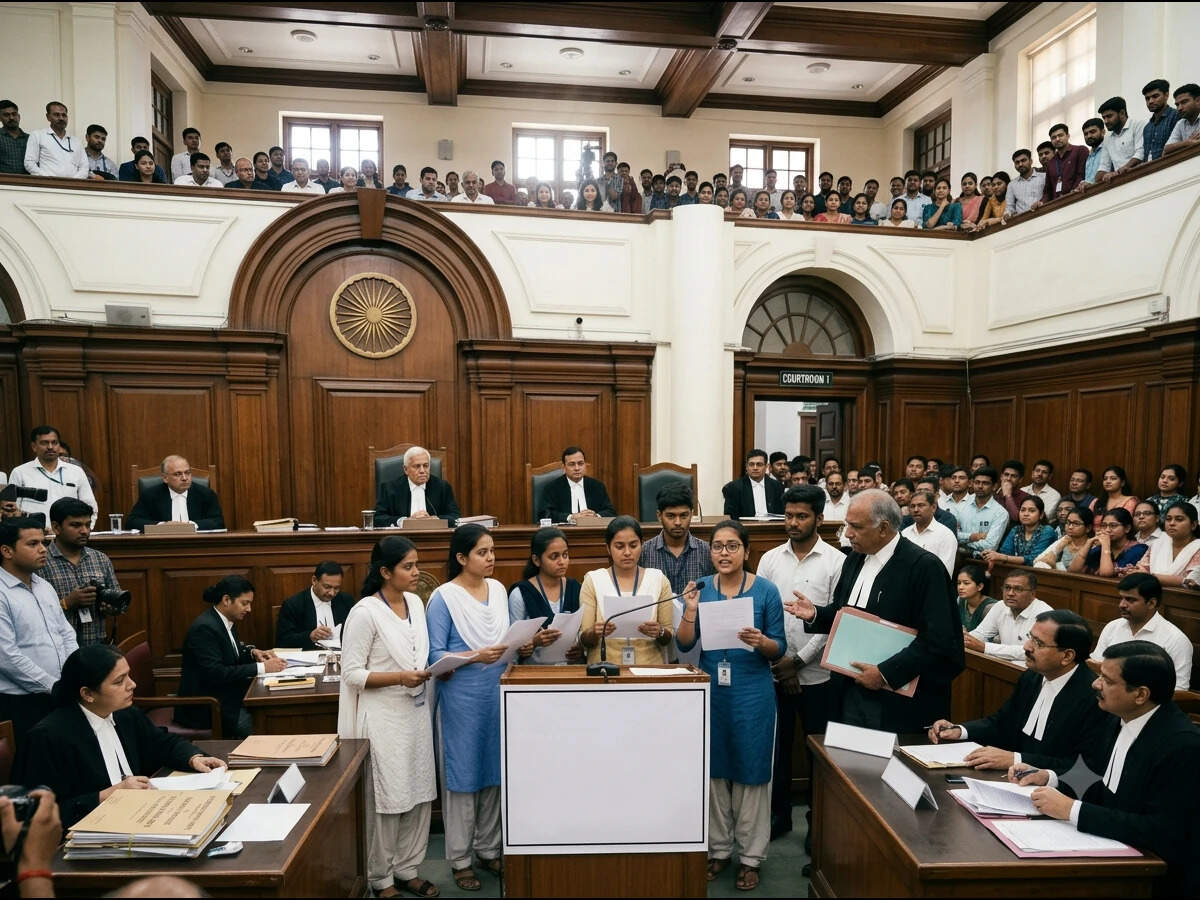
The Central Board of Secondary Education (CBSE) has presented its case for the three-language policy in the Supreme Court. According to the CBSE, a significant number of its affiliated schools are already implementing the policy.
As of now, 47.3% of CBSE-affiliated schools offer two or more Indian languages in Class 9. Furthermore, 99.19% of these schools have at least one teacher qualified to teach an Indian language.
The CBSE and the National Council of Educational Research and Training (NCERT) have assured the court that the necessary infrastructure and support systems are in place for the successful implementation of the policy. This includes the development of textbooks and transition support for schools.
The three-language policy has been a subject of debate, with some arguing that it promotes linguistic diversity and others claiming that it imposes an undue burden on students. The policy requires students to study three languages, including two Indian languages, from Class 1 to Class 10.
The CBSE has maintained that the policy is designed to promote the study of Indian languages and to foster a sense of national unity. The board has also argued that the policy is flexible and allows schools to choose the languages they want to offer.
The Supreme Court is hearing challenges to the policy from various petitioners who argue that it is unconstitutional and imposes an undue burden on students. The court's decision is expected to have a significant impact on the education system in the country.
The CBSE's defense of the policy is based on the argument that it is essential for promoting linguistic diversity and national unity. The board has also argued that the policy is in line with the National Education Policy (NEP) 2020, which emphasizes the importance of promoting Indian languages.
In recent years, there has been a growing emphasis on promoting Indian languages in schools. The NEP 2020 has recommended that schools promote the study of Indian languages and that students be encouraged to learn as many languages as possible.
The outcome of the case is being closely watched by educators, policymakers, and students. The Supreme Court's decision is expected to have a significant impact on the education system in the country and will likely shape the future of language education in India.
The CBSE's defense of the three-language policy is a significant development in the case. The board's arguments are based on the idea that the policy is essential for promoting linguistic diversity and national unity. The court's decision will likely be based on a careful consideration of the arguments presented by the CBSE and the petitioners.
In conclusion, the CBSE has defended its three-language policy in the Supreme Court, citing the compliance of its affiliated schools and the availability of necessary infrastructure and support systems. The court's decision is expected to have a significant impact on the education system in the country and will likely shape the future of language education in India.