Bhopal Municipal Corporation Introduces Mandatory Credibility Verification
Bhopal Municipal Corporation tightens building permission process, introduces credibility verification for applicants. Move aims to prevent misuse of approvals.
'%3E%3Crect%20width%3D'96'%20height%3D'96'%20fill%3D'%23B3261E'%2F%3E%3Ccircle%20cx%3D'30'%20cy%3D'24'%20r%3D'44'%20fill%3D'%23fff'%20opacity%3D'.12'%2F%3E%3Ccircle%20cx%3D'60'%20cy%3D'74'%20r%3D'40'%20fill%3D'%23000'%20opacity%3D'.10'%2F%3E%3C%2Fg%3E%3Cg%20fill%3D'%23fff'%3E%3Crect%20x%3D'29'%20y%3D'49'%20width%3D'8'%20height%3D'19'%20rx%3D'1'%2F%3E%3Crect%20x%3D'39'%20y%3D'40'%20width%3D'9'%20height%3D'28'%20rx%3D'1'%2F%3E%3Crect%20x%3D'50'%20y%3D'45'%20width%3D'8'%20height%3D'23'%20rx%3D'1'%2F%3E%3Crect%20x%3D'60'%20y%3D'53'%20width%3D'7'%20height%3D'15'%20rx%3D'1'%2F%3E%3Crect%20x%3D'41'%20y%3D'34'%20width%3D'5'%20height%3D'6'%2F%3E%3C%2Fg%3E%3C%2Fsvg%3E)
The Bhopal Municipal Corporation (BMC) has made credibility verification of applicants mandatory before approving construction plans for houses, commercial complexes, and multi-storey buildings. This move is intended to ensure that approvals are not misused and that sanctioned construction is actually followed on the ground.
The decision comes amid repeated instances of builders and property owners allegedly deviating from sanctioned plans and using residential premises for commercial activities. According to BMC records, the civic body generated Rs 51.78 crore through its Building Permission Branch and Legal Colony Cell between April 1, 2025, and March 5, 2026.
Of this, the Building Permission Branch contributed Rs 16.51 crore, including Rs 3.96 crore from supervision charges. The legal colony cell generated another Rs 30.33 crore, with development permission fees, supervision charges, and other levies forming a significant portion of the revenue. The supervision charge, reportedly collected at 2%, was being levied on establishments based on permissions issued by the Corporation.
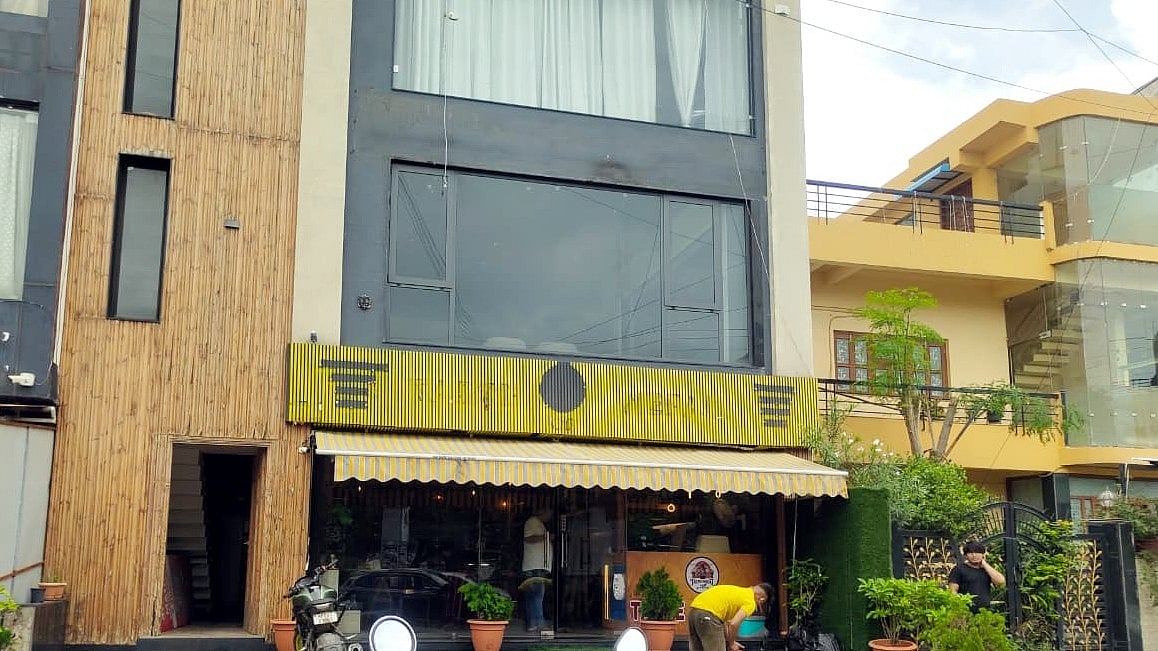
The BMC has identified several cases across various zones where complexes were constructed on plots of around 2,000 to 2,500 sq ft. In some cases, owners allegedly obtained permission for residential flats but subsequently constructed shops and rooftop penthouses. There were also instances where construction exceeded the area approved in the sanctioned building plan.
Complaints led to notices and enforcement action, with some cases eventually reaching courts. To strengthen monitoring, municipal commissioner Sanskrati Jain has assigned city planners for each assembly constituency to track permission-related revenue. Officials will now be required to report the revenue generated from building permissions during time limit meetings.
The stricter system comes at a time when the Corporation is also conducting a citywide drive against commercial activities operating from residential properties, with notices being issued to properties found violating permissible land-use norms. The move is expected to improve the overall transparency and accountability of the building permission process in Bhopal.
The introduction of credibility verification is a significant step towards preventing the misuse of building approvals. It will help ensure that construction activities are carried out in accordance with sanctioned plans, and that residential premises are not used for commercial purposes.
The BMC's efforts to strengthen monitoring and enforcement are also commendable. By assigning city planners to track permission-related revenue and requiring officials to report revenue generated from building permissions, the Corporation can keep a closer eye on the building permission process and prevent any irregularities.
In conclusion, the Bhopal Municipal Corporation's decision to introduce mandatory credibility verification for building permission applicants is a welcome move. It will help prevent the misuse of approvals, ensure transparency and accountability, and improve the overall quality of construction activities in the city.
The move is also significant in the context of the city's ongoing drive against commercial activities operating from residential properties. By cracking down on unauthorized commercial activities and ensuring that building approvals are used for their intended purpose, the BMC can help maintain the integrity of the city's land-use norms and prevent any potential conflicts of interest.
Overall, the introduction of credibility verification for building permission applicants is a positive development for the city of Bhopal. It reflects the BMC's commitment to transparency, accountability, and good governance, and is expected to have a positive impact on the city's construction sector and overall development.
Frequently asked questions
What is the purpose of introducing credibility verification for building permission applicants?
The purpose is to prevent the misuse of building approvals and ensure that construction activities are carried out in accordance with sanctioned plans.
How much revenue did the Bhopal Municipal Corporation generate from building permissions between April 1, 2025, and March 5, 2026?
The BMC generated Rs 51.78 crore through its Building Permission Branch and Legal Colony Cell.