BMC's Sealing Claims Questioned by Supreme Court
Bhopal Municipal Corporation's sealing drive claims disputed, only 2 establishments sealed
'%3E%3Crect%20width%3D'96'%20height%3D'96'%20fill%3D'%231A5276'%2F%3E%3Ccircle%20cx%3D'30'%20cy%3D'24'%20r%3D'44'%20fill%3D'%23fff'%20opacity%3D'.12'%2F%3E%3Ccircle%20cx%3D'60'%20cy%3D'74'%20r%3D'40'%20fill%3D'%23000'%20opacity%3D'.10'%2F%3E%3C%2Fg%3E%3Cg%20fill%3D'%23fff'%3E%3Cpath%20d%3D'M31%2041%20L48%2031%20L65%2041%20Z'%2F%3E%3Crect%20x%3D'33'%20y%3D'43'%20width%3D'4'%20height%3D'17'%2F%3E%3Crect%20x%3D'41'%20y%3D'43'%20width%3D'4'%20height%3D'17'%2F%3E%3Crect%20x%3D'51'%20y%3D'43'%20width%3D'4'%20height%3D'17'%2F%3E%3Crect%20x%3D'59'%20y%3D'43'%20width%3D'4'%20height%3D'17'%2F%3E%3Crect%20x%3D'30'%20y%3D'62'%20width%3D'36'%20height%3D'4'%20rx%3D'1'%2F%3E%3C%2Fg%3E%3C%2Fsvg%3E)
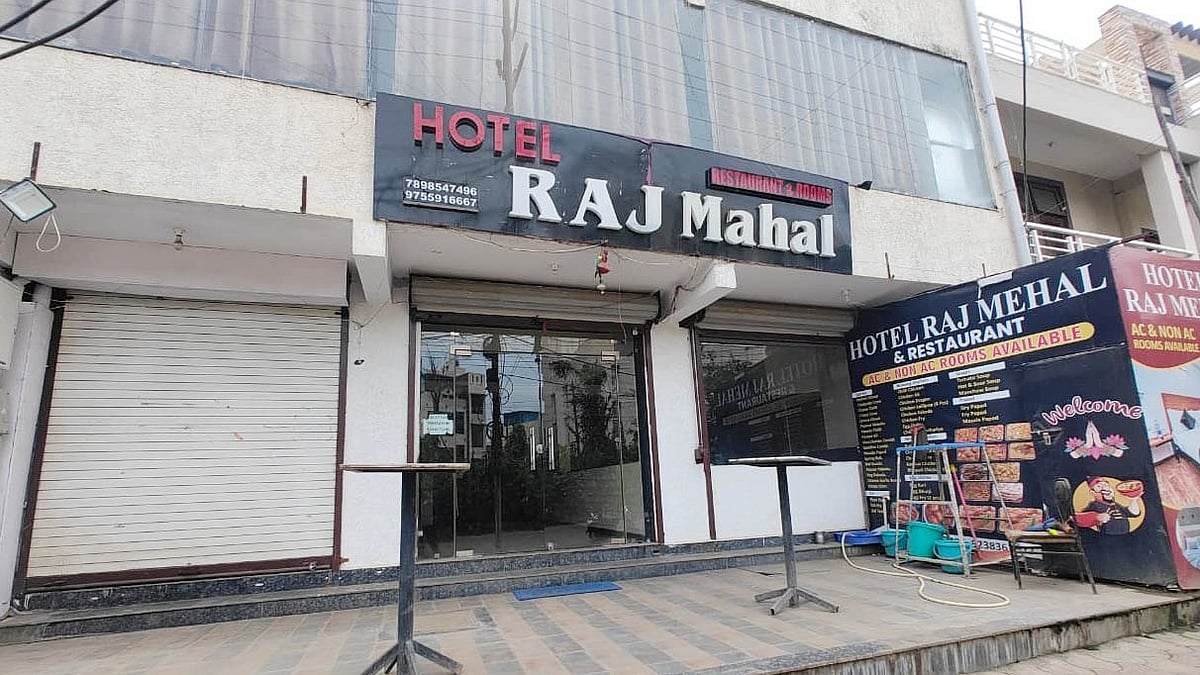
A recent sealing drive by the Bhopal Municipal Corporation (BMC) in residential areas of Bhopal has come under scrutiny after a ground verification revealed discrepancies in the corporation's claims. The BMC had informed the Supreme Court that nearly 100 establishments were sealed during the drive, which began on August 1. However, an inspection found that only two establishments, a tattoo studio and Raj Mahal Hotel in Rohit Nagar, were actually sealed.
The BMC had issued notices to 1,018 establishments in Bhopal for running commercial activities in residential areas. Despite this, the remaining properties were merely shut voluntarily, and not sealed by the civic body. The Action Taken Report (ATR) submitted by the BMC to the Supreme Court showed that 100 establishments were sealed, which has been questioned after the ground verification.
A 10-member high-level committee was constituted by the Madhya Pradesh government to examine the issue, and after this, the establishments that had closed voluntarily began reopening. On August 4, when the Supreme Court hearing was underway, the situation in several affected areas had returned to normal, with shops in Rohit Nagar and Arera Colony operating despite earlier directions to remain shut.
An inspection carried out on Tuesday and Wednesday found that the locks placed on both sealed establishments had been removed, and the side doors of the properties were found open. The manager of Raj Mahal Hotel, Anshul, said that the management reopened the premises after receiving assurances from local leaders that markets would be allowed to function and no further action would be taken by the BMC.
Municipal commissioner Sanskriti Jain stated that further action would be taken after receiving the written Supreme Court order. She added that the locks placed during the sealing process were opened as per the committee's decision and the matter was under review. Any further action, she said, would be taken according to legal provisions.
The sealing drive was initiated to address the issue of illegal commercial establishments operating in residential areas of Bhopal. The BMC's claims have been disputed, and the matter is currently under review. The Supreme Court's order is awaited, and further action will be taken accordingly.
The incident highlights the need for accurate reporting and transparency in the actions taken by civic bodies. The discrepancy in the BMC's claims and the actual number of sealed establishments has raised questions about the effectiveness of the sealing drive.
In the context of urban planning and development, the issue of illegal commercial establishments in residential areas is a significant concern. The BMC's sealing drive was aimed at addressing this issue, but the disputed claims have raised questions about the approach and implementation of the drive.
The outcome of the Supreme Court hearing and the subsequent actions taken by the BMC will be crucial in determining the future course of action. The incident has also highlighted the need for coordination and communication between civic bodies, government agencies, and local leaders to address the issue effectively.
In conclusion, the Bhopal Municipal Corporation's sealing drive has lost steam, with 100 establishments reopening ahead of the Supreme Court hearing. The disputed claims and the actual number of sealed establishments have raised questions about the effectiveness of the drive, and the matter is currently under review. The Supreme Court's order is awaited, and further action will be taken accordingly.
The incident has significant implications for urban planning and development in Bhopal, and the outcome of the Supreme Court hearing will be closely watched. The need for accurate reporting, transparency, and coordination between civic bodies and government agencies has been highlighted, and it remains to be seen how the issue will be addressed in the future.
The Supreme Court's decision will be crucial in determining the future course of action, and it is expected that the court will provide guidance on the issue. The BMC's actions and the subsequent developments will be closely monitored, and it is hoped that the issue will be resolved in a fair and transparent manner.
The incident has also raised questions about the role of local leaders and their influence on the actions taken by civic bodies. The assurances given by local leaders to the management of Raj Mahal Hotel have been cited as the reason for the reopening of the establishment, and it remains to be seen how this will be addressed in the future.
In the end, the outcome of the Supreme Court hearing and the subsequent actions taken by the BMC will be crucial in determining the future course of action. The incident has highlighted the need for accurate reporting, transparency, and coordination between civic bodies and government agencies, and it is hoped that the issue will be resolved in a fair and transparent manner.
Frequently asked questions
How many establishments were sealed by the BMC during the drive?
Only 2 establishments, a tattoo studio and Raj Mahal Hotel, were actually sealed.
What was the reason for the reopening of the sealed establishments?
The management of Raj Mahal Hotel reopened the premises after receiving assurances from local leaders that markets would be allowed to function and no further action would be taken by the BMC.