Supreme Court Stays Demolition of 25 Khandwa Houses
Supreme Court grants relief to Khandwa families, stays demolition. Residents claim 40-year occupancy.
'%3E%3Crect%20width%3D'96'%20height%3D'96'%20fill%3D'%23B3261E'%2F%3E%3Ccircle%20cx%3D'30'%20cy%3D'24'%20r%3D'44'%20fill%3D'%23fff'%20opacity%3D'.12'%2F%3E%3Ccircle%20cx%3D'60'%20cy%3D'74'%20r%3D'40'%20fill%3D'%23000'%20opacity%3D'.10'%2F%3E%3C%2Fg%3E%3Cg%20fill%3D'%23fff'%3E%3Crect%20x%3D'29'%20y%3D'49'%20width%3D'8'%20height%3D'19'%20rx%3D'1'%2F%3E%3Crect%20x%3D'39'%20y%3D'40'%20width%3D'9'%20height%3D'28'%20rx%3D'1'%2F%3E%3Crect%20x%3D'50'%20y%3D'45'%20width%3D'8'%20height%3D'23'%20rx%3D'1'%2F%3E%3Crect%20x%3D'60'%20y%3D'53'%20width%3D'7'%20height%3D'15'%20rx%3D'1'%2F%3E%3Crect%20x%3D'41'%20y%3D'34'%20width%3D'5'%20height%3D'6'%2F%3E%3C%2Fg%3E%3C%2Fsvg%3E)
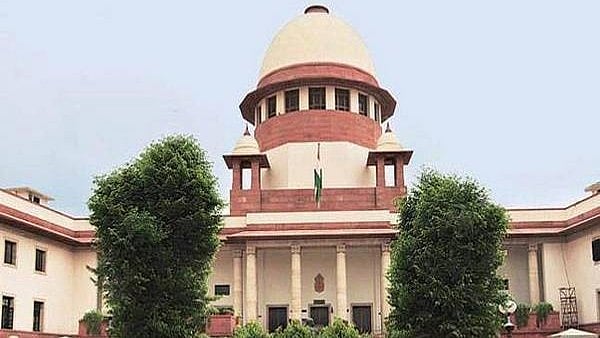
The Supreme Court has ordered a status quo on the proposed demolition of 25 houses in Khandwa district, Madhya Pradesh, granting interim relief to residents who claim to have lived there for over 40 years.
The order was passed by a Bench comprising Chief Justice Surya Kant and Justices Joymalya Bagchi and V Mohana on Friday. Advocate Nizam Pasha, appearing for the petitioners, sought urgent intervention after the Madhya Pradesh High Court refused to grant relief.
Pasha argued that the residents had occupied the land for over four decades and requested protection until their petition could be heard. He stated that the High Court had suggested alternative accommodation for the affected families instead of staying the demolition.
The Supreme Court Bench directed that the status quo regarding demolition shall be maintained until August 3, 2026, when the matter will be heard again. The Khandwa Municipal Corporation had alleged that the houses were built in violation of norms on encroached land and had issued demolition notices.
The affected families had initially approached the Jabalpur Bench of the Madhya Pradesh High Court but failed to secure relief, prompting them to move the Supreme Court. The residents claim to have lived in the area for over 40 years, and the Supreme Court's interim relief has provided them with temporary protection from demolition.
The Khandwa Municipal Corporation's allegations of encroachment and violation of norms have been a point of contention for the residents. The corporation's decision to issue demolition notices had sparked concerns among the affected families, who argued that they had been living in the area for decades.
The Supreme Court's order has come as a relief to the families, who can now continue to occupy their homes until the matter is heard again in August. The court's decision to maintain the status quo has also raised questions about the legitimacy of the demolition notices issued by the Khandwa Municipal Corporation.
The case highlights the complexities of land ownership and occupancy in India, where disputes over encroachment and violation of norms are common. The Supreme Court's intervention has provided a temporary solution to the affected families, but the final outcome of the case remains to be seen.
The significance of this case lies in its implications for the rights of occupants and the powers of municipal corporations to issue demolition notices. The Supreme Court's decision will have a bearing on similar cases across the country, where families are fighting to protect their homes from demolition.
In conclusion, the Supreme Court's order granting interim relief to the Khandwa families has provided them with temporary protection from demolition. The case will be heard again in August, and the final outcome will have significant implications for the affected families and the broader issue of land ownership and occupancy in India.
Frequently asked questions
Why did the Supreme Court grant interim relief to Khandwa families?
The Supreme Court granted interim relief to Khandwa families because they claimed to have lived in the area for over 40 years and sought protection from demolition.
What is the next step in the case?
The case will be heard again on August 3, 2026, when the Supreme Court will decide on the matter.