ED Uncovers Ashok Kharat's Alleged Benami Bank Network in Mumbai
Ashok Kharat exploited pandemic-era KYC loopholes, ED alleges. Bogus accounts used to route Rs 4.12 crore.
'%3E%3Crect%20width%3D'96'%20height%3D'96'%20fill%3D'%23B3261E'%2F%3E%3Ccircle%20cx%3D'30'%20cy%3D'24'%20r%3D'44'%20fill%3D'%23fff'%20opacity%3D'.12'%2F%3E%3Ccircle%20cx%3D'60'%20cy%3D'74'%20r%3D'40'%20fill%3D'%23000'%20opacity%3D'.10'%2F%3E%3C%2Fg%3E%3Cg%20fill%3D'%23fff'%3E%3Crect%20x%3D'29'%20y%3D'49'%20width%3D'8'%20height%3D'19'%20rx%3D'1'%2F%3E%3Crect%20x%3D'39'%20y%3D'40'%20width%3D'9'%20height%3D'28'%20rx%3D'1'%2F%3E%3Crect%20x%3D'50'%20y%3D'45'%20width%3D'8'%20height%3D'23'%20rx%3D'1'%2F%3E%3Crect%20x%3D'60'%20y%3D'53'%20width%3D'7'%20height%3D'15'%20rx%3D'1'%2F%3E%3Crect%20x%3D'41'%20y%3D'34'%20width%3D'5'%20height%3D'6'%2F%3E%3C%2Fg%3E%3C%2Fsvg%3E)
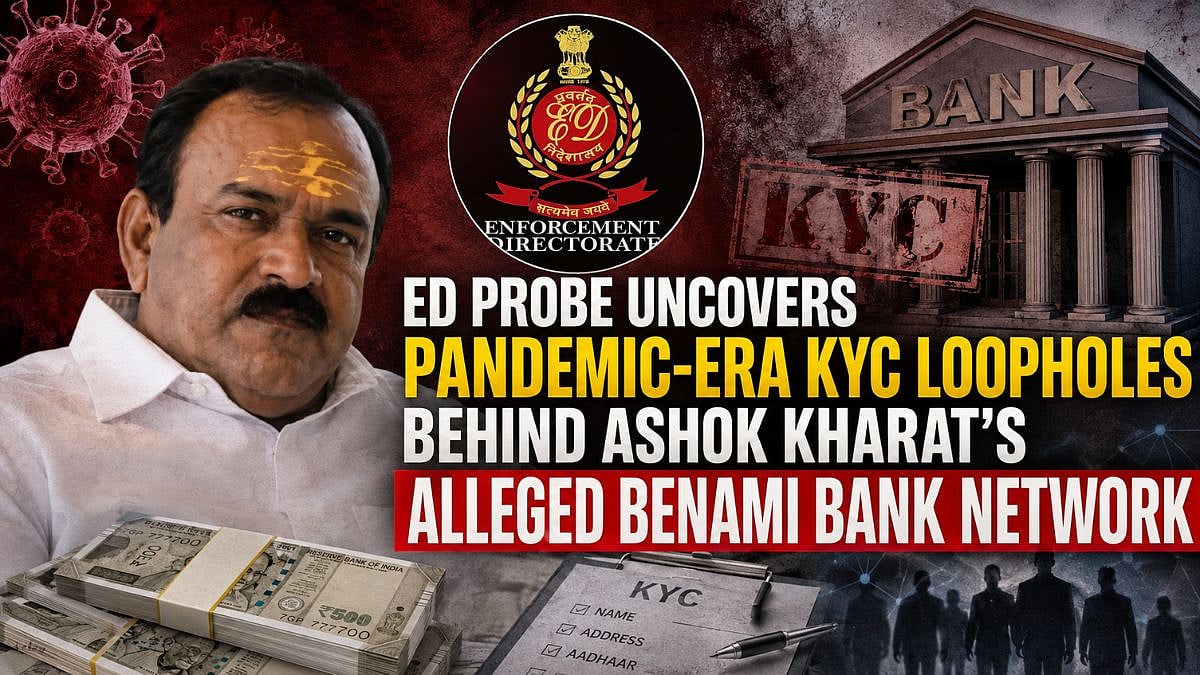
The Enforcement Directorate (ED) has alleged that self-styled godman Ashok Kharat exploited procedural relaxations in the Know Your Customer (KYC) process during the COVID-19 pandemic to build a network of bogus and benami bank accounts.
According to the ED, Kharat's modus operandi involved exploiting temporary disruptions in the KYC process to facilitate the opening of 60 bank accounts without mandatory physical verification of customers.
The ED claimed that these accounts formed part of a larger network of more than 100 bogus and benami accounts allegedly controlled by Kharat, through which funds exceeding Rs 4.12 crore were allegedly routed.
The findings are based on statements recorded from bank officials during the money laundering probe. Milind Dadasaheb Bankar, Branch Manager of Samatha Nagari Sahakari Patsanstha (SNSP), admitted that the prescribed KYC protocols were completely sidelined while opening 60 accounts directly linked to Kharat.
Around 43 of these accounts were generated in a single day on May 25, 2021, when the cooperative society's Aadhaar-based authentication software was unavailable due to operational constraints during the pandemic.
Kharat allegedly exploited the situation to get the accounts opened through alternate verification methods, including WhatsApp video calls and telephonic confirmations.
The ED alleged that, in most cases, account opening forms had already been filled in before being submitted, while the actual account holders neither visited the branch nor interacted directly with bank officials.
The Branch Manager stated that no approval had been obtained from the chairman or any higher authority to relax KYC compliance or Aadhaar-based verification during the pandemic.
Despite the absence of such authorisation, the accounts were opened in line with the cooperative society's prevailing operational practices at the time, the ED alleged.
The agency alleged that Kharat subsequently expanded this alleged network by facilitating the creation of 12 additional bank accounts in October 2024.
As part of its enforcement action, the ED has frozen active balances totalling Rs 94.27 lakh across these specific accounts.
The ED's investigation highlights the vulnerabilities in the KYC process during the pandemic, which were exploited by individuals like Kharat to carry out illicit financial transactions.
The case also raises concerns about the effectiveness of the KYC norms in preventing money laundering and other financial crimes.
The ED's action against Kharat and his alleged benami bank network is a significant step towards curbing such activities and ensuring the integrity of the financial system.
The incident serves as a reminder of the need for stringent KYC norms and robust monitoring mechanisms to prevent the misuse of the financial system for illicit purposes.
In the context of Mumbai, the ED's investigation underscores the importance of vigilant monitoring of financial transactions to prevent money laundering and other financial crimes.
The city's financial institutions must remain vigilant and ensure that KYC norms are strictly adhered to, in order to prevent the exploitation of loopholes by individuals like Kharat.
The ED's action is a significant development in the ongoing efforts to curb financial crimes in Mumbai and ensure the integrity of the city's financial system.
Frequently asked questions
What was the modus operandi used by Ashok Kharat to exploit KYC loopholes?
Kharat allegedly exploited temporary disruptions in the KYC process to facilitate the opening of bank accounts without mandatory physical verification of customers.
How much money was allegedly routed through the bogus accounts?
Funds exceeding Rs 4.12 crore were allegedly routed through the accounts.