Moon Drifting 3.8cm Away from Earth Annually
Moon moving away from Earth, affecting daylight and tides. What's next?
'%3E%3Crect%20width%3D'96'%20height%3D'96'%20fill%3D'%23B3261E'%2F%3E%3Ccircle%20cx%3D'30'%20cy%3D'24'%20r%3D'44'%20fill%3D'%23fff'%20opacity%3D'.12'%2F%3E%3Ccircle%20cx%3D'60'%20cy%3D'74'%20r%3D'40'%20fill%3D'%23000'%20opacity%3D'.10'%2F%3E%3C%2Fg%3E%3Cg%20fill%3D'%23fff'%3E%3Crect%20x%3D'29'%20y%3D'49'%20width%3D'8'%20height%3D'19'%20rx%3D'1'%2F%3E%3Crect%20x%3D'39'%20y%3D'40'%20width%3D'9'%20height%3D'28'%20rx%3D'1'%2F%3E%3Crect%20x%3D'50'%20y%3D'45'%20width%3D'8'%20height%3D'23'%20rx%3D'1'%2F%3E%3Crect%20x%3D'60'%20y%3D'53'%20width%3D'7'%20height%3D'15'%20rx%3D'1'%2F%3E%3Crect%20x%3D'41'%20y%3D'34'%20width%3D'5'%20height%3D'6'%2F%3E%3C%2Fg%3E%3C%2Fsvg%3E)
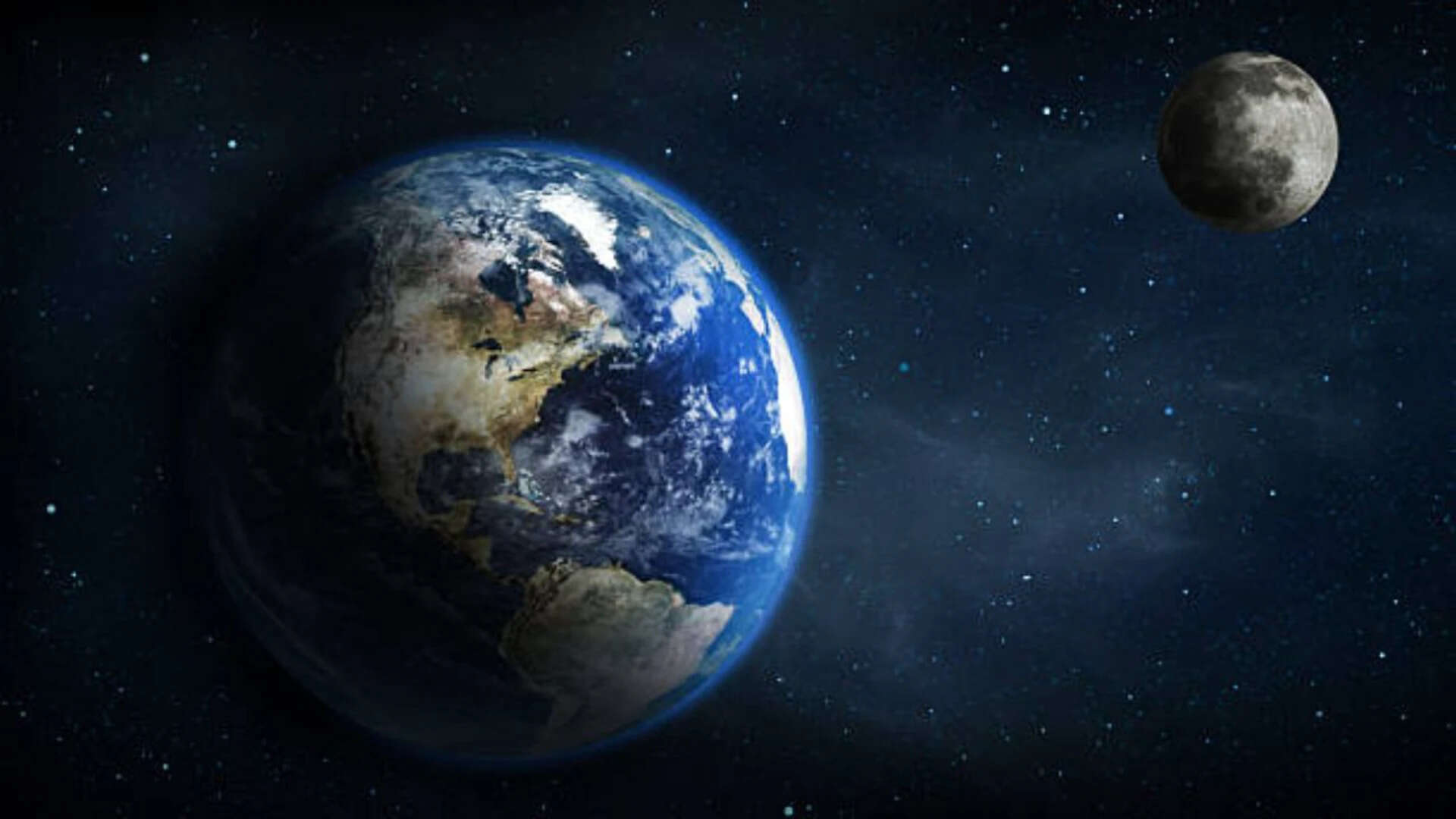
The Moon is slowly moving away from Earth at a rate of 3.8 centimeters per year. This gradual distancing has significant implications for our planet, with effects that will be felt over millions of years.
One of the primary consequences of the Moon's migration is the extension of daylight hours. As the Moon moves further away, its gravitational pull on Earth will weaken, causing our planet's rotation to slow down. This deceleration will result in longer days, with the potential for 25-hour days in the distant future.
Another significant impact of the Moon's movement is the end of total solar eclipses. These rare and awe-inspiring events occur when the Moon passes directly between the Earth and the Sun, blocking the Sun's light and casting a shadow on our planet. However, as the Moon moves further away, its apparent size in the sky will decrease, making it unable to completely cover the Sun's disk.
The weakened gravitational pull of the Moon will also disrupt coastal ecosystems and marine life. The tides, which are driven by the Moon's gravity, will become less pronounced, leading to changes in the distribution of marine species and the erosion of coastlines.
The Moon's ascent to a higher orbit is a slow but profound transformation in our natural environment. While the effects of this movement will not be felt immediately, they will have a significant impact on the Earth's rotation, tides, and ecosystems over millions of years.
The process of the Moon moving away from Earth is a natural consequence of the tidal interactions between the two bodies. The Moon's gravity causes the Earth's oceans to bulge, creating a slight delay in the Earth's rotation. This delay, in turn, causes the Moon to move away from our planet.
In conclusion, the Moon's gradual distancing from Earth has significant implications for our planet's natural environment. While the effects of this movement will not be felt immediately, they will have a profound impact on the Earth's rotation, tides, and ecosystems over millions of years.
The Moon's movement away from Earth is a reminder of the dynamic and constantly changing nature of our universe. As our planet continues to evolve, it is essential to understand and appreciate the intricate relationships between the Earth, the Moon, and the Sun.
The study of the Moon's movement and its effects on Earth is an ongoing area of research, with scientists continually monitoring the Moon's orbit and its impact on our planet. By understanding these changes, we can gain a deeper appreciation for the complex and interconnected systems that govern our universe.
As the Moon continues to move away from Earth, it is essential to consider the potential consequences of this movement and how they may impact our planet's natural environment. By doing so, we can work towards a better understanding of the Earth-Moon system and the intricate relationships that govern our universe.
In the end, the Moon's movement away from Earth is a natural process that has been occurring for billions of years. While it may have significant implications for our planet, it is also a reminder of the beauty and complexity of the universe we inhabit.
Frequently asked questions
How fast is the Moon moving away from Earth?
The Moon is moving away from Earth at a rate of 3.8 centimeters per year.
What will happen to total solar eclipses as the Moon moves away?
Total solar eclipses will eventually come to an end as the Moon's apparent size in the sky decreases, making it unable to completely cover the Sun's disk.