Maharashtra Restaurants Urge FDA To End 'Name & Shame' Practice
Restaurant bodies oppose public shaming, seek improvement notices before licence suspension.
'%3E%3Crect%20width%3D'96'%20height%3D'96'%20fill%3D'%23B3261E'%2F%3E%3Ccircle%20cx%3D'30'%20cy%3D'24'%20r%3D'44'%20fill%3D'%23fff'%20opacity%3D'.12'%2F%3E%3Ccircle%20cx%3D'60'%20cy%3D'74'%20r%3D'40'%20fill%3D'%23000'%20opacity%3D'.10'%2F%3E%3C%2Fg%3E%3Cg%20fill%3D'%23fff'%3E%3Crect%20x%3D'29'%20y%3D'49'%20width%3D'8'%20height%3D'19'%20rx%3D'1'%2F%3E%3Crect%20x%3D'39'%20y%3D'40'%20width%3D'9'%20height%3D'28'%20rx%3D'1'%2F%3E%3Crect%20x%3D'50'%20y%3D'45'%20width%3D'8'%20height%3D'23'%20rx%3D'1'%2F%3E%3Crect%20x%3D'60'%20y%3D'53'%20width%3D'7'%20height%3D'15'%20rx%3D'1'%2F%3E%3Crect%20x%3D'41'%20y%3D'34'%20width%3D'5'%20height%3D'6'%2F%3E%3C%2Fg%3E%3C%2Fsvg%3E)
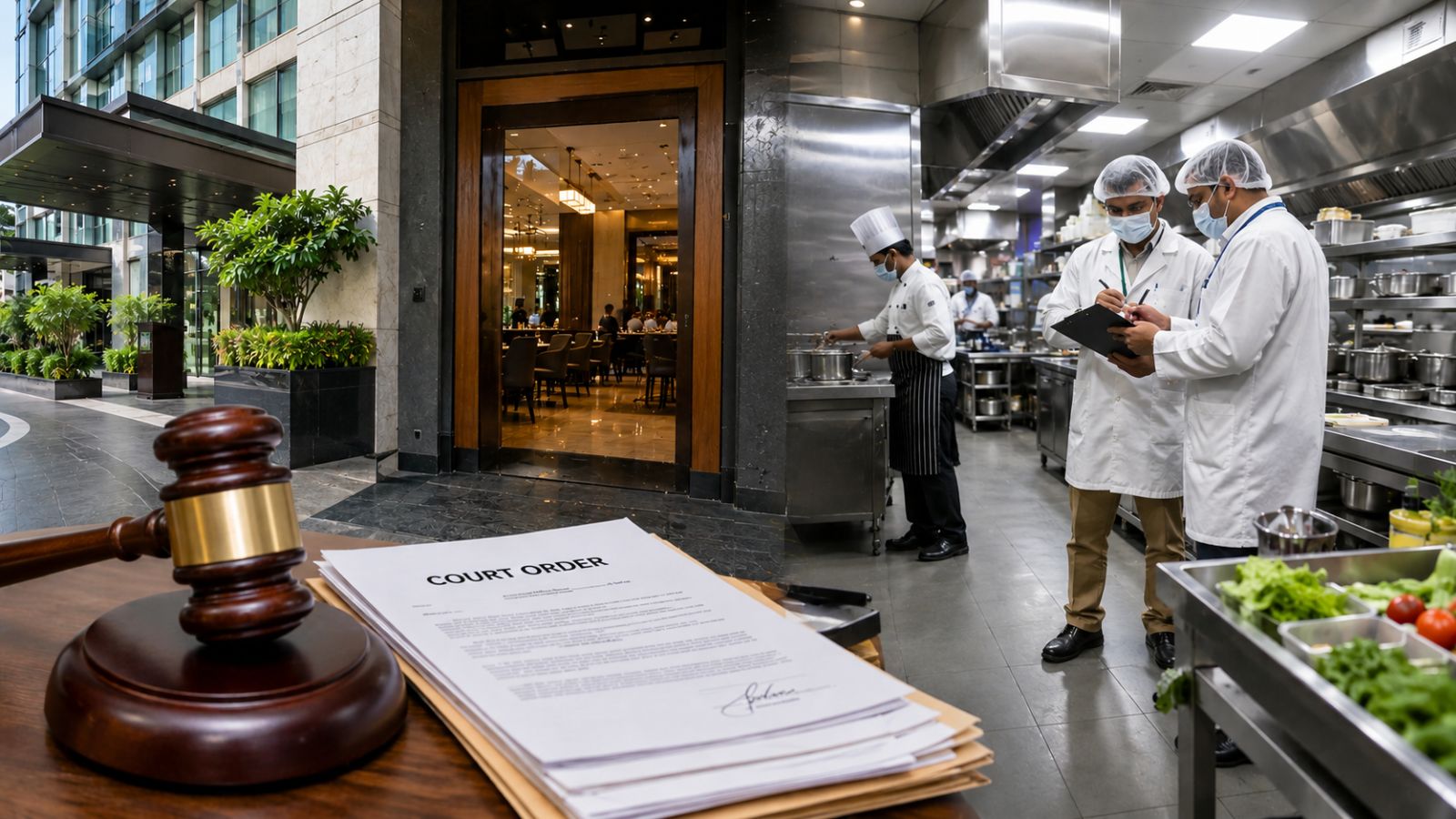
Major hospitality associations in Maharashtra have appealed to the state Food and Drug Administration (FDA) to stop the practice of naming and shaming kitchen establishments before investigations are complete.
The Hotel and Restaurant Association Western India (HRAWI), the National Restaurant Association of India (NRAI), and the Indian Hotel and Restaurant Association (AHAR) have raised concerns over recent public enforcement tactics. They argue that premature publicity can cause irreparable reputational damage to businesses.
At the heart of the sector's representation is a call for the FDA to issue prior improvement notices under Section 32 of the Food Safety and Standards (FSS) Act, 2006. This would give food business operators a fair opportunity to rectify identified deficiencies before resorting to licence suspensions or cancellations.
The associations have also requested the regulatory authority to refrain from publishing names, photographs, or video footage of establishments in mainstream media or on social media platforms before full legal proceedings and compliance reviews are concluded. They have urged the FDA to exercise caution when issuing public statements regarding ongoing inspections.
While reiterating their commitment to maintaining high hygiene and safety standards, association leaders pointed out that publicising interim inspection findings bypasses the principles of natural justice. They highlighted that under the statutory framework of the Food Safety and Standards Authority of India (FSSAI), inspections are designed to be consultative and corrective in the first instance.
The hospitality sector supports thousands of local livelihoods, and unverified or premature disclosures can destroy consumer trust instantly. The industry bodies emphasised their long-standing partnership with both the FSSAI and the Maharashtra FDA on capacity building, training, and awareness programmes.
Reaffirming their willingness to work alongside regulators to foster a strong culture of compliance, HRAWI, NRAI, and AHAR urged the authority to balance public health protection with fairness. They seek to ensure that regulatory enforcement remains constructive rather than punitive.
The associations' appeal comes at a time when the FDA has been actively conducting inspections and enforcing food safety regulations in the state. The move is seen as an effort to ensure that food business operators maintain high standards of hygiene and safety.
The FDA's actions have been welcomed by the associations, but they have expressed concerns over the manner in which the regulatory authority has been publicising the results of inspections. They argue that this approach can be counterproductive and may harm the reputation of establishments that are otherwise compliant with food safety regulations.
In conclusion, the hospitality associations in Maharashtra have urged the FDA to adopt a more constructive approach to regulatory enforcement. By issuing improvement notices and refraining from publicising interim inspection findings, the FDA can help to maintain high standards of hygiene and safety while also protecting the reputation of food business operators.
This approach is seen as essential for maintaining consumer trust and confidence in the hospitality sector. The associations' appeal is likely to be closely watched by the FDA and other stakeholders in the sector, as it seeks to balance the need for effective regulatory enforcement with the need to protect the reputation of food business operators.
The outcome of this appeal is likely to have significant implications for the hospitality sector in Maharashtra, and may set a precedent for other states to follow. As the FDA considers the associations' appeal, it is likely to weigh the competing interests of public health protection and the need to protect the reputation of food business operators.
Ultimately, the goal of the FDA and the hospitality associations is the same: to ensure that food business operators maintain high standards of hygiene and safety. By working together and adopting a constructive approach to regulatory enforcement, they can help to achieve this goal while also protecting the reputation of establishments in the sector.
Frequently asked questions
What is the 'name & shame' practice in food safety regulation?
The 'name & shame' practice refers to the publicising of names, photographs, or video footage of establishments that have been found to be non-compliant with food safety regulations.
Why are hospitality associations in Maharashtra opposing the 'name & shame' practice?
The associations are opposing the practice because they argue that it can cause irreparable reputational damage to businesses and destroy consumer trust instantly.