CSMT Canteen Shut Over Non-Edible Oil, Expired Ghee
Railway canteen found with hygiene issues, non-edible oil and expired ghee. Staff raise food safety concerns.
'%3E%3Crect%20width%3D'96'%20height%3D'96'%20fill%3D'%23B3261E'%2F%3E%3Ccircle%20cx%3D'30'%20cy%3D'24'%20r%3D'44'%20fill%3D'%23fff'%20opacity%3D'.12'%2F%3E%3Ccircle%20cx%3D'60'%20cy%3D'74'%20r%3D'40'%20fill%3D'%23000'%20opacity%3D'.10'%2F%3E%3C%2Fg%3E%3Cg%20fill%3D'%23fff'%3E%3Crect%20x%3D'29'%20y%3D'49'%20width%3D'8'%20height%3D'19'%20rx%3D'1'%2F%3E%3Crect%20x%3D'39'%20y%3D'40'%20width%3D'9'%20height%3D'28'%20rx%3D'1'%2F%3E%3Crect%20x%3D'50'%20y%3D'45'%20width%3D'8'%20height%3D'23'%20rx%3D'1'%2F%3E%3Crect%20x%3D'60'%20y%3D'53'%20width%3D'7'%20height%3D'15'%20rx%3D'1'%2F%3E%3Crect%20x%3D'41'%20y%3D'34'%20width%3D'5'%20height%3D'6'%2F%3E%3C%2Fg%3E%3C%2Fsvg%3E)
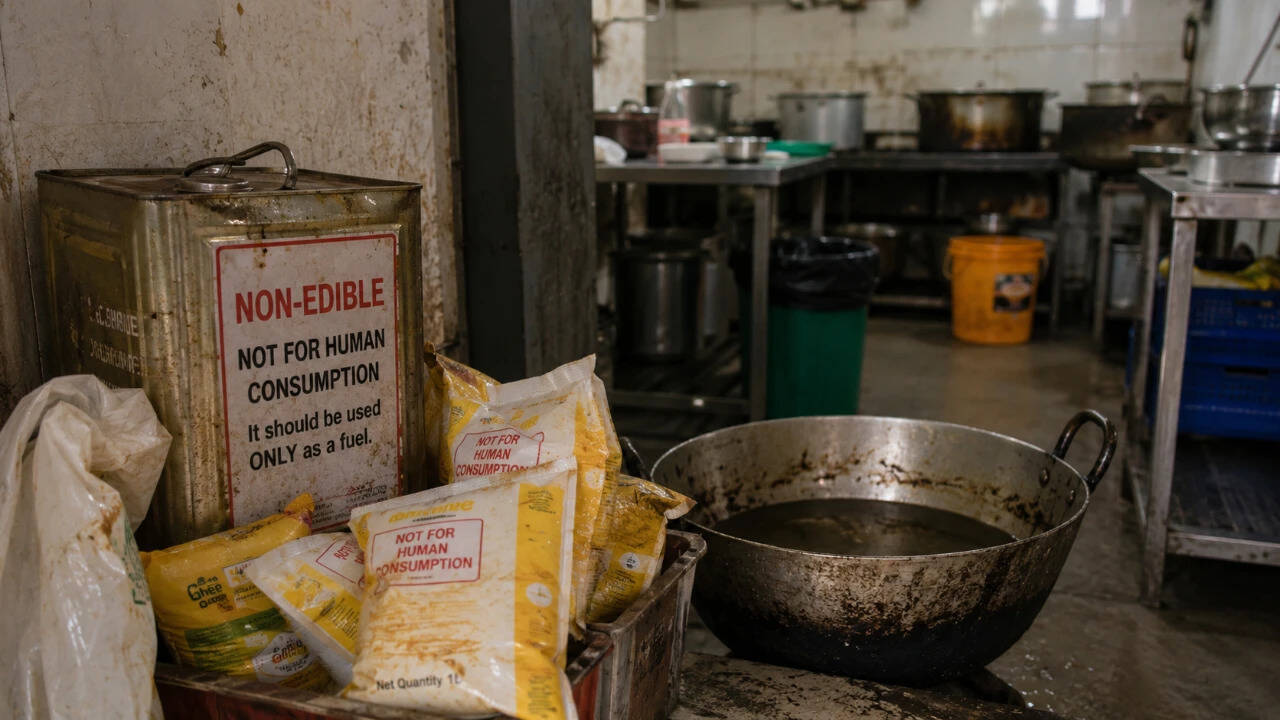
A railway canteen at Chhatrapati Shivaji Maharaj Terminus (CSMT) was found to have significant hygiene deficiencies during a recent inspection. The inspection revealed the presence of non-edible ghee and expired packets of food items, raising serious concerns about food safety among the railway staff who use the canteen.
The inspection team discovered used oil, clearly marked as non-edible, being stored in a cooking vessel. This finding is particularly alarming as it suggests a potential risk to the health and wellbeing of the staff who consume food from the canteen.
Following the inspection, the canteen was shut down for two days. Union representatives have since come forward to claim that the non-edible items were intended for use in lamps, not for cooking purposes. However, this explanation has done little to alleviate the concerns of the staff, who are demanding stricter quality control measures to ensure the food served at the canteen is safe to eat.
The CSMT canteen is a crucial facility for railway staff, providing them with meals and refreshments throughout the day. The discovery of hygiene deficiencies and non-edible items has highlighted the need for regular inspections and stricter monitoring of food quality at the canteen.
The incident has also raised questions about the overall standards of food safety and hygiene at railway canteens across the city. With thousands of staff relying on these facilities for their daily meals, it is essential that the railway authorities take immediate action to address these concerns and ensure that the food served is safe and healthy.
In recent years, there have been several instances of food safety concerns at railway canteens and stations across India. The incident at CSMT highlights the need for greater vigilance and stricter quality control measures to prevent such incidents in the future.
The shutdown of the canteen for two days is a clear indication of the seriousness with which the railway authorities are treating this incident. However, more needs to be done to restore the confidence of the staff and ensure that the food served at the canteen meets the highest standards of safety and hygiene.
The incident serves as a reminder of the importance of regular inspections and monitoring of food quality at railway canteens. It also highlights the need for greater awareness and education among staff and canteen operators about the importance of food safety and hygiene.
In conclusion, the discovery of non-edible oil and expired ghee at the CSMT canteen is a serious concern that needs to be addressed immediately. The railway authorities must take swift action to ensure that the food served at the canteen is safe and healthy, and that the highest standards of hygiene and quality control are maintained at all times.
The incident has significant implications for the health and wellbeing of railway staff, and it is essential that the authorities take a proactive approach to preventing such incidents in the future. By doing so, they can help to maintain the trust and confidence of the staff, and ensure that the railway canteens continue to provide a safe and healthy dining experience for all users.
Frequently asked questions
What was found at the CSMT canteen during the inspection?
Non-edible oil and expired ghee were found, raising food safety concerns among staff.
What action was taken after the inspection findings?
The canteen was shut down for two days following the discovery of hygiene deficiencies and non-edible items.