Maharashtra Handloom Weavers Preserve India's Textile Heritage
Maharashtra's handloom weavers keep India's textile heritage alive. Their craftsmanship is a source of cultural pride.
'%3E%3Crect%20width%3D'96'%20height%3D'96'%20fill%3D'%23B3261E'%2F%3E%3Ccircle%20cx%3D'30'%20cy%3D'24'%20r%3D'44'%20fill%3D'%23fff'%20opacity%3D'.12'%2F%3E%3Ccircle%20cx%3D'60'%20cy%3D'74'%20r%3D'40'%20fill%3D'%23000'%20opacity%3D'.10'%2F%3E%3C%2Fg%3E%3Cg%20fill%3D'%23fff'%3E%3Crect%20x%3D'29'%20y%3D'49'%20width%3D'8'%20height%3D'19'%20rx%3D'1'%2F%3E%3Crect%20x%3D'39'%20y%3D'40'%20width%3D'9'%20height%3D'28'%20rx%3D'1'%2F%3E%3Crect%20x%3D'50'%20y%3D'45'%20width%3D'8'%20height%3D'23'%20rx%3D'1'%2F%3E%3Crect%20x%3D'60'%20y%3D'53'%20width%3D'7'%20height%3D'15'%20rx%3D'1'%2F%3E%3Crect%20x%3D'41'%20y%3D'34'%20width%3D'5'%20height%3D'6'%2F%3E%3C%2Fg%3E%3C%2Fsvg%3E)
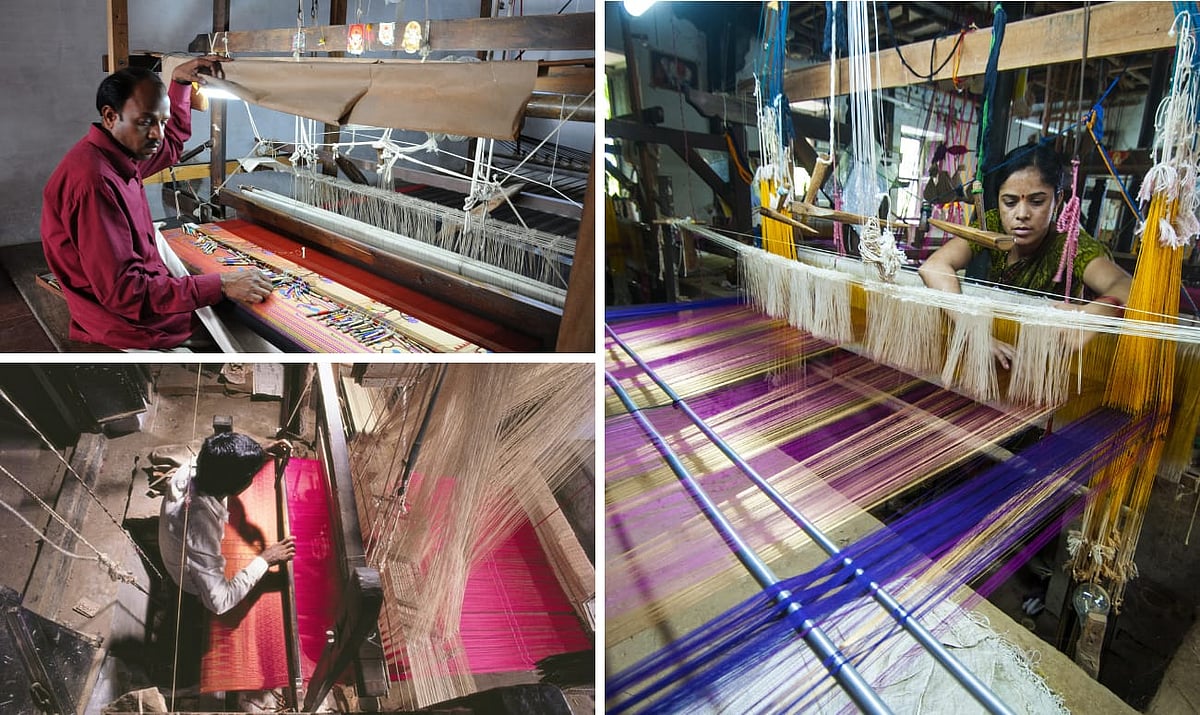
Maharashtra's handloom weavers have been preserving India's textile heritage for years, long before the call for a self-reliant India. These skilled artisans have been keeping the cultural pride of India alive through their homemade goods and services.
The state of Maharashtra has been nurturing its local skilled labour and indigenous handloom industry, which has been in existence since the invention of handlooms in earlier ages. The weaving art is one of the early artistic expressions and manifestations in the state.
According to marketing consultant Saurabh Khanorkar of Indrayani Handlooms, the current condition of the handloom industry in Maharashtra looks stable and promising. Despite facing challenges such as competition from power looms, rising raw material costs, and a shortage of skilled weavers, the sector continues to survive through government funds, cooperative societies, design innovation, and increasing consumer interest.
The Maharashtra handloom industry supports roughly 2,800 registered handloom weavers, according to the Fourth All India Handloom Census 2019-20 update from the Ministry of Textiles. There are 2,882 handloom weavers, 627 allied workers, and 3,509 total handloom workers in the state.
However, weavers still face challenges in terms of working conditions, wages, and working hours. Ashwinii Ahher, founder of Toshani Enterprises, notes that while progress has been made, there is still a long way to go in addressing the challenges faced by daily labourers.
The handloom industry is an integral part of Maharashtra's cultural landscape and folklore. The state government has been providing support to the industry through various initiatives, including government funds and cooperative societies.
The increasing consumer interest in handloom products has also been a major factor in the survival of the industry. Many consumers are now opting for handmade and sustainable products, which has led to an increase in demand for handloom products.
In conclusion, Maharashtra's handloom weavers are playing a crucial role in preserving India's textile heritage. Their craftsmanship and skill are a source of cultural pride, and their industry is an integral part of the state's cultural landscape.
The handloom industry's survival is a testament to the resilience and determination of the weavers, who have been facing challenges for years. With the support of the government and increasing consumer interest, the industry is likely to continue thriving in the years to come.
The preservation of India's textile heritage is not only important for the cultural identity of the country but also for the livelihood of thousands of weavers and artisans who depend on the industry.
As the demand for handmade and sustainable products continues to grow, the handloom industry is likely to play an increasingly important role in the country's textile sector.
In the end, the story of Maharashtra's handloom weavers is one of hope and resilience, and their craftsmanship will continue to be a source of pride for the state and the country.
Frequently asked questions
How many handloom weavers are there in Maharashtra?
There are roughly 2800 registered handloom weavers in Maharashtra, according to the Fourth All India Handloom Census 2019-20 update.
What are the challenges faced by the handloom industry in Maharashtra?
The handloom industry in Maharashtra faces challenges such as competition from power looms, rising raw material costs, and a shortage of skilled weavers.