Delhi Students Face Road Safety Risks Alone
Two-thirds of Delhi students cross major roads alone. Safety concerns include crashes and harassment.
'%3E%3Crect%20width%3D'96'%20height%3D'96'%20fill%3D'%23B3261E'%2F%3E%3Ccircle%20cx%3D'30'%20cy%3D'24'%20r%3D'44'%20fill%3D'%23fff'%20opacity%3D'.12'%2F%3E%3Ccircle%20cx%3D'60'%20cy%3D'74'%20r%3D'40'%20fill%3D'%23000'%20opacity%3D'.10'%2F%3E%3C%2Fg%3E%3Cg%20fill%3D'%23fff'%3E%3Crect%20x%3D'29'%20y%3D'49'%20width%3D'8'%20height%3D'19'%20rx%3D'1'%2F%3E%3Crect%20x%3D'39'%20y%3D'40'%20width%3D'9'%20height%3D'28'%20rx%3D'1'%2F%3E%3Crect%20x%3D'50'%20y%3D'45'%20width%3D'8'%20height%3D'23'%20rx%3D'1'%2F%3E%3Crect%20x%3D'60'%20y%3D'53'%20width%3D'7'%20height%3D'15'%20rx%3D'1'%2F%3E%3Crect%20x%3D'41'%20y%3D'34'%20width%3D'5'%20height%3D'6'%2F%3E%3C%2Fg%3E%3C%2Fsvg%3E)
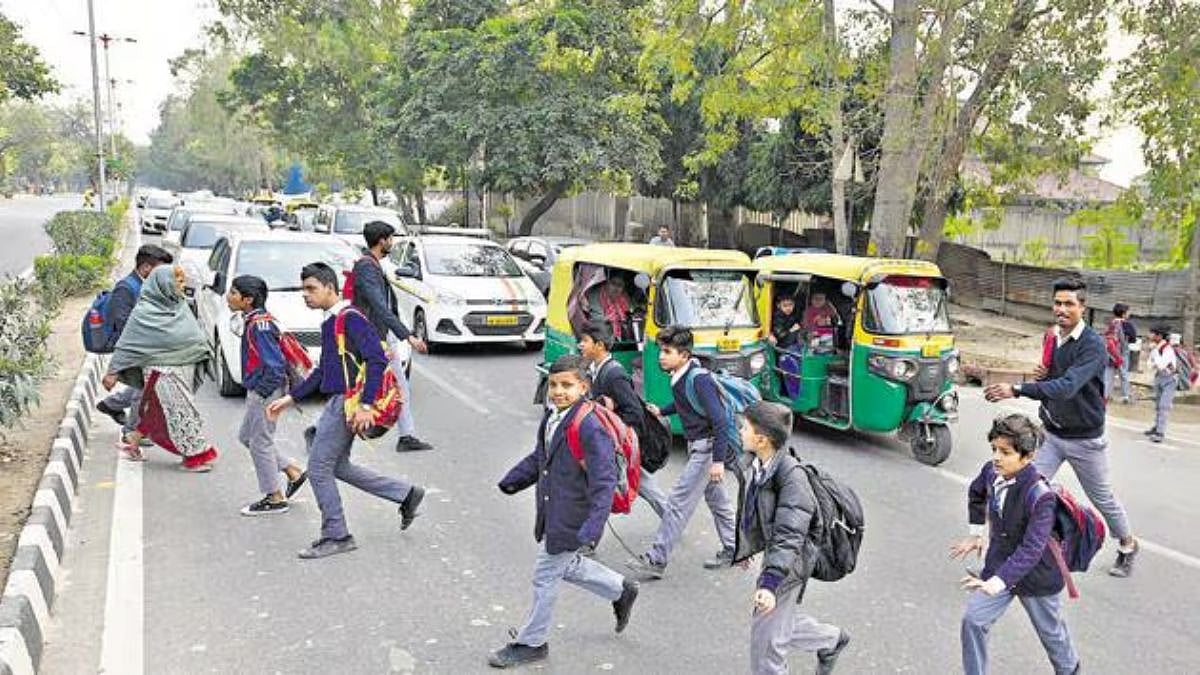
A recent study has found that two-thirds of school-going adolescents in Delhi cross major roads alone on their way to school, highlighting the need for safer school routes. The study, conducted by the George Institute of Global Health and supported by the Indian Council of Medical Research, included 4,789 students aged 10-19 years from four public schools located near high-crash road segments in Delhi.
The study examined how adolescents travel to and from school, their understanding of road safety signs, safety practices, and the risks they perceive during their daily commutes. According to Pratishtha Singh, a public health researcher, walking emerged as the most common mode of school travel, particularly among boys. Many students reported concerns about road crashes, speeding vehicles, robbery, and harassment during their daily journeys.
Of those surveyed, 80% of boys and 49% of girls walk from school to home, often on busy roads and highways without adult supervision. Crossing major roads alone was also common, with many students who cycled also travelling independently on high-traffic roads. The study found that adolescents faced a range of safety concerns during their daily journeys, including road crashes and speeding vehicles, as well as fears of robbery and personal safety.
Boys were more likely to report concerns about robbery, whereas girls more frequently reported fears of gendered harassment or eve teasing. The findings highlight the need to make school journeys safer through a combination of people-centered infrastructure, enforcement, and more effective road safety education.
The study suggests that regular exposure to traffic risks may make some hazards feel like a normal part of everyday life, while also highlighting important differences in how boys and girls experience safety during their daily commutes. To address these concerns, the study recommends creating environments that make safe travel possible, including safer infrastructure, enforcement, and education that responds to the realities young people face every day.
The need for safer school routes is a pressing concern in Delhi, where many students are forced to navigate busy roads and highways without adult supervision. The study's findings have significant implications for policymakers and educators, who must work together to create safer and more supportive environments for adolescents to travel to and from school.
In conclusion, the study highlights the importance of addressing the road safety concerns of adolescents in Delhi. By creating safer and more supportive environments, we can help reduce the risks associated with daily commutes and promote a culture of road safety among young people.
The study's recommendations are a crucial step towards making school journeys safer for all students in Delhi. By prioritizing the safety and well-being of adolescents, we can help ensure that they are able to travel to and from school without fear of harm or harassment.
Overall, the study provides a comprehensive understanding of the road safety concerns faced by adolescents in Delhi and highlights the need for a multi-faceted approach to addressing these concerns. By working together, we can create a safer and more supportive environment for all students to travel to and from school.
The findings of the study are a wake-up call for policymakers and educators to take immediate action to address the road safety concerns of adolescents in Delhi. By prioritizing the safety and well-being of young people, we can help promote a culture of road safety and reduce the risks associated with daily commutes.
In the long run, the study's recommendations have the potential to make a significant impact on the safety and well-being of adolescents in Delhi. By creating safer and more supportive environments, we can help promote a culture of road safety and reduce the risks associated with daily commutes.
The study's findings are a significant contribution to our understanding of the road safety concerns faced by adolescents in Delhi. By highlighting the need for safer school routes and more effective road safety education, the study provides a crucial step towards promoting a culture of road safety among young people.
In conclusion, the study highlights the importance of addressing the road safety concerns of adolescents in Delhi. By creating safer and more supportive environments, we can help reduce the risks associated with daily commutes and promote a culture of road safety among young people.
Frequently asked questions
What percentage of Delhi students cross major roads alone?
Two-thirds of Delhi students cross major roads alone.
What are the main safety concerns faced by Delhi students?
The main safety concerns faced by Delhi students include road crashes, speeding vehicles, robbery, and harassment.