Tropical Forests Hit By Excessive Heat
Rising temperatures affect 57M hectares, hindering photosynthesis. Future increases projected.
'%3E%3Crect%20width%3D'96'%20height%3D'96'%20fill%3D'%23B3261E'%2F%3E%3Ccircle%20cx%3D'30'%20cy%3D'24'%20r%3D'44'%20fill%3D'%23fff'%20opacity%3D'.12'%2F%3E%3Ccircle%20cx%3D'60'%20cy%3D'74'%20r%3D'40'%20fill%3D'%23000'%20opacity%3D'.10'%2F%3E%3C%2Fg%3E%3Cg%20fill%3D'%23fff'%3E%3Crect%20x%3D'29'%20y%3D'49'%20width%3D'8'%20height%3D'19'%20rx%3D'1'%2F%3E%3Crect%20x%3D'39'%20y%3D'40'%20width%3D'9'%20height%3D'28'%20rx%3D'1'%2F%3E%3Crect%20x%3D'50'%20y%3D'45'%20width%3D'8'%20height%3D'23'%20rx%3D'1'%2F%3E%3Crect%20x%3D'60'%20y%3D'53'%20width%3D'7'%20height%3D'15'%20rx%3D'1'%2F%3E%3Crect%20x%3D'41'%20y%3D'34'%20width%3D'5'%20height%3D'6'%2F%3E%3C%2Fg%3E%3C%2Fsvg%3E)
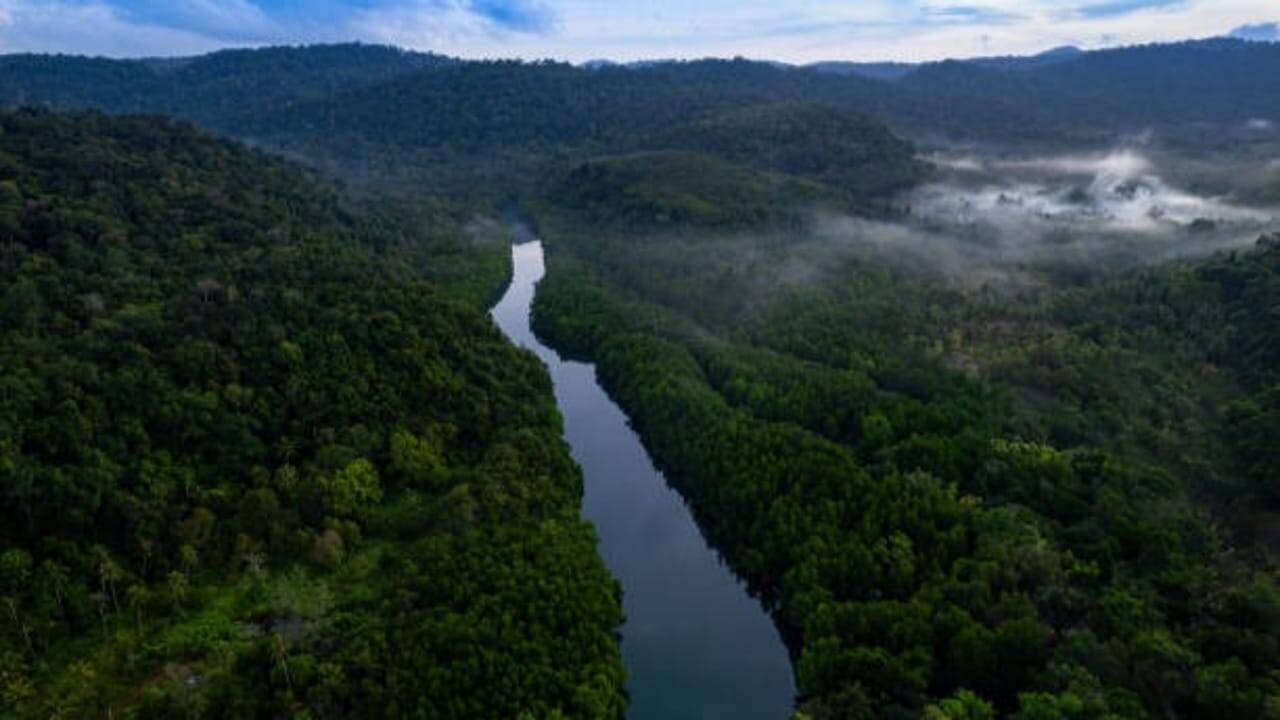
A recent study has found that 57 million hectares of tropical forests are struggling to photosynthesise efficiently due to rising heat. This is a critical issue as tropical forests play a vital role in capturing atmospheric carbon.
The excessive heat is reducing the efficiency of trees in these forests, which could have severe consequences for the environment. The critical heat thresholds are being exceeded in millions of hectares of tropical forests, leading to a decline in their ability to perform photosynthesis.
According to projections, the situation is likely to worsen in the future, with significant increases in heat-stressed forest areas expected. While some species may be able to adapt to the changing conditions, the speed at which they can do so remains uncertain.
Tropical forests are some of the most biodiverse ecosystems on the planet, and their health is crucial for maintaining the balance of the environment. The impact of rising temperatures on these forests is a major concern, as it could lead to a decline in their ability to capture carbon and produce oxygen.
The study's findings highlight the need for urgent action to address the issue of climate change and its impact on tropical forests. This includes reducing greenhouse gas emissions and implementing measures to protect and conserve these vital ecosystems.
The consequences of inaction could be severe, with the potential for significant losses of biodiversity and ecosystem function. It is essential that we take steps to mitigate the effects of climate change on tropical forests and work towards preserving these critical ecosystems.
In the context of the global effort to combat climate change, the preservation of tropical forests is a key priority. These forests are not only important for capturing carbon, but also for supporting local communities and maintaining ecosystem services.
The study's projections suggest that the situation will continue to deteriorate unless action is taken to address the root causes of climate change. This includes transitioning to renewable energy sources, increasing energy efficiency, and protecting natural habitats.
Ultimately, the fate of tropical forests depends on our ability to respond to the challenges posed by climate change. It is essential that we take a proactive approach to addressing this issue and work towards preserving these vital ecosystems for future generations.
The impact of climate change on tropical forests is a pressing concern that requires immediate attention. As the situation continues to deteriorate, it is essential that we take action to mitigate the effects of rising temperatures and work towards preserving these critical ecosystems.