Rahul Gandhi Condemns Forceful Hospitalisation of Sonam Wangchuk
Rahul Gandhi reacts to Sonam Wangchuk's hospitalisation, calls it wrong. Wangchuk was on a hunger strike demanding Education Minister's resignation.
'%3E%3Crect%20width%3D'96'%20height%3D'96'%20fill%3D'%231A5276'%2F%3E%3Ccircle%20cx%3D'30'%20cy%3D'24'%20r%3D'44'%20fill%3D'%23fff'%20opacity%3D'.12'%2F%3E%3Ccircle%20cx%3D'60'%20cy%3D'74'%20r%3D'40'%20fill%3D'%23000'%20opacity%3D'.10'%2F%3E%3C%2Fg%3E%3Cg%20fill%3D'%23fff'%3E%3Cpath%20d%3D'M31%2041%20L48%2031%20L65%2041%20Z'%2F%3E%3Crect%20x%3D'33'%20y%3D'43'%20width%3D'4'%20height%3D'17'%2F%3E%3Crect%20x%3D'41'%20y%3D'43'%20width%3D'4'%20height%3D'17'%2F%3E%3Crect%20x%3D'51'%20y%3D'43'%20width%3D'4'%20height%3D'17'%2F%3E%3Crect%20x%3D'59'%20y%3D'43'%20width%3D'4'%20height%3D'17'%2F%3E%3Crect%20x%3D'30'%20y%3D'62'%20width%3D'36'%20height%3D'4'%20rx%3D'1'%2F%3E%3C%2Fg%3E%3C%2Fsvg%3E)
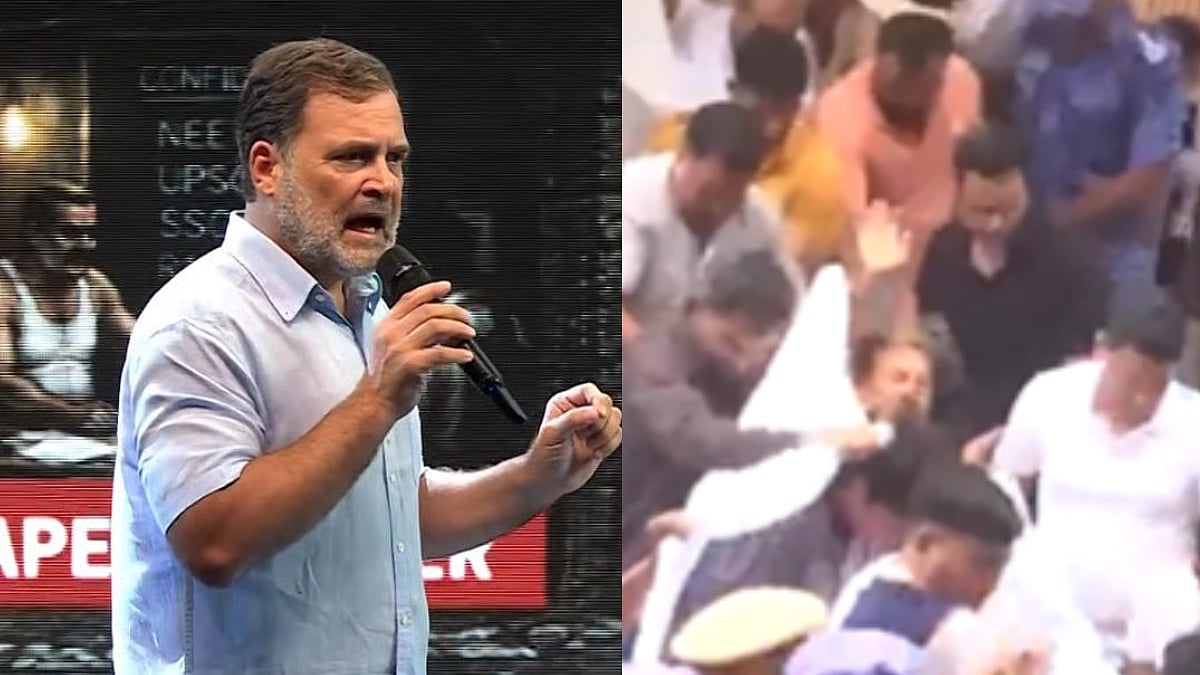
On Saturday, Leader of Opposition in the Lok Sabha Rahul Gandhi condemned the forceful hospitalisation of activist Sonam Wangchuk at Safdarjung Hospital in New Delhi. Wangchuk was on the 21st day of his hunger strike, demanding the resignation of Education Minister Dharmendra Pradhan.
Gandhi stated that the removal of Wangchuk from Jantar Mantar while he was on a non-violent hunger strike is wrong. He added that the core tenets of the Modi government are Asatya and Hinsa, which translates to falsehood and violence. Gandhi emphasized that paper leaks, the rising cost of education, and student suicides are critical issues for India's future.
Earlier, Gandhi addressed the 'Chhatron Ki Goonj' rally in Dehradun, where he demanded sweeping reforms to India's education and examination system. He argued that no political party or organisation should control educational institutions and called for a broad political consensus to tackle recurring paper leaks.
Wangchuk was shifted from Jantar Mantar to Safdarjung Hospital by Delhi Police, citing his deteriorating health after more than three weeks of fasting. He was scheduled to lead a protest march to Parliament on Monday before being hospitalised. The police stated that the decision was taken in compliance with the Delhi High Court's directions and based on expert medical advice.
The Delhi High Court had ordered the police to ensure Wangchuk's safety and well-being during his hunger strike. The police said that they shifted Wangchuk to the hospital for essential medical care, considering his deteriorating health condition.
Wangchuk's wife expressed gratitude towards the government for taking care of her husband's health. She said that she is grateful that the government cared enough to shift Wangchuk to the hospital.
The incident has sparked a debate about the government's handling of protests and hunger strikes. Gandhi's reaction highlights the opposition's concern about the government's approach to addressing critical issues such as education and student welfare.
The issue of paper leaks and the rising cost of education has been a longstanding concern in India. The opposition has been demanding reforms to the education system, and Wangchuk's hunger strike was a attempt to bring attention to these issues.
In the context of India's education system, the incident highlights the need for a broader discussion about the role of the government and political parties in controlling educational institutions. Gandhi's call for a broad political consensus to tackle recurring paper leaks underscores the need for a collaborative approach to addressing these critical issues.
The significance of this incident lies in its implications for the future of India's education system and the government's approach to addressing critical issues. As the country continues to grapple with challenges such as paper leaks and student suicides, the need for a comprehensive and collaborative approach to education reform becomes increasingly important.
In conclusion, the forceful hospitalisation of Sonam Wangchuk has sparked a debate about the government's handling of protests and hunger strikes. The incident highlights the need for a broader discussion about the role of the government and political parties in controlling educational institutions and the need for a collaborative approach to addressing critical issues such as education and student welfare.