Ancient Marsupial Fossil Found In Queensland
A 23m-year-old fossil discovery in Queensland reveals Australia's oldest carnivorous marsupial. The finding sheds light on the continent's evolutionary history.
'%3E%3Crect%20width%3D'96'%20height%3D'96'%20fill%3D'%23B3261E'%2F%3E%3Ccircle%20cx%3D'30'%20cy%3D'24'%20r%3D'44'%20fill%3D'%23fff'%20opacity%3D'.12'%2F%3E%3Ccircle%20cx%3D'60'%20cy%3D'74'%20r%3D'40'%20fill%3D'%23000'%20opacity%3D'.10'%2F%3E%3C%2Fg%3E%3Cg%20fill%3D'%23fff'%3E%3Crect%20x%3D'29'%20y%3D'49'%20width%3D'8'%20height%3D'19'%20rx%3D'1'%2F%3E%3Crect%20x%3D'39'%20y%3D'40'%20width%3D'9'%20height%3D'28'%20rx%3D'1'%2F%3E%3Crect%20x%3D'50'%20y%3D'45'%20width%3D'8'%20height%3D'23'%20rx%3D'1'%2F%3E%3Crect%20x%3D'60'%20y%3D'53'%20width%3D'7'%20height%3D'15'%20rx%3D'1'%2F%3E%3Crect%20x%3D'41'%20y%3D'34'%20width%3D'5'%20height%3D'6'%2F%3E%3C%2Fg%3E%3C%2Fsvg%3E)
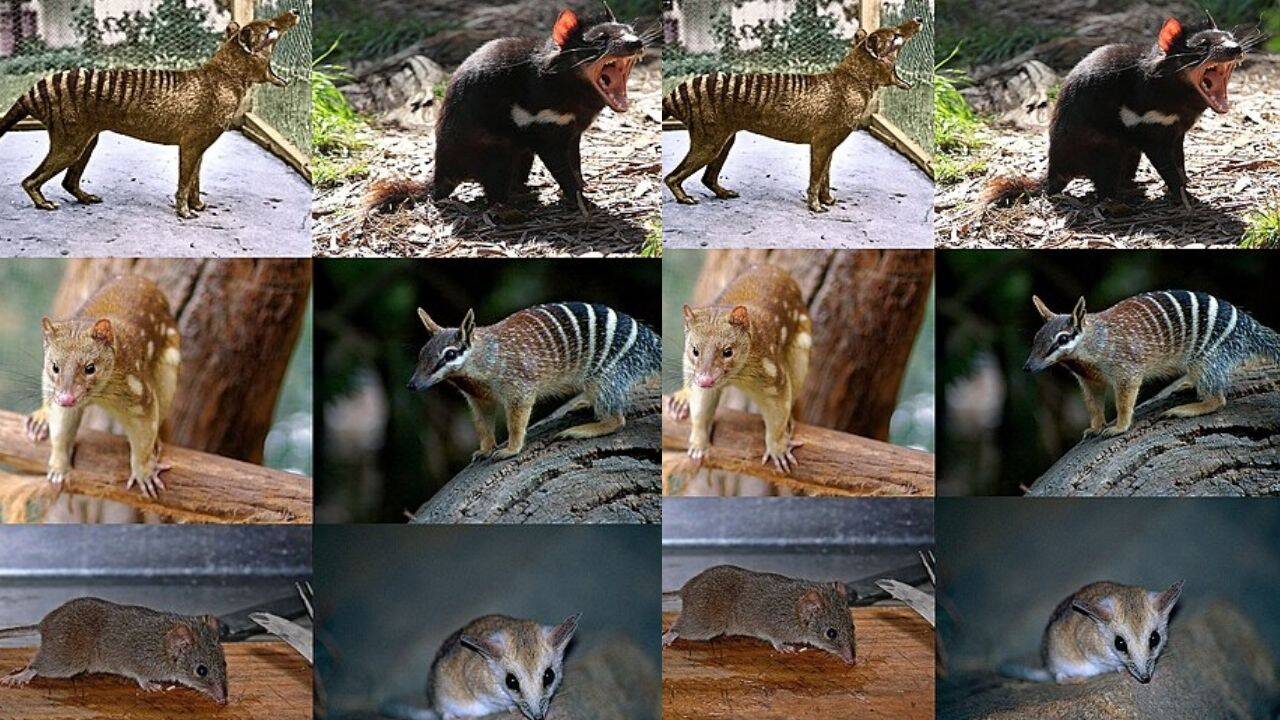
A groundbreaking fossil discovery in Queensland, Australia, has unearthed the country's oldest known carnivorous marsupial, dating back an astonishing 23 million years. The fossilized remains, comprising tiny jaws, belong to a newly identified species named Miyumba chrisdickmani. This significant find has major implications for our understanding of Australia's evolutionary history.
The discovery was made in the lush rainforests of Queensland, providing valuable insights into the habitats of these ancient predators. The fact that these early marsupials thrived in wet environments suggests that they originated in such habitats before adapting to drier landscapes over time.
The newly identified species, Miyumba chrisdickmani, is a member of the dasyurid family, which includes modern-day carnivorous marsupials such as quolls and Tasmanian devils. This finding fills a significant gap in the continent's evolutionary history, shedding light on the origins of these fascinating creatures.
The discovery of Miyumba chrisdickmani is a testament to the importance of paleontological research in understanding the history of life on Earth. By studying fossilized remains, scientists can gain a deeper understanding of the evolution of different species and the environments in which they lived.
The rainforests of Queensland, where the fossil was found, are known for their rich biodiversity and complex ecosystems. The fact that these ancient marsupials inhabited such environments suggests that they played a vital role in shaping the continent's ecological landscape.
The discovery of Australia's oldest carnivorous marsupial has significant implications for our understanding of the country's natural history. It highlights the importance of continued research and exploration into the continent's fossil record, which is likely to yield many more exciting discoveries in the future.
In conclusion, the finding of Miyumba chrisdickmani is a major breakthrough in the field of paleontology, providing new insights into the evolution of carnivorous marsupials in Australia. As scientists continue to study the fossil record, we can expect to learn more about the fascinating history of life on Earth.
The significance of this discovery extends beyond the scientific community, as it highlights the importance of preserving and protecting our natural heritage. By understanding the evolution of different species and the environments in which they lived, we can gain a deeper appreciation for the complex ecosystems that support life on Earth.
Ultimately, the discovery of Miyumba chrisdickmani is a reminder of the awe-inspiring complexity and diversity of life on our planet, and the importance of continued research and exploration into the natural world.