E20 Fuel Cuts Mileage 2-6%: Ministers
E20 fuel may reduce mileage, ministers say. Figures vary between ministries.
'%3E%3Crect%20width%3D'96'%20height%3D'96'%20fill%3D'%230B6E4F'%2F%3E%3Ccircle%20cx%3D'30'%20cy%3D'24'%20r%3D'44'%20fill%3D'%23fff'%20opacity%3D'.12'%2F%3E%3Ccircle%20cx%3D'60'%20cy%3D'74'%20r%3D'40'%20fill%3D'%23000'%20opacity%3D'.10'%2F%3E%3C%2Fg%3E%3Cg%20fill%3D'none'%20stroke%3D'%23fff'%20stroke-width%3D'3.2'%20stroke-linecap%3D'round'%20stroke-linejoin%3D'round'%3E%3Cpolyline%20points%3D'31%2C59%2041%2C49%2049%2C54%2063%2C37'%2F%3E%3Cpolyline%20points%3D'55%2C37%2063%2C37%2063%2C45'%2F%3E%3C%2Fg%3E%3C%2Fsvg%3E)
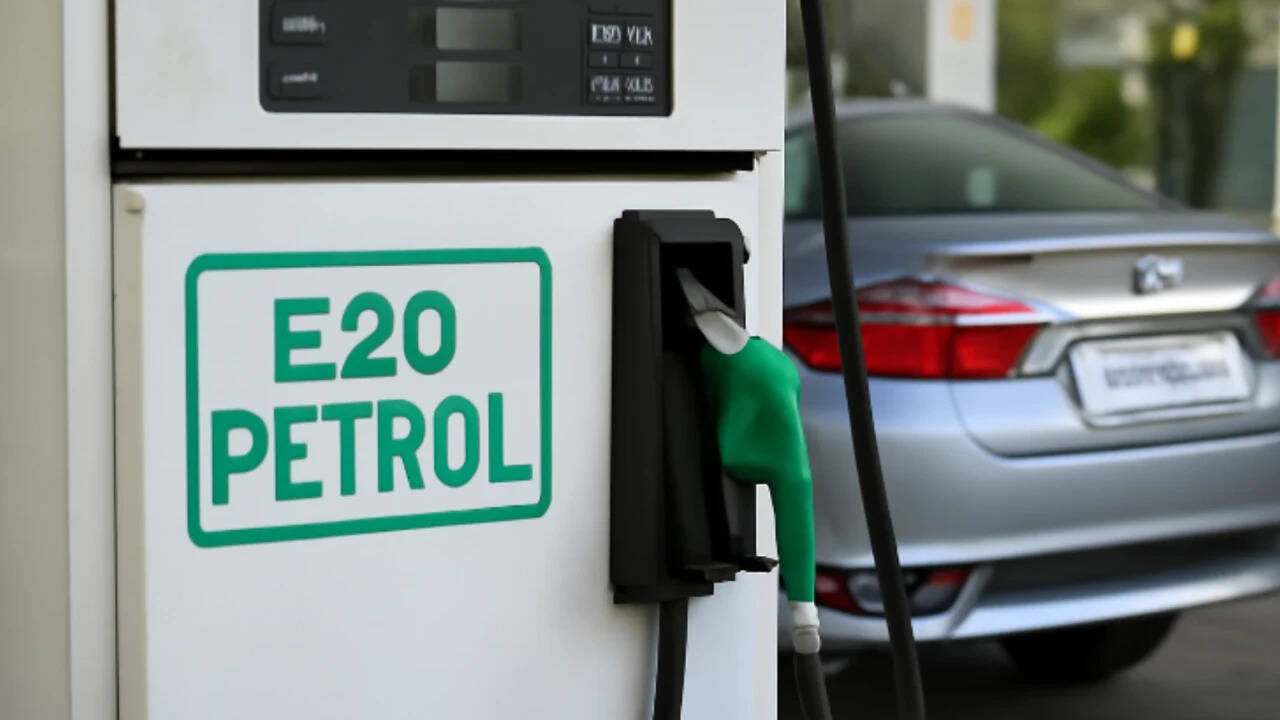
The Indian government has released varied estimates on the impact of E20 fuel on vehicle mileage. According to the Road Transport Ministry, older vehicles using E20 fuel may experience a 2-6% decrease in fuel efficiency.
On the other hand, the Petroleum Ministry has suggested a general reduction of about 3-5% in mileage. Both ministries have emphasized that fuel economy is dependent on various factors, including driving habits and vehicle maintenance.
The introduction of E20 fuel, which contains 20% ethanol, is part of the government's efforts to reduce dependence on fossil fuels and promote sustainable energy sources. However, concerns have been raised about the potential impact on vehicle performance and fuel efficiency.
The Road Transport Ministry's estimate of a 2-6% decrease in mileage is based on studies and tests conducted on older vehicles. The ministry has stated that the actual impact of E20 fuel on mileage may vary depending on several factors, including the age and condition of the vehicle, driving habits, and maintenance practices.
The Petroleum Ministry's estimate of a 3-5% reduction in mileage is more conservative, but still suggests that E20 fuel may have a noticeable impact on fuel efficiency. The ministry has emphasized that the use of E20 fuel is expected to have several benefits, including reduced greenhouse gas emissions and improved air quality.
The varying estimates from the two ministries highlight the complexity of the issue and the need for further research and testing. As the government continues to promote the use of E20 fuel, it is likely that the impact on vehicle mileage will be closely monitored and studied.
In the context of India's energy policy, the introduction of E20 fuel is a significant step towards reducing dependence on fossil fuels and promoting sustainable energy sources. The government has set ambitious targets for the use of ethanol in fuel, and the introduction of E20 fuel is a key part of this strategy.
The impact of E20 fuel on mileage is likely to be a key concern for vehicle owners and drivers, particularly those who rely on their vehicles for daily use. As the government continues to promote the use of E20 fuel, it is likely that there will be a growing need for information and guidance on how to optimize fuel efficiency and minimize the impact of E20 fuel on vehicle performance.
In conclusion, the introduction of E20 fuel is a significant development in India's energy policy, and the impact on vehicle mileage is a key concern. While the estimates from the two ministries vary, it is clear that E20 fuel may have a noticeable impact on fuel efficiency, and further research and testing are needed to fully understand the effects.
The government's efforts to promote sustainable energy sources and reduce dependence on fossil fuels are likely to have a significant impact on the environment and the economy. As the use of E20 fuel becomes more widespread, it is likely that there will be a growing need for information and guidance on how to optimize fuel efficiency and minimize the impact of E20 fuel on vehicle performance.
The significance of this development for India is that it marks a major step towards reducing dependence on fossil fuels and promoting sustainable energy sources. The introduction of E20 fuel is a key part of the government's strategy to reduce greenhouse gas emissions and improve air quality, and it is likely to have a significant impact on the environment and the economy.
Frequently asked questions
What is E20 fuel?
E20 fuel contains 20% ethanol and is part of the government's efforts to reduce dependence on fossil fuels.
How much will E20 fuel affect my vehicle's mileage?
The impact of E20 fuel on mileage may vary depending on several factors, including the age and condition of the vehicle, driving habits, and maintenance practices, with estimates ranging from 2-6% to 3-5% reduction.