Yonkers Uncovers Buried River
Yonkers restores river, creates habitat. New park emerges.
'%3E%3Crect%20width%3D'96'%20height%3D'96'%20fill%3D'%23B3261E'%2F%3E%3Ccircle%20cx%3D'30'%20cy%3D'24'%20r%3D'44'%20fill%3D'%23fff'%20opacity%3D'.12'%2F%3E%3Ccircle%20cx%3D'60'%20cy%3D'74'%20r%3D'40'%20fill%3D'%23000'%20opacity%3D'.10'%2F%3E%3C%2Fg%3E%3Cg%20fill%3D'%23fff'%3E%3Crect%20x%3D'29'%20y%3D'49'%20width%3D'8'%20height%3D'19'%20rx%3D'1'%2F%3E%3Crect%20x%3D'39'%20y%3D'40'%20width%3D'9'%20height%3D'28'%20rx%3D'1'%2F%3E%3Crect%20x%3D'50'%20y%3D'45'%20width%3D'8'%20height%3D'23'%20rx%3D'1'%2F%3E%3Crect%20x%3D'60'%20y%3D'53'%20width%3D'7'%20height%3D'15'%20rx%3D'1'%2F%3E%3Crect%20x%3D'41'%20y%3D'34'%20width%3D'5'%20height%3D'6'%2F%3E%3C%2Fg%3E%3C%2Fsvg%3E)
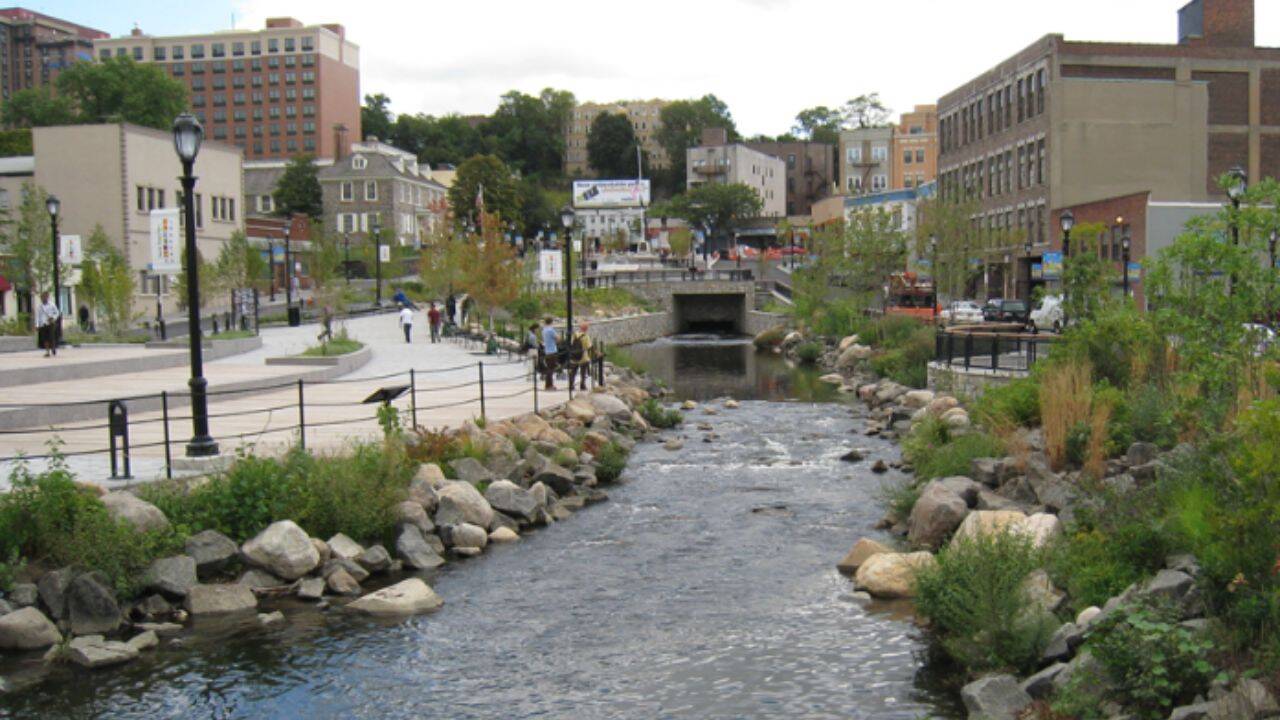
A significant project was completed in Yonkers, New York, in 2012, which involved uncovering a section of the Saw Mill River. This river had been buried beneath a downtown parking lot since the 1920s. The former Larkin Plaza was transformed into a three-acre public park, bringing new life to the area.
The restoration of the river was a major undertaking, and the results were impressive. Within six months, the restored river supported 14,000 square feet of new aquatic habitat. This habitat also attracted several species, indicating a positive impact on the local ecosystem.
The project's success can be attributed to the city's efforts to revitalize the downtown area. By uncovering the buried river, Yonkers created a unique public space that not only serves as a park but also provides a habitat for various species.
The Saw Mill River had been hidden from view for nearly a century, and its restoration has brought significant benefits to the area. The creation of a new aquatic habitat has enhanced biodiversity, and the public park has become a valuable asset for the community.
The transformation of the former Larkin Plaza into a public park has also had a positive impact on the local environment. The restored river and surrounding park have improved air and water quality, making the area a more pleasant place to live and visit.
In the context of urban development, the Yonkers project serves as a model for revitalizing neglected areas. By incorporating natural elements, such as rivers and parks, into urban planning, cities can create more sustainable and livable environments.
The success of the Yonkers project has significant implications for urban development and environmental conservation. It demonstrates that even in densely populated areas, it is possible to create thriving ecosystems and public spaces that benefit both the community and the environment.
In conclusion, the restoration of the Saw Mill River in Yonkers, New York, is a notable example of urban renewal and environmental conservation. The creation of a new aquatic habitat and public park has enhanced the area's biodiversity and quality of life, making it a valuable model for other cities to follow.
Frequently asked questions
What was the outcome of the Yonkers river restoration project?
The project resulted in the creation of 14,000 square feet of new aquatic habitat and attracted several species.
What was the former Larkin Plaza transformed into?
The former Larkin Plaza was transformed into a three-acre public park.