South Korea Weighs Military Role In Hormuz Amid Trump Pressure
South Korea considers military contribution, no decision yet, amid US pressure
'%3E%3Crect%20width%3D'96'%20height%3D'96'%20fill%3D'%234A235A'%2F%3E%3Ccircle%20cx%3D'30'%20cy%3D'24'%20r%3D'44'%20fill%3D'%23fff'%20opacity%3D'.12'%2F%3E%3Ccircle%20cx%3D'60'%20cy%3D'74'%20r%3D'40'%20fill%3D'%23000'%20opacity%3D'.10'%2F%3E%3C%2Fg%3E%3Cg%20fill%3D'none'%20stroke%3D'%23fff'%20stroke-width%3D'3'%3E%3Ccircle%20cx%3D'48'%20cy%3D'48'%20r%3D'16'%2F%3E%3Cellipse%20cx%3D'48'%20cy%3D'48'%20rx%3D'6.5'%20ry%3D'16'%2F%3E%3Cline%20x1%3D'32'%20y1%3D'42'%20x2%3D'64'%20y2%3D'42'%2F%3E%3Cline%20x1%3D'32'%20y1%3D'54'%20x2%3D'64'%20y2%3D'54'%2F%3E%3C%2Fg%3E%3C%2Fsvg%3E)
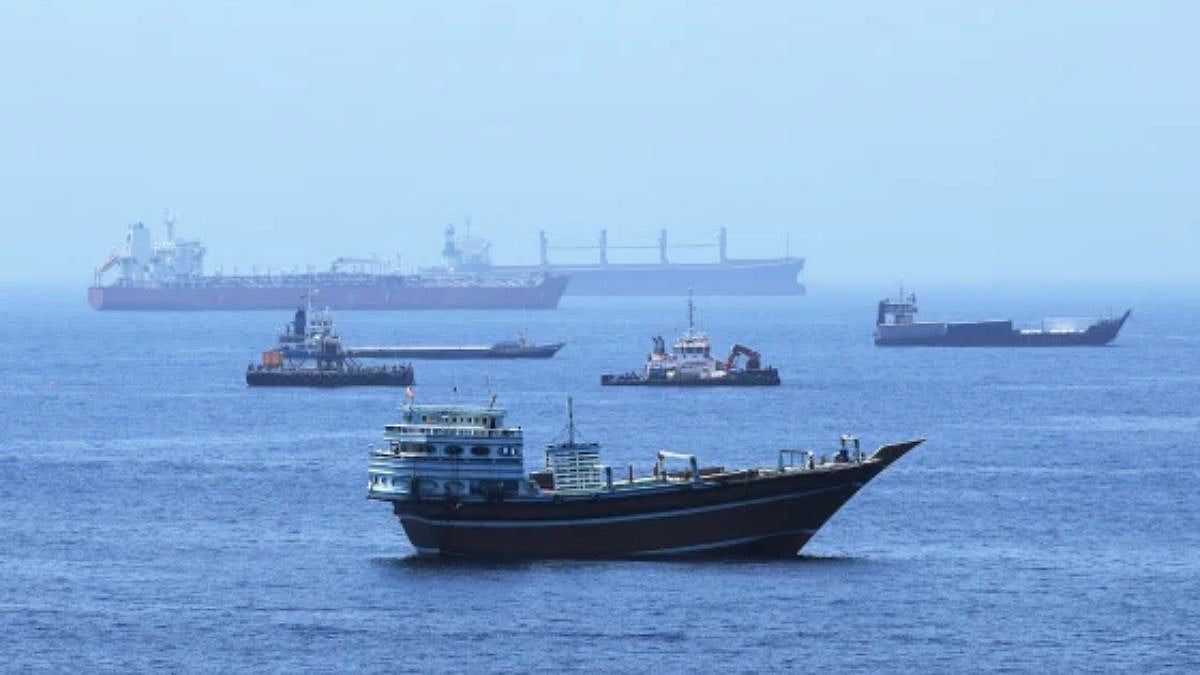
South Korea is reviewing possible military contributions to international efforts aimed at securing freedom of navigation in the Strait of Hormuz. This comes amid mounting pressure from US President Donald Trump, who has publicly criticized South Korea for insufficient support in connection with the Iran conflict.
The presidential office in Seoul said on Friday that the government was examining practical ways to contribute to efforts to secure the strategically vital waterway. However, any move must not undermine South Korea's defence readiness on the Korean Peninsula. Officials rejected reports suggesting that a military deployment had already been approved or was imminent.
South Korean media reports have said Seoul is considering several options, including deploying a naval logistics support vessel, maritime patrol aircraft, and mine-detection or clearance capabilities. The possible contribution is expected to focus primarily on protecting commercial shipping and supporting maritime security rather than direct combat operations.
Among the assets reportedly under consideration are a logistics support ship and P-8A maritime patrol aircraft. However, the presidential office pushed back against reports that preparations had already been finalized for a deployment later this year, stressing that discussions remained ongoing and that no final decision had been taken.
Any deployment involving South Korean troops would also require approval from the National Assembly. The deliberations come amid growing pressure from the Trump administration for Seoul to contribute to efforts aimed at protecting navigation through the Strait of Hormuz.
For South Korea, the issue is also closely linked to economic and energy security. The country depends heavily on energy supplies transported through the Strait of Hormuz, making prolonged disruption to shipping a significant concern.
The presidential office said any contribution would have to be carefully balanced against South Korea's defence requirements at home and undertaken in accordance with domestic legal procedures. Seoul has therefore left open the possibility of a limited military contribution while stopping short of committing to a deployment, stressing that maintaining its security readiness on the Korean Peninsula remains a priority.
The situation highlights the complex relationships between countries and the need for careful consideration of military contributions. South Korea must balance its own security needs with its relationships with other countries and its role in international efforts.
In conclusion, South Korea is weighing its options for a military contribution to securing the Strait of Hormuz, but no decision has been made yet. The country must carefully consider its own security needs and its relationships with other countries before making any decisions.
The issue also has significant implications for the global economy and energy security. The Strait of Hormuz is a critical waterway for international trade, and any disruption to shipping could have far-reaching consequences.
As the situation continues to evolve, it is likely that South Korea will face ongoing pressure from the US and other countries to contribute to international efforts. However, the country must prioritize its own security needs and make decisions that are in its best interests.
The US-South Korea relationship is also an important factor in this situation. The two countries have a long-standing alliance, but there have been tensions in recent years over issues such as trade and security. The US pressure on South Korea to contribute to efforts in the Strait of Hormuz is likely to add to these tensions and create further challenges for the relationship.
Overall, the situation in the Strait of Hormuz is complex and multifaceted, and South Korea must navigate it carefully. The country's decision on whether to contribute to international efforts will have significant implications for its own security, its relationships with other countries, and the global economy.
In terms of what this means for the region, it is clear that the situation in the Strait of Hormuz is a critical issue that requires careful consideration and cooperation from all countries involved. The US, South Korea, and other countries must work together to find a solution that balances their own security needs with the need to protect international trade and energy security.
The issue also highlights the importance of diplomacy and international cooperation. The US and South Korea must work together to find a solution that is in the best interests of both countries, and that also takes into account the needs and concerns of other countries in the region.
In conclusion, the situation in the Strait of Hormuz is complex and challenging, and South Korea must navigate it carefully. The country's decision on whether to contribute to international efforts will have significant implications for its own security, its relationships with other countries, and the global economy.
What this means for Mumbai or India is that the situation in the Strait of Hormuz has significant implications for global trade and energy security. Any disruption to shipping in the region could have far-reaching consequences for the Indian economy, and the country must carefully consider its own role in international efforts to secure the waterway.
The Indian government must also be aware of the complex relationships between countries and the need for careful consideration of military contributions. India must balance its own security needs with its relationships with other countries and its role in international efforts.
In terms of the broader implications, the situation in the Strait of Hormuz highlights the need for international cooperation and diplomacy. Countries must work together to find solutions that balance their own security needs with the need to protect international trade and energy security.
Overall, the situation in the Strait of Hormuz is a critical issue that requires careful consideration and cooperation from all countries involved. The US, South Korea, India, and other countries must work together to find a solution that is in the best interests of all parties involved.
Frequently asked questions
Why is South Korea considering a military contribution to the Strait of Hormuz?
South Korea is considering a military contribution to the Strait of Hormuz due to pressure from the US and to protect its own economic and energy security interests.
What kind of military contribution is South Korea considering?
South Korea is considering deploying a naval logistics support vessel, maritime patrol aircraft, and mine-detection or clearance capabilities to support maritime security in the Strait of Hormuz.