Dipke Launches 'School Thik Karo' Campaign in Hingoli
Abhijeet Dipke's campaign aims to improve rural schools. First audit flags gaps.
'%3E%3Crect%20width%3D'96'%20height%3D'96'%20fill%3D'%23B3261E'%2F%3E%3Ccircle%20cx%3D'30'%20cy%3D'24'%20r%3D'44'%20fill%3D'%23fff'%20opacity%3D'.12'%2F%3E%3Ccircle%20cx%3D'60'%20cy%3D'74'%20r%3D'40'%20fill%3D'%23000'%20opacity%3D'.10'%2F%3E%3C%2Fg%3E%3Cg%20fill%3D'%23fff'%3E%3Crect%20x%3D'29'%20y%3D'49'%20width%3D'8'%20height%3D'19'%20rx%3D'1'%2F%3E%3Crect%20x%3D'39'%20y%3D'40'%20width%3D'9'%20height%3D'28'%20rx%3D'1'%2F%3E%3Crect%20x%3D'50'%20y%3D'45'%20width%3D'8'%20height%3D'23'%20rx%3D'1'%2F%3E%3Crect%20x%3D'60'%20y%3D'53'%20width%3D'7'%20height%3D'15'%20rx%3D'1'%2F%3E%3Crect%20x%3D'41'%20y%3D'34'%20width%3D'5'%20height%3D'6'%2F%3E%3C%2Fg%3E%3C%2Fsvg%3E)
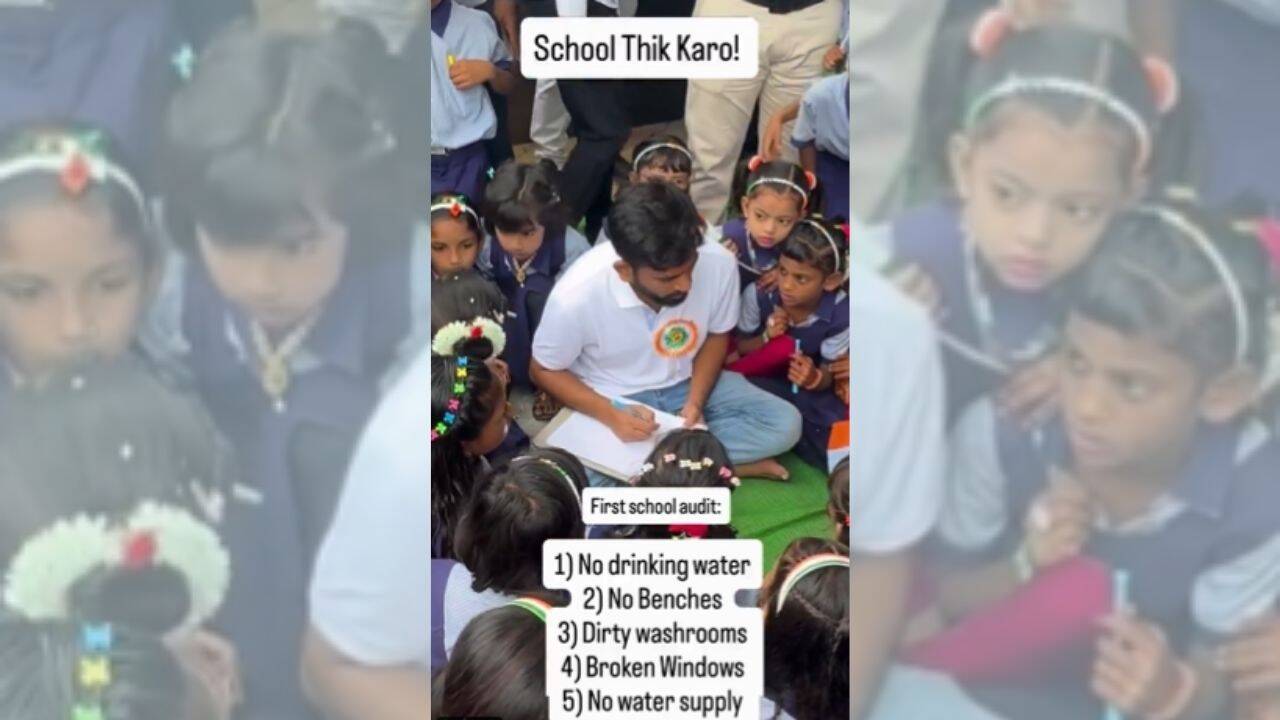
Abhijeet Dipke has launched the 'School Thik Karo' campaign in Santuk Pimpri village, Hingoli, to conduct a social audit of rural government schools across the country. The campaign's primary objective is to identify and address issues such as lack of water and poor sanitation in these schools.
The initiative will rely on parents and residents to report deficiencies using a standardized assessment form, which will help in evaluating the condition of essential facilities in these schools. This information will be used to improve the learning environment for students.
The first audit conducted as part of this campaign has already flagged gaps in a school in Hingoli. This highlights the need for such an initiative, which aims to bring about positive change in the education sector.
The 'School Thik Karo' campaign is a nationwide effort, and its success will depend on the participation of local communities. By involving parents and residents in the audit process, the campaign seeks to create a sense of ownership and responsibility among stakeholders.
The campaign's focus on essential facilities such as water and sanitation is crucial, as these are basic necessities that can significantly impact the health and well-being of students. By addressing these issues, the campaign aims to create a conducive learning environment that will help students achieve their full potential.
The 'School Thik Karo' campaign is an important step towards improving the condition of rural government schools in India. It highlights the need for collective action to address the challenges faced by these schools and ensures that students have access to quality education.
The campaign's impact will be closely watched, and its success will depend on the ability of stakeholders to work together towards a common goal. As the campaign gains momentum, it is expected to bring about positive change in the education sector and improve the lives of students in rural areas.
In the context of India's efforts to improve its education system, the 'School Thik Karo' campaign is a significant initiative. It underscores the importance of community participation and collective action in addressing the challenges faced by rural government schools.
The campaign's nationwide scope and focus on essential facilities make it a crucial step towards creating a better learning environment for students in rural areas. Its success will have a positive impact on the education sector and contribute to the country's overall development.
In conclusion, the 'School Thik Karo' campaign launched by Abhijeet Dipke is an important initiative that aims to improve the condition of rural government schools in India. Its focus on essential facilities and community participation makes it a significant step towards creating a conducive learning environment for students.
As the campaign moves forward, it is expected to bring about positive change in the education sector and improve the lives of students in rural areas. The campaign's success will depend on the ability of stakeholders to work together towards a common goal, and its impact will be closely watched in the coming months.
What it means for India is that the campaign has the potential to make a significant difference in the lives of students in rural areas. By improving the condition of rural government schools, the campaign can help increase access to quality education and contribute to the country's overall development.
This, in turn, can have a positive impact on the country's economy and society as a whole, as education is a critical factor in determining the trajectory of a nation's growth and development. Therefore, the 'School Thik Karo' campaign is an important initiative that deserves attention and support from all stakeholders.
Frequently asked questions
What is the 'School Thik Karo' campaign?
The 'School Thik Karo' campaign is a nationwide initiative that aims to improve the condition of rural government schools in India by conducting a social audit and addressing issues such as lack of water and poor sanitation.
How will the campaign achieve its objectives?
The campaign will rely on parents and residents to report deficiencies using a standardized assessment form, which will help in evaluating the condition of essential facilities in these schools.