India Snubs Mohsin Naqvi at Asia Cup Final
India's cricket team skips PCB chief, BCCI takes a stand
'%3E%3Crect%20width%3D'96'%20height%3D'96'%20fill%3D'%231B5E20'%2F%3E%3Ccircle%20cx%3D'30'%20cy%3D'24'%20r%3D'44'%20fill%3D'%23fff'%20opacity%3D'.12'%2F%3E%3Ccircle%20cx%3D'60'%20cy%3D'74'%20r%3D'40'%20fill%3D'%23000'%20opacity%3D'.10'%2F%3E%3C%2Fg%3E%3Cg%3E%3Ccircle%20cx%3D'48'%20cy%3D'48'%20r%3D'15'%20fill%3D'%23fff'%2F%3E%3Cpath%20d%3D'M43%2034%20Q50%2048%2043%2062'%20fill%3D'none'%20stroke%3D'%238a94a6'%20stroke-width%3D'2.4'%2F%3E%3Cpath%20d%3D'M47%2033%20Q54%2048%2047%2063'%20fill%3D'none'%20stroke%3D'%238a94a6'%20stroke-width%3D'1.8'%20stroke-dasharray%3D'1.5%203'%2F%3E%3C%2Fg%3E%3C%2Fsvg%3E)

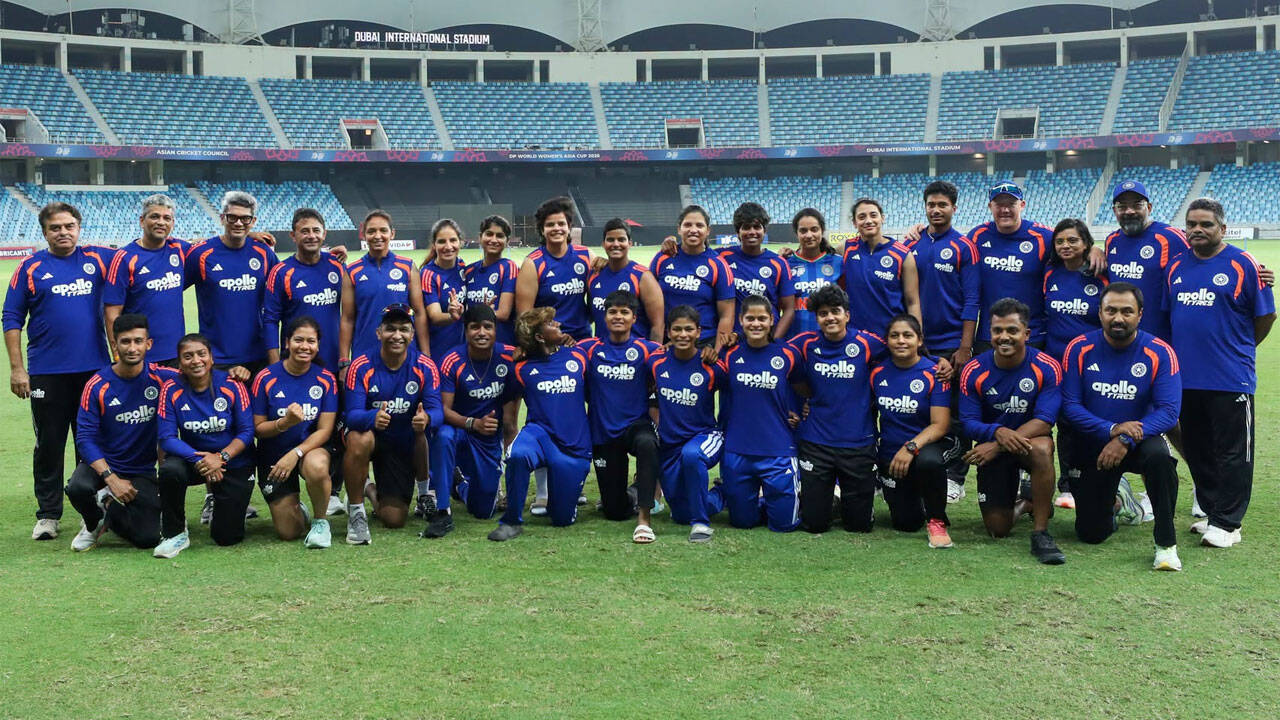
India's cricket team made a notable statement during the Women's Asia Cup final trophy presentation by not inviting Pakistan Cricket Board (PCB) chairman Mohsin Naqvi to the ceremony.
The incident occurred after India won the tournament, and the team was being presented with the trophy. Coach Amol Muzumdar later explained that the move was a deliberate decision taken by the Board of Control for Cricket in India (BCCI).
Muzumdar stated that the BCCI had taken a stand on the matter, implying that the decision to exclude Naqvi was not taken lightly. The exact reasons behind the BCCI's decision are not explicitly stated, but it is likely related to the ongoing tensions between the two cricketing nations.
The relationship between the BCCI and PCB has been strained in recent years, with several issues causing friction between the two boards. The decision to snub Naqvi at the trophy presentation is likely to further exacerbate the situation.
The Women's Asia Cup is a premier international cricket tournament, and the final match was closely watched by fans from both India and Pakistan. The incident has sparked a lot of debate and discussion among cricket enthusiasts, with some praising the BCCI's decision and others criticizing it.
In the context of Indo-Pak cricketing relations, this incident is significant. The two nations have a long and complex history of cricketing rivalry, with political tensions often spilling over into the sporting arena. The BCCI's decision to snub Naqvi is likely to be seen as a reflection of the current state of relations between the two countries.
The incident has also raised questions about the role of sports in diplomacy and whether it can be used as a tool to improve relations between nations. While cricket has the power to bring people together, it can also be used as a means of making political statements.
In this case, the BCCI's decision to snub Naqvi at the trophy presentation is a clear indication of the board's stance on the matter. The move is likely to have significant implications for the future of Indo-Pak cricketing relations, and it will be interesting to see how the situation develops in the coming months.
The significance of this incident cannot be overstated, as it highlights the complex and often fraught nature of Indo-Pak relations. The use of sports as a means of making political statements is not new, but it is a phenomenon that is likely to continue in the future.
As the cricketing world continues to evolve, it will be important to monitor the situation and see how the BCCI's decision affects the relationship between India and Pakistan. For now, the incident has sparked a lot of debate and discussion, and it will be interesting to see how the situation develops in the coming months.
Frequently asked questions
Why did India snub Mohsin Naqvi at the Asia Cup final?
The exact reasons are not stated, but it is likely related to the ongoing tensions between the BCCI and PCB.
What is the current state of Indo-Pak cricketing relations?
The relationship is strained, with several issues causing friction between the two boards.