Nvidia CEO Jensen Huang Dismisses AI Job Loss Fears
Nvidia CEO says AI automates tasks, not jobs. Optimism amidst job loss warnings.
'%3E%3Crect%20width%3D'96'%20height%3D'96'%20fill%3D'%23B3261E'%2F%3E%3Ccircle%20cx%3D'30'%20cy%3D'24'%20r%3D'44'%20fill%3D'%23fff'%20opacity%3D'.12'%2F%3E%3Ccircle%20cx%3D'60'%20cy%3D'74'%20r%3D'40'%20fill%3D'%23000'%20opacity%3D'.10'%2F%3E%3C%2Fg%3E%3Cg%20fill%3D'%23fff'%3E%3Crect%20x%3D'29'%20y%3D'49'%20width%3D'8'%20height%3D'19'%20rx%3D'1'%2F%3E%3Crect%20x%3D'39'%20y%3D'40'%20width%3D'9'%20height%3D'28'%20rx%3D'1'%2F%3E%3Crect%20x%3D'50'%20y%3D'45'%20width%3D'8'%20height%3D'23'%20rx%3D'1'%2F%3E%3Crect%20x%3D'60'%20y%3D'53'%20width%3D'7'%20height%3D'15'%20rx%3D'1'%2F%3E%3Crect%20x%3D'41'%20y%3D'34'%20width%3D'5'%20height%3D'6'%2F%3E%3C%2Fg%3E%3C%2Fsvg%3E)
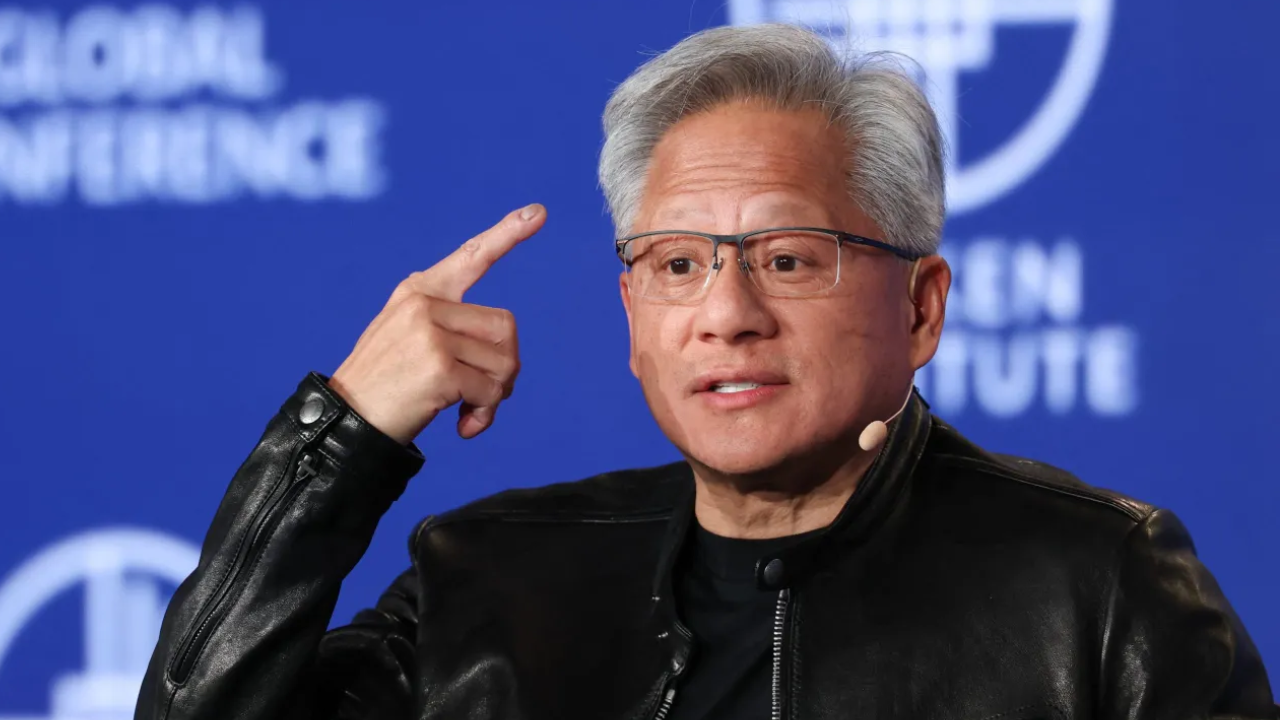
Nvidia CEO Jensen Huang has downplayed the notion that Artificial Intelligence (AI) will lead to significant job losses, arguing that people often confuse tasks with jobs. According to Huang, AI automates specific tasks within a job, rather than replacing the entire role. He cited the fields of radiology and software engineering as examples, where AI has disrupted traditional workflows yet companies are still hiring professionals in these areas.
Huang's comments come amidst growing concerns about the impact of AI on employment, with some experts warning of a potential 'bloodbath' in certain industries. However, the Nvidia CEO remains optimistic, stating that the narrative around AI job loss is 'exactly backward'. He believes that while AI may automate certain tasks, it will also create new opportunities and enhance existing jobs.
One of the fields Huang mentioned, radiology, has seen significant advancements in AI-powered imaging and diagnosis. Despite this, radiologists are still in high demand, as their expertise is required to interpret and validate the results generated by AI systems. Similarly, in software engineering, AI is being used to automate coding and testing tasks, but human engineers are still needed to design, develop, and maintain complex software systems.
Huang's views are not universally shared, however. Dario Amodei, a prominent AI expert, has warned of a potential 'white-collar bloodbath' as AI automates tasks currently performed by professionals. Amodei's warnings are based on the idea that AI will increasingly be able to perform tasks that were previously thought to be the exclusive domain of humans, such as data analysis and decision-making.
Labour market data also suggests that the impact of AI on employment is more complex than Huang's comments might suggest. For example, the number of paralegals and manufacturing jobs has declined in recent years, potentially due to automation. However, it is also possible that other factors, such as changes in industry trends and consumer demand, have contributed to these declines.
In conclusion, while Huang's comments highlight the potential benefits of AI in enhancing and creating jobs, the debate around AI and employment is far from settled. As AI continues to advance and automate tasks, it is likely that some jobs will be displaced, while others will be created. Ultimately, the key to navigating this changing landscape will be to ensure that workers have the skills and training needed to adapt to an increasingly automated workforce.
The significance of this debate extends beyond the tech industry, as AI has the potential to impact a wide range of sectors and professions. As such, it is essential to consider the potential consequences of AI on employment and to develop strategies for mitigating any negative effects. By doing so, we can work towards creating a future where the benefits of AI are shared by all, and where workers are equipped to thrive in an increasingly automated world.
In the context of India, where the tech industry is a significant contributor to the economy, the debate around AI and employment takes on added importance. As the country continues to grow and develop its tech sector, it will be crucial to consider the potential impact of AI on employment and to develop strategies for ensuring that workers are equipped to adapt to an increasingly automated workforce.
Overall, the debate around AI and employment is complex and multifaceted, and there are valid arguments on both sides. While Huang's comments highlight the potential benefits of AI in enhancing and creating jobs, it is also important to consider the potential risks and challenges associated with automation. By engaging in a nuanced and informed discussion, we can work towards creating a future where the benefits of AI are shared by all, and where workers are equipped to thrive in an increasingly automated world.
In terms of the broader implications of AI on employment, it is clear that the technology has the potential to significantly impact a wide range of industries and professions. As such, it is essential to consider the potential consequences of AI and to develop strategies for mitigating any negative effects. This may involve investing in education and training programs, as well as implementing policies and regulations that support workers who are displaced by automation.
In conclusion, the debate around AI and employment is a complex and multifaceted one, and there are valid arguments on both sides. While Huang's comments highlight the potential benefits of AI in enhancing and creating jobs, it is also important to consider the potential risks and challenges associated with automation. By engaging in a nuanced and informed discussion, we can work towards creating a future where the benefits of AI are shared by all, and where workers are equipped to thrive in an increasingly automated world.
The impact of AI on employment will likely be felt across a wide range of industries and professions, and it is essential to consider the potential consequences of this technology. As AI continues to advance and automate tasks, it is likely that some jobs will be displaced, while others will be created. Ultimately, the key to navigating this changing landscape will be to ensure that workers have the skills and training needed to adapt to an increasingly automated workforce.
In the end, the future of work in an age of AI will depend on our ability to adapt and evolve. By investing in education and training programs, and by implementing policies and regulations that support workers who are displaced by automation, we can work towards creating a future where the benefits of AI are shared by all, and where workers are equipped to thrive in an increasingly automated world.
What it means for Mumbai and India is that the country needs to be prepared for the changes that AI will bring to the job market. This includes investing in education and training programs, as well as implementing policies and regulations that support workers who are displaced by automation. By doing so, India can ensure that its workforce is equipped to thrive in an increasingly automated world, and that the benefits of AI are shared by all.
In terms of the potential risks and challenges associated with AI, it is clear that the technology has the potential to significantly impact a wide range of industries and professions. As such, it is essential to consider the potential consequences of AI and to develop strategies for mitigating any negative effects. This may involve investing in education and training programs, as well as implementing policies and regulations that support workers who are displaced by automation.
Overall, the debate around AI and employment is complex and multifaceted, and there are valid arguments on both sides. While Huang's comments highlight the potential benefits of AI in enhancing and creating jobs, it is also important to consider the potential risks and challenges associated with automation. By engaging in a nuanced and informed discussion, we can work towards creating a future where the benefits of AI are shared by all, and where workers are equipped to thrive in an increasingly automated world.
The significance of this debate extends beyond the tech industry, as AI has the potential to impact a wide range of sectors and professions. As such, it is essential to consider the potential consequences of AI on employment and to develop strategies for mitigating any negative effects. By doing so, we can work towards creating a future where the benefits of AI are shared by all, and where workers are equipped to thrive in an increasingly automated world.
In conclusion, the future of work in an age of AI will depend on our ability to adapt and evolve. By investing in education and training programs, and by implementing policies and regulations that support workers who are displaced by automation, we can work towards creating a future where the benefits of AI are shared by all, and where workers are equipped to thrive in an increasingly automated world.
What it means for India is that the country needs to be prepared for the changes that AI will bring to the job market. This includes investing in education and training programs, as well as implementing policies and regulations that support workers who are displaced by automation. By doing so, India can ensure that its workforce is equipped to thrive in an increasingly automated world, and that the benefits of AI are shared by all.
The impact of AI on employment will likely be felt across a wide range of industries and professions, and it is essential to consider the potential consequences of this technology. As AI continues to advance and automate tasks, it is likely that some jobs will be displaced, while others will be created. Ultimately, the key to navigating this changing landscape will be to ensure that workers have the skills and training needed to adapt to an increasingly automated workforce.
In the end, the future of work in an age of AI will depend on our ability to adapt and evolve. By investing in education and training programs, and by implementing policies and regulations that support workers who are displaced by automation, we can work towards creating a future where the benefits of AI are shared by all, and where workers are equipped to thrive in an increasingly automated world.
Frequently asked questions
What is Nvidia CEO Jensen Huang's view on AI job loss?
Huang believes that AI automates tasks, not entire roles, and that the narrative around AI job loss is 'exactly backward'.
Which fields does Huang cite as examples of AI disruption?
Huang cites radiology and software engineering as examples of fields that have been disrupted by AI, yet are still hiring professionals.