BMC Explores AI For Doctor-Patient Consultations
Mumbai civic hospitals may use speech-to-text AI, reducing doctor typing time and increasing patient care.
'%3E%3Crect%20width%3D'96'%20height%3D'96'%20fill%3D'%23B3261E'%2F%3E%3Ccircle%20cx%3D'30'%20cy%3D'24'%20r%3D'44'%20fill%3D'%23fff'%20opacity%3D'.12'%2F%3E%3Ccircle%20cx%3D'60'%20cy%3D'74'%20r%3D'40'%20fill%3D'%23000'%20opacity%3D'.10'%2F%3E%3C%2Fg%3E%3Cg%20fill%3D'%23fff'%3E%3Crect%20x%3D'29'%20y%3D'49'%20width%3D'8'%20height%3D'19'%20rx%3D'1'%2F%3E%3Crect%20x%3D'39'%20y%3D'40'%20width%3D'9'%20height%3D'28'%20rx%3D'1'%2F%3E%3Crect%20x%3D'50'%20y%3D'45'%20width%3D'8'%20height%3D'23'%20rx%3D'1'%2F%3E%3Crect%20x%3D'60'%20y%3D'53'%20width%3D'7'%20height%3D'15'%20rx%3D'1'%2F%3E%3Crect%20x%3D'41'%20y%3D'34'%20width%3D'5'%20height%3D'6'%2F%3E%3C%2Fg%3E%3C%2Fsvg%3E)
Mumbai's civic administration is exploring the use of AI-based speech-to-text technology to convert doctor-patient conversations into digital medical records. This technology is being considered as the next phase of the BMC's Hospital Management Information System (HMIS), which aims to make hospital services paperless and reduce waiting time.
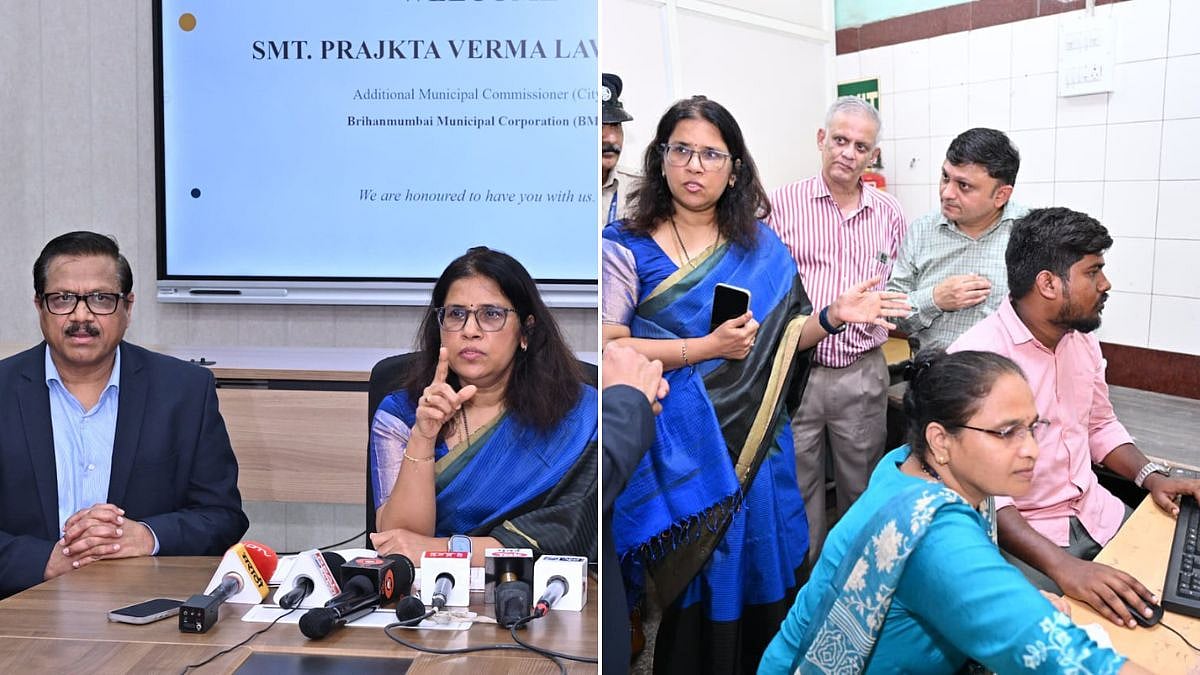
The proposed technology would allow doctors to spend more time attending to patients and less time typing. Prajakta Lavangre Varma, Additional Municipal Commissioner (City), said that the technology could automatically convert conversations during consultations into text and incorporate them into a patient's digital medical record.
Varma visited Lokmanya Tilak Municipal General Hospital (Sion Hospital) to review the implementation of HMIS, which has commenced at the hospital. She said that speech-to-text AI technology would be the next phase of HMIS, but implementing such a system in busy government hospitals could be challenging due to background noise and multiple patients.
The BMC has signed an MoU with Fractal, an IT firm, to explore technological solutions to these challenges. Meanwhile, the civic body is expanding HMIS to digitise various hospital services, including OPD registration, consultations, prescriptions, diagnostic investigations, and payments.
The system is currently operational at the OPD level at Sion Hospital and will gradually be strengthened and introduced across other BMC hospitals. Patients will also have digital health records, enabling repeat visitors to access their records without registering from scratch and reducing the need to carry paper documents.
The BMC is also working to integrate Aadhaar, ABHA, and Ayushman Bharat-linked services with HMIS. Online payment facilities will be expanded through multiple counters to reduce queues. Additionally, the civic administration is introducing an SMS-based system for birth and death certificates, allowing applicants to receive a unique application number and another alert once the certificate is ready for collection.
The expansion of HMIS and the introduction of speech-to-text AI technology are part of the BMC's efforts to improve healthcare services in Mumbai. The civic administration aims to provide better patient care and reduce waiting time by making hospital services more efficient and paperless.
The use of technology in healthcare is becoming increasingly important, and the BMC's initiatives are a step in the right direction. By leveraging AI and digital technology, the civic administration can improve the quality of healthcare services and make them more accessible to patients.
In the coming months, the BMC plans to roll out the expanded HMIS and speech-to-text AI technology across all its hospitals. This will not only improve patient care but also reduce the administrative burden on doctors and hospital staff.
The BMC's efforts to digitise hospital services and introduce new technologies are a significant development in the healthcare sector. As the civic administration continues to work towards improving healthcare services, patients in Mumbai can expect to see significant improvements in the quality of care they receive.
In conclusion, the BMC's exploration of speech-to-text AI technology and the expansion of HMIS are important steps towards improving healthcare services in Mumbai. By leveraging technology and digital innovation, the civic administration can provide better patient care and make hospital services more efficient and paperless.
Frequently asked questions
What is the BMC's Hospital Management Information System (HMIS)?
HMIS is a system aimed at making hospital services paperless and reducing waiting time.
What is the proposed speech-to-text AI technology for?
The technology is proposed to convert doctor-patient conversations into digital medical records, reducing doctor typing time and increasing patient care.