SC Urges Railways To Drop 'Second-Class Passenger' Term
Supreme Court recommends change, citing equality and dignity. Railways to tackle overcrowding.
'%3E%3Crect%20width%3D'96'%20height%3D'96'%20fill%3D'%23B3261E'%2F%3E%3Ccircle%20cx%3D'30'%20cy%3D'24'%20r%3D'44'%20fill%3D'%23fff'%20opacity%3D'.12'%2F%3E%3Ccircle%20cx%3D'60'%20cy%3D'74'%20r%3D'40'%20fill%3D'%23000'%20opacity%3D'.10'%2F%3E%3C%2Fg%3E%3Cg%20fill%3D'%23fff'%3E%3Crect%20x%3D'29'%20y%3D'49'%20width%3D'8'%20height%3D'19'%20rx%3D'1'%2F%3E%3Crect%20x%3D'39'%20y%3D'40'%20width%3D'9'%20height%3D'28'%20rx%3D'1'%2F%3E%3Crect%20x%3D'50'%20y%3D'45'%20width%3D'8'%20height%3D'23'%20rx%3D'1'%2F%3E%3Crect%20x%3D'60'%20y%3D'53'%20width%3D'7'%20height%3D'15'%20rx%3D'1'%2F%3E%3Crect%20x%3D'41'%20y%3D'34'%20width%3D'5'%20height%3D'6'%2F%3E%3C%2Fg%3E%3C%2Fsvg%3E)
The Supreme Court has urged Indian Railways to discontinue the use of the term 'second-class passenger', deeming it outdated and inconsistent with constitutional values of equality and dignity. This recommendation was made while hearing a case related to a fatal accident caused by train overcrowding.
The court observed that passengers should not be identified by hierarchical labels, and instead, only railway coaches should be classified. The term 'second-class passenger' should be removed from railway tickets, manuals, and official records, the bench suggested.
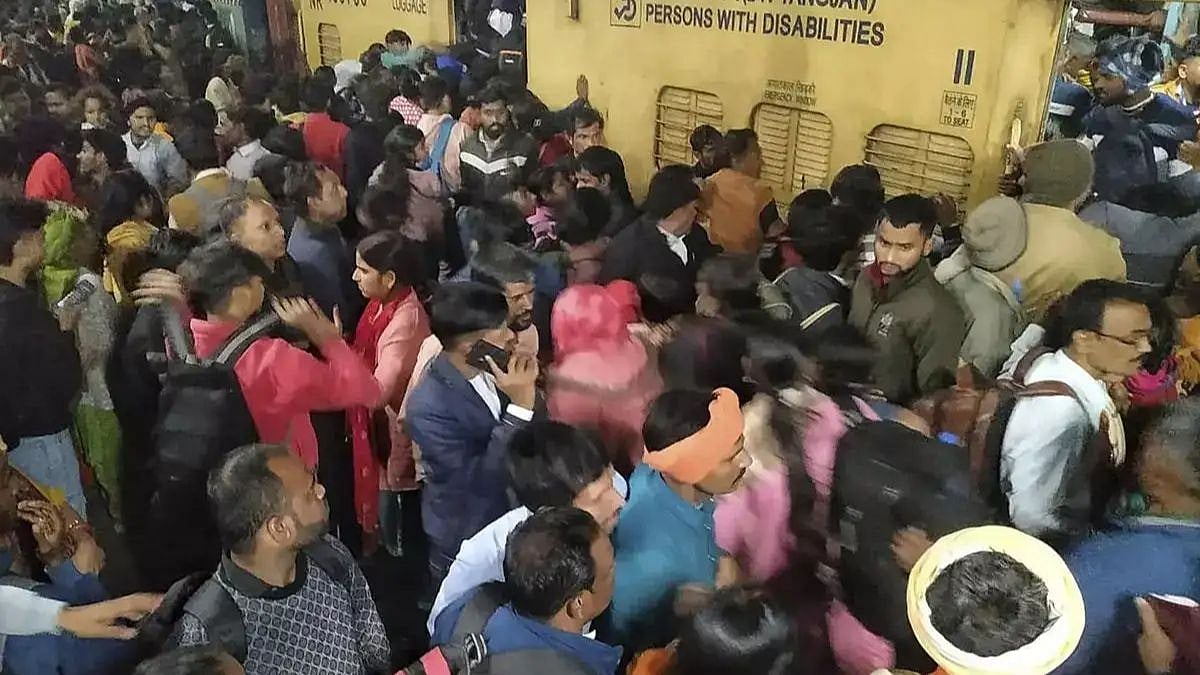
In addition to its observations on terminology, the apex court stressed the need for Indian Railways to take stronger measures to address overcrowding in trains. The bench noted that excessive crowding compromises passenger safety and comfort, requiring urgent administrative attention to prevent avoidable tragedies.
The case stemmed from a petition filed by the widow of a man who died after falling from an overcrowded train. The Supreme Court awarded ₹8 lakh to the deceased passenger's widow, holding that the family deserved compensation and underscoring the responsibility of public authorities to ensure safe travel conditions.
The court highlighted the importance of public institutions upholding constitutional principles of equality and dignity in both language and practice. Terminology that creates a hierarchy among passengers is incompatible with modern constitutional values and should be replaced with more inclusive language, the bench observed.
Although the court's observations are advisory, they are expected to carry significant weight in shaping future railway policy. Indian Railways has long faced criticism over overcrowding, particularly in general and second-class coaches. The latest observations are likely to add momentum to ongoing discussions on improving passenger safety, infrastructure, and adopting more inclusive terminology across the railway network.
The Supreme Court's recommendation to drop the term 'second-class passenger' is a step towards promoting equality and dignity among railway passengers. It is now up to Indian Railways to consider policy changes and implement more effective measures to address overcrowding and ensure safe travel conditions.
In conclusion, the Supreme Court's observations on the term 'second-class passenger' and train overcrowding highlight the need for Indian Railways to prioritize passenger safety and dignity. By adopting more inclusive terminology and addressing overcrowding, Indian Railways can work towards providing a safer and more comfortable travel experience for all passengers.
The move is expected to have a significant impact on the railway system, promoting a more equitable and respectful environment for passengers. As Indian Railways considers policy changes, it is likely that other public institutions will also re-examine their terminology and practices to ensure they align with constitutional values of equality and dignity.
The Supreme Court's decision serves as a reminder of the importance of language and terminology in promoting equality and dignity. By dropping the term 'second-class passenger', Indian Railways can take a significant step towards creating a more inclusive and respectful environment for all passengers.